
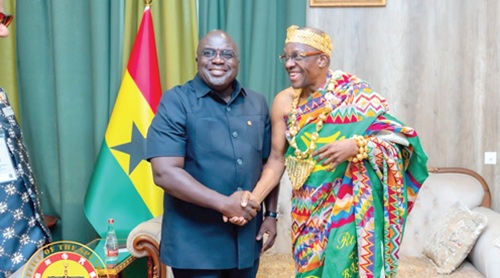
President John Dramani Mahama has reminded African leaders and legislators that the ultimate expression of sovereignty is the capacity of a nation to solve the fundamental problems of its people.
He said a true sovereign nation must be capable of feeding its people, educating its children, protecting its vulnerable, creating opportunities for its youth, and financing its own development priorities.
“Across Africa, our citizens do not judge sovereignty by the speeches we make, but they judge it by whether the lights stay on, whether jobs are available, whether schools educate, whether hospitals heal, and whether government keeps their promises.
“We must build economies capable of supporting the social systems we seek to protect.
We must strengthen domestic production, support African enterprises, expand regional trade, and create pathways to prosperity that are anchored in our own priorities and realities.
“Dependency in whatever form it appears ultimately weakens sovereignty,” the President added.
Event
This was contained in a speech read on his behalf by the Chief of Staff, Julius Debrah, at the Fourth African Inter-Parliamentary Conference on Family, Sovereignty and Values at the Parliament House in Accra yesterday.
The three-day event is on the theme: “Consolidating parliamentary consensus: Advancing the African Charter on family, sovereignty and values.”
Participating are legislators from 20 African nations, including parliamentary leaders, traditional authorities, faith-based organisations, civil society groups, policy experts and youth representatives.
Concrete actions
The Second Deputy Speaker of Parliament, Andrew Asiamah Amoako, said the conference marked a transition from discussions to concrete action towards adopting an African Charter capable of guiding legislation and policy across the continent.
He urged parliamentarians to work towards strengthening family systems, preserving culture and developing policies that promote youth development, education and responsible governance.
The Speaker of Morocco’s House of Councillors, Mohamed Ould Errachid, said Africa faced the challenge of balancing modernisation with cultural identity rather than choosing one over the other.
“Africa is not just a place where we have to apply systems that were taught elsewhere.
No, Africa is a continent that bears a history, that has a vision, that has a singular contribution to the world debate, and we should be proud of that,” he said.
Exploitation
The President of the Senate of Eswatini, Lindiwe Dlamini, said Africa’s vast natural wealth had not translated into adequate development partly because of external exploitation and limited control over resources.
She expressed concern over what she described as growing attacks on family structures and cultural values, and called on parliamentarians to enact legislation that protected families, strengthened parental authority and preserved African traditions for future generations.
“We find ourselves to be gatekeepers for our nations at a time when the world is highly influenced by progressive woke ideology driven by nefarious entities, anchored in secular humanism.
These progressive ideologies are influencing global politics and polluting the hearts and minds of African children and youth,” the Eswatini president said.
Priorities
The First Vice-President of Chad’s National Assembly, Dr Houdeingar David, also urged African countries to define their development priorities based on local realities and indigenous knowledge systems.
He said African values such as solidarity, respect for elders and communal responsibility should inform governance and public policy.
The Second Deputy Speaker of Burundi’s Senate, Clotilde Kampimbare, emphasised the need for stronger parliamentary ownership of debates on family values, cultural sovereignty and national identity.
She called for enhanced parliamentary diplomacy at the regional and continental levels to promote African perspectives on social and cultural issues.
