
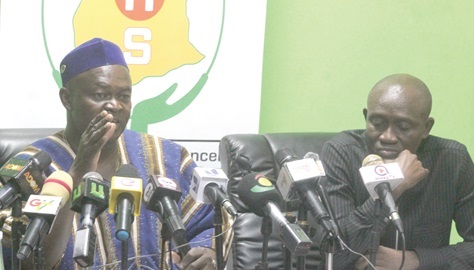
About 1.5 million children are expected to benefit from this year's Seasonal Malaria Chemoprevention (SMC) campaign, which aims to protect children against malaria during the peak rainy season.
The campaign, which targets children aged between three and 59 months, is being carried out in seven regions, namely the Upper East, Upper West, North East, Northern, Savannah, Bono East and Oti regions, through a monthly door-to-door administration of anti-malaria medicines by trained community health volunteers.
The Director-General of the Ghana Health Service (GHS), Prof. Samuel Kaba Akoriyea, at a media briefing in Accra yesterday, said the intervention formed part of the country's strategy to eliminate malaria and urged parents and caregivers to ensure that every eligible child completed all four treatment cycles for maximum protection.
He said the medicines were provided free of charge and were safe and effective in reducing malaria episodes among children.
"SMC remains one of our most effective malaria prevention interventions, reducing malaria episodes among children by up to 75 per cent when all treatment cycles are completed," he said.
Professor Akoriyea said the first treatment cycle had been completed successfully in the Upper West, Upper East, North East and Oti regions, while the Northern, Savannah and Bono East regions would begin their first cycle from July 2 to 5, 2026.
School distribution
Prof. Akoriyea said the GHS was simultaneously undertaking the nationwide school-based distribution of Insecticide-Treated Mosquito Nets (ITNs) to pupils in Primary Two and Primary Six as part of efforts to strengthen household protection against malaria.
He explained that the distribution programme in schools complemented the routine distribution of mosquito nets through antenatal clinics, child welfare clinics, HIV and tuberculosis clinics, as well as periodic nationwide mass distribution campaigns.
He commended regional and district health teams, community health volunteers, development partners and caregivers for supporting the implementation of the programme and said every net distributed under the programme had undergone quality assurance checks and received regulatory approval before being supplied to beneficiaries.
Prof. Akoriyea said the country continued to make steady progress in the fight against malaria, with prevalence declining from 27.5 per cent in 2011 to 8.6 per cent in 2022, while malaria deaths had reduced from 3,259 in 2011 to 52 in 2025 through sustained investments in prevention, early diagnosis and treatment.
Success
The National Coordinator of the School Health Education Programme (SHEP) of the Ghana Education Service (GES), Theresa Oppong-Mensah, said the success of the intervention would not be measured by the number of mosquito nets distributed but by the number of children who slept under them every night.
She said malaria remained one of the major causes of absenteeism, poor concentration and reduced academic performance among schoolchildren, making malaria prevention an important component of quality education.
Ms Oppong-Mensah, therefore, urged teachers to educate pupils on the correct use of the nets and encouraged parents to air the nets under shade for at least 48 hours before hanging them over children's sleeping spaces.
She cautioned against using the nets for fishing, gardening, drying food or any purpose other than protecting people from mosquito bites.
The Programme Manager of the National Malaria Elimination Programme, Dr Franklin Asiedu, said the SMC campaign alone required an operational budget of more than GH¢40 million this year.
He said although the programme was originally designed to run for five monthly treatment cycles, funding constraints had reduced this year's campaign to four cycles.
