
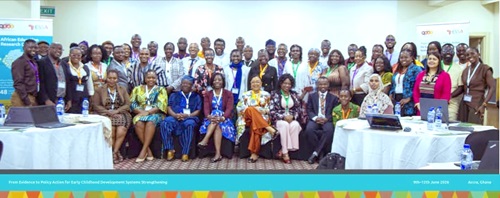
A four-day workshop on early childhood development (ECD) research dissemination for policy intervention in Sub-Saharan Africa has ended in Accra.
The event was organised by ESSA and the Research for Equitable Access and Learning (REAL) Centre at the University of Cambridge.
It brought together 31 research grantee awardees of ESSA and REAL Centre’s ECD project, alongside selected policymakers, to share research findings, explore policy implications, and co-create pathways for evidence uptake.
ECD researchers from Ghana, Nigeria, Cameroon, Kenya, Malawi, Tanzania, Ethiopia, Eritrea, Mozambique and South Africa participated in the programme.
Presentations
The convening featured research presentations, poster sessions, policy roundtables, facilitated country and thematic group work, peer-learning sessions, and structured networking opportunities.
It aimed at disseminating current ECD research evidence generated by grantees with a focus on findings relevant to national and regional policy priorities in Sub-Saharan Africa, facilitating meaningful dialogue and collaboration between researchers, policymakers and other ECD stakeholders to strengthen mutual understanding and trust.
Moreover, it sought to co-create actionable, country-specific recommendations and implementation strategies to strengthen evidence-informed ECD policy and practice and establish and formalise a Community of Learning (CoL) to support ongoing peer exchange, joint learning, and sustained research uptake beyond the convening.
The benefits of ECD for school readiness and broader individual and societal outcomes are recognised in regional and global policy documents.
For example, the Sustainable Development Goal 4.2 calls on governments and individuals to promote ‘access to quality early childhood development, care, and pre-primary education so that they are ready for education.’
Similarly, the African Union Agenda 2063 and the Continental Education Strategy 2026-2035 emphasise the need for holistic child development.
In her closing remarks, the Chief Executive Officer (CEO) of ESSA, Dr Pauline Essah, described the event as a success and “very positive”.
She said it had been a full four days of engaging with researchers, policymakers, practitioners, and all those who needed the evidence that had been generated around ECD to be able to make effective decisions that would help African children have a strong foundation and grow into adults who could contribute to the socio-economic development of the continent.
Positive
“It’s been very positive, so we are going away feeling fulfilled; there is homework to be done, reports to be written, actions to be taken because we just don’t do research …, we do research to gather evidence for action to bring about positive change.
Also, we are hoping to get additional funding to help the researchers to engage with policymakers in their own countries to use the evidence for change on the ground,” she said.
Dr Essah said the evidence from the research would be shared with policymakers, education and ECD stakeholders across the 10 countries where research had taken place to help them in decision-making.
