


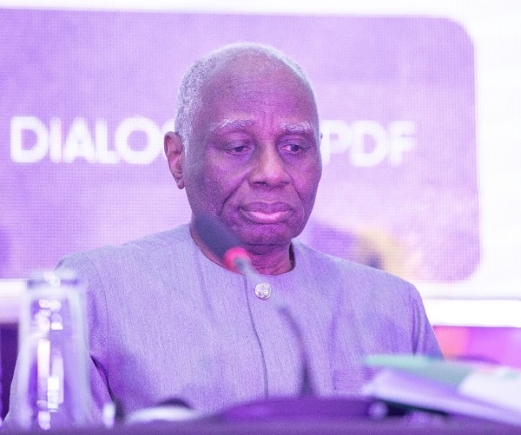
THE Chairman of the West Africa Gas Summit, Tsatsu Tsikata, said the West African Gas Pipeline (WAGP) remained a proud example of regional energy integration and sustainable that energy that must be enhanced.
He however, affirmed but that Ghana and its neighbors must “brutally” address payment and supply challenges if such cooperation is to continue working.
“There’s no reason why payment for gas from Nigeria should not be as secure as payment for gas supplied by ENI under a partial risk guarantee arrangement with the World Bank. There’s absolutely no reason why the same security of payment should not be used when it comes to gas from Nigeria,” he said.
Mr Tsikata said regional collaboration in gas development is now “a necessary outlook” given rising power needs from mineral processing of gold, lithium, aluminium and bauxite, plus digitization, AI centers and data centers.
He added that it takes “a lot of honesty about addressing those problems to make sure that we make regional cooperation effective” and build on it to do more
Speaking at the opening session of the three-day summit in Accra yesterday (Tuesday, June 9), Mr Tsikata, who was involved in initiating the pipeline project, said the logic was clear from Ghana’s perspective – Nigeria had vast, readily available gas reserves while Ghana would save time and cost searching for its own.
“There was just no question about Nigeria’s vast reserves, and therefore the availability of those reserves created an opportunity for Ghana. By creating, or by getting involved in the creation of the pipeline, it was clear to us that access would give Ghana security of energy supply,” he said.
Early doubts
Mr Tsikata recalled that when GNPC championed gas as a complement to Ghana’s hydroelectric power, there were naysayers, including the World Bank and other international advisors.
“They argued Ghana’s energy demand did not justify gas, and that hydropower would be sufficient into the distant future, with gas needed only one year in seven when the water level of the Volta Lake comes down.
“Now, obviously, they were wrong in those perspectives. And what GNPC began to champion from those days in terms of gas has shown itself to be clearly the way forward,” he said.
Industrialisation
For his part, the Deputy Minister of Energy and Green Transition, Richard Gyan-Mensah, said gas must be leveraged as a tool for industrialisation and socio-economic transformation, not treated as an end in itself.
Mr Gyan-Mensah, indicated that, that while progress has been made, the transformative impact aimed for in national growth, infrastructure, energy access, job creation, and better livelihoods have not yet been fully achieved.
“Just to remind sponsors, rapid gas expansion is not the end goal, but a way to drive socio-economic transformation. The key question is how we turn our gas resources into lasting values for our people,” he said.
Mr Gyan-Mensah said West African economies remain challenged by energy affordability, industrial competitiveness, infrastructure shortfalls and the need for sustainable development, even with abundant natural gas.
Global events, he added, show that countries without resilient energy systems remain susceptible to geopolitical shocks.
Resources
He said resources alone do not generate prosperity. “Prosperity happens when resources are backed by sound policy, good infrastructure, strong institutions, and effective partnerships. Governments need to create an environment that builds investment confidence and ensures benefits reach our people”.
In Ghana, he affirmed that, gas supply through the West African Gas Pipeline has supported the power sector and broader economy for years — “a prime example of how regional integration creates shared value.”
Mr Gyan-Mensah added that, domestic discoveries led by partners including Tullow Oil, Kosmos Energy, ENI and GNPC have transformed the energy landscape.
He said a major challenge across Africa is transforming ideas into bankable projects, and platforms that support project preparation and readiness can speed up implementation.
“The opportunity in West Africa is huge. We have the resources. We have the talents. We have the institutions and the partnerships to try. What’s needed now is ongoing commitment, coordinated efforts, and a shared drive to turn our potentials into real progress,” Mr Gyan-Mensah concluded.
Summit
For his part, the Executive Secretary of the Gas Consortium, Senam Kodzo Gbeho, said West Africa needs its own platform for “candid, practical conversations” on regional gas development, and that the West Africa Gas Summit is delivering that.
Opening the summit in Accra on Tuesday, Mr Gbeho said the gathering was not about debating agendas of other forums.
“What matters is that West Africa needs its own platform for candid, practical conversations about regional gas development, and you have helped make that platform a reality,” he told delegates.
In attendance at the summit were, policymakers, regulators, investors, financiers, industry leaders and regional institutions.