


Experts and industry stakeholders have identified standards development, skills training and technology transfer as critical requirements for attracting investment and accelerating Ghana's transition to a circular economy.
They said addressing those challenges would help businesses scale up operations, improve access to international markets and support green industrial transformation across key sectors of the economy.
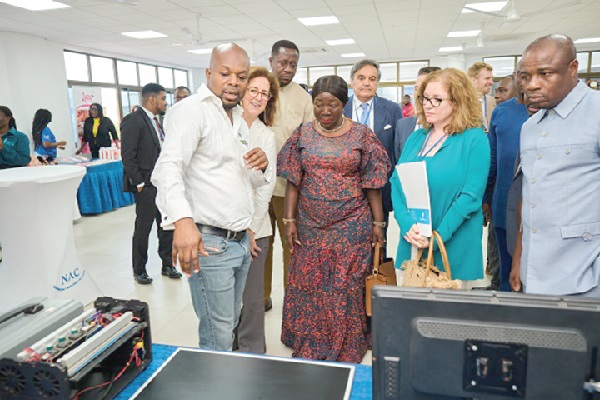
The position was made during a panel discussion at the opening of the two-day Ghana–Italy Circular Economy Dialogue held in Accra from June 16 to 17.
The event was organised by UNIDO ITPO Italy, the Italian Trade Agency (ITA), Italian Agency for Development Cooperation (AICS), Confindustria Assafrica & Mediterraneo, Made in Italy Circular and Sustainable (MICS), Italian Exhibition Group (Ecomondo), CNA-Federmoda, E4Impact Foundation, Alliance of Bioversity International and CIAT, the Italian Directory of Diasporas for the International Cooperation (CIDCI) and World Trade Centre Accra.
It brought together policymakers, business leaders, entrepreneurs, researchers, development partners and industry experts from Ghana and Italy to explore practical solutions and partnership opportunities for sustainable industrial development.
The dialogue examined Ghana's evolving circular economy ecosystem and opportunities for green industrial transformation, with discussions focusing on policy direction, industrial competitiveness, environmental sustainability, private sector participation and innovation-driven growth.
Participants also explored how Ghana–Italy cooperation could support sustainable manufacturing systems, investment promotion, technology transfer and climate-resilient industrial development.
Market access
Speaking during a panel discussion in Accra last Tuesday, a representative from the Ministry of Trade, Agribusiness and Industry, Kwasi Ofori Antwi, said standards remained one of the most important requirements for market access and business growth.
“We need to learn from some of the best practices in the area that we are looking at. Standards open up the industry market and are important for market access for businesses,” he said.
Mr Ofori Antwi explained that although circular economy practices were already taking place across various sectors of the economy, many businesses were struggling to access markets because standards had not yet been developed for some innovative products.
He said the challenge was particularly affecting upcyclers and businesses developing products within the circular economy space.
“We had a meeting with some upcyclers on the continent who, for example, are facing market access challenges. It is really based on the fact that there are no set standards for some of the products that have been developed,” he said.
Mr Ofori Antwi said Ghana and Italy could strengthen collaboration in areas such as standards development, skills training, technology transfer and provision of equipment to support businesses operating within the circular economy industry.
He also highlighted financing as one of the key challenges confronting businesses in the sector.
Investment opportunities
An official of the Italian Exhibition Group, Ilaria Messori, said Ghana was an attractive destination for circular economy investments because of its stable democratic environment, growing economy and youthful population.
She said rapid urbanisation and the increasing volume of waste generated across the country presented opportunities for investment in recycling, waste management and resource recovery.
“Ghana has got rapid economic growth and a stable democracy, which is very important for international investors,” she said.
Ms Messori added that Ghana's youthful population was a strategic asset that could drive innovation, market expansion and workforce development.
She, however, identified infrastructure gaps and the need for clear rules and standards as challenges that required attention to attract more international investors into the sector.
“There is a need for clear rules and standards for international investors to invest in a country,” she said.
Green industrialisation
A representative from the Environmental Protection Authority (EPA), Letitia Abra Kom Nyaaba, said efforts were underway to promote cleaner production methods and resource efficiency among industries to support sustainable industrial development.
She said circular economy principles were increasingly being incorporated into industrial operations through measures aimed at reducing waste and pollution.
She explained that industries were beginning to rethink production processes from the design stage by exploring alternatives to toxic raw materials and adopting materials that could be reused at the end of their lifecycle.
“I have seen quite a number of industries moving away from end-of-pipe solutions to pollution and looking at what they can do right from the design stage of their processes,” she said.
Ms Nyaaba said that although a number of circular economy initiatives were being implemented in areas such as waste oil recovery, metal recycling, textile reuse and organic waste management, most of them remained fragmented and operated on a relatively small scale.
“A lot is happening in silos. You take waste oil, metals, textiles and coconut fibre. So much is happening, but they are all still on a small scale. The scaling up is what we want to support,” she said.
She added that the EPA continued to provide regulatory guidance, technical support and capacity-building assistance to businesses to help them comply with environmental standards while remaining competitive.
Agric potential
A representative from Alliance of Bioversity International and the International Centre for Tropical Agriculture (CIAT), Gianpiero Menza, said it was significant to apply circular economy principles within Ghana's agricultural sector.
He said Ghana generated substantial volumes of agricultural waste, which could be converted into valuable products such as bio-fertilisers and other bio-based inputs.
He said agriculture accounted for a significant portion of the country's economy and that agricultural waste represented a major resource that could support industrial development if properly harnessed.
Mr Menza added that while several technologies and innovations had already been developed, many remained at pilot or pre-commercialisation stages because of limited financing and inadequate market uptake.
“What is missing is continuity to ensure that these solutions become systematic and that they are implemented at scale,” he said.
He stressed the need for stronger collaboration among governments, industries, universities and development organisations to facilitate technology transfer and commercialisation of innovations.