


Shippers have expressed concerns over persistent delays in the evacuation of containers from the Meridian Port Services (MPS) Terminal 3 to Inland Container Depots (ICDs) in Tema.
Their bone of contention was that the prolonged delays in transferring containers from T3 to the ICDs were tying up cargo, disrupting their operations, and increasing the cost of doing business at the Port of Tema.
The shippers explained that containers that were supposed to be positioned at Inland Container Depots, including the Golden Jubilee Terminal (GJT), to enable consignees or their agents to clear and take delivery of the cargo within the free storage period, had remained at MPS Terminal 3 for weeks.
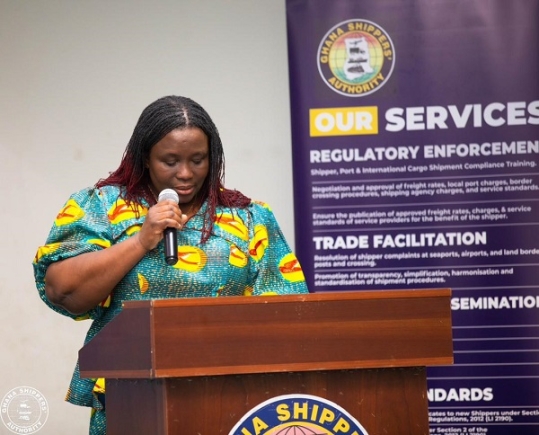
The stakeholders' concerns dominated discussions at the Second Quarter Brokers and Trade Associations' Shipper Committee meeting convened by the Ghana Shippers' Authority (GSA) in Accra.
The meeting, which included trade associations and shippers consisting of importers and exporters, brought together representatives from the aviation, maritime, logistics, standards, and communications sectors.
Rising clearance costs
The shippers maintained that the difficulty was the time it took for containers to be transferred, positioned and made available for collection.
They regretted that rent, demurrage and other time-related penalties continued to accrue at the expense of importers.
The stakeholders stressed that the prolonged clearance and evacuation period continued to affect supply chain efficiency, increase operational expenses and undermine the competitiveness of Ghanaian businesses.
They stated that the charges accumulated as a result of the delays were, in many cases, beyond the control of importers, who had fulfilled all the statutory requirements to clear their goods.
Stronger coordination
Participants also pressed the regulators and service providers present for practical timelines and clearer coordination among the service providers.
They urged the institutions to work more closely together to address the persistent delays affecting cargo evacuation and clearance.
Despite their grievances, the stakeholders welcomed the Ghana Shippers' Authority's effort to bring regulators, service providers and other industry players onto a single platform to address the long-standing challenges affecting international trade.
They said the meeting had given shippers the opportunity to engage directly with the institutions whose decisions and operational processes shaped the cost of doing business and the efficiency of cargo clearance in Ghana.
Validity registration
The Head of the Shipper Services and Trade Department at the Ghana Shippers' Authority (GSA), Monica Josiah, who represented the CEO, stated that the authority remained committed to supporting shippers through practical trade facilitation measures.
She assured participants that shipper registrations would remain valid for a period of 12 months before renewal was required.
Mrs Josiah explained that the measure was intended to provide greater certainty and convenience for users while enabling them to effectively utilise the Integrated Customs Management System (ICUMS) platform and other trade facilitation initiatives.
She encouraged importers, exporters and other industry players who had not yet registered with the Authority to do so in order to benefit from the services and protections provided under the Ghana Shippers' Authority Act, 2024 (Act 1122).
Mrs Josiah reiterated the authority's commitment to continuous stakeholder engagement and to creating a business environment that supported efficient cargo movement and international trade.