
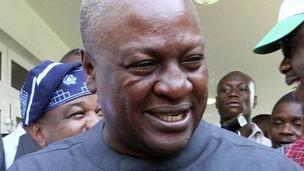
 President John Dramani Mahama has called for the removal of bottlenecks militating against the integration process in Africa.
Inaugurating the Centre for Regional Integration in Africa (CRIA) in Accra yesterday, President Mahama lamented that although member countries had signed several protocols for the free movement of people and goods across borders, the situation had not improved.
He, therefore, stressed the need for African leaders to show commitment to the integration process by educating the people manning the borders on the guidelines for the movement of Africans across borders.
The CRIA is a non-governmental centre for research, training, consultancy and advisory services. It also seeks to provide institutionalised support at policy, technical and intellectual levels.
President Mahama said the challenge of integration in the past had been how to bring democratic leaders and dictators together.
He said Africa had made a lot of progress now with many countries holding elections and governed by constitution.
Besides, he said, many African nations were recording a growth rate of about six per cent and achieving the Millennium Development Goals (MDGs).
President Mahama said the integration process would speed up the growth rate of African countries and facilitate the achievement of the MDGs.
"Integration will speed up the growth and move people out of poverty," he said.
The President said there was no disagreement among African leaders about the integration process and its viability.
He said the strategy now was about how to achieve the integration process from the level of regional economic groupings.
The President said Ghana had a choice for the integration through the efforts of Dr Kwame Nkrumah to the liberation of Africa.
Besides, he said, Ghana's Constitution had stipulated that Ghana would automatically become part of any integration process in Africa.
In his remarks, the Executive Director of CRIA, Prof S.K.B. Asante, expressed worry that West African regional groupings such as the Economic Community of West African States (ECOWAS) had not succeeded in achieving economic integration.
As a result, he said, the sub-region continued to export raw products and import finished and used products from Europe and other parts of the world.
Prof Asante attributed the challenge to weak institutional capacity at the sub-regional and regional levels.
He, therefore, proposed initiating systematic programmes for capacity building for staff of regional groupings.
A Member of the Board of Trustees of CRIA, Dr Mrs Mary Chinery-Hesse, said African leaders had failed to achieve the integration process, and asked the whole of Africa to embrace the process.
Dr Kwadwo Busia of the United Nations Economic Commission on Africa, who chaired the function, said there was no urgent agenda in Africa than to work to realise regional integration.
By Musah Yahaya Jafaru & Ruby Efe Ani-Adjei
