
The Director of National Counter Terrorism Fusion Centre, Major General Timothy Ba-Taa-Banah, has disclosed that more than 8,000 people have been killed in over 2,000 terrorist attacks across the Sahel this year.
The figures represent a 14 per cent increase in fatalities compared with the same period last year.
The data means an average of about 45 people lose their lives to terrorism every day within the subregion.
“Between 2015 and 2025, nearly 99,000 people were killed in more than 23,000 terrorist attacks across the Sahel, making West Africa the epicentre of terrorism on the continent,” Major General Ba-Taa-Banah said.
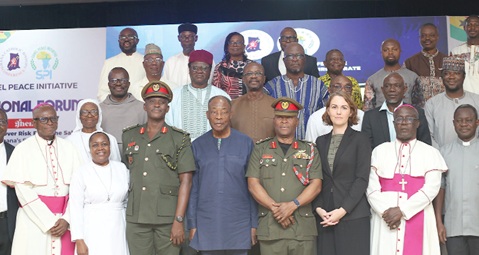
He disclosed this at the Sahel Peace Initiative (SPI) National Forum in Accra last Thursday, held on the theme: “The Spill-Over Risk from the Sahel: Assessing Ghana’s Security Preparedness and Early Warning System”.
Terrorism in West Africa
Major General Ba-Taa-Banah said terrorism in the subregion had evolved from isolated attacks into coordinated operations by groups that were increasingly using technology, artificial intelligence and financial networks to expand their activities.
He said the threat had moved beyond attacks on individuals to targeting economies, governance systems, education, healthcare and public confidence in state institutions.
“The threat is not just about killing human beings. If it were only human lives, we may not have to worry and invest so much. The nature of the threat requires that we do more than the states are willing to do or the security forces are able to do,” he said.
See something, say something
Major General Ba-Taa-Banah said Ghana had developed a National Counter Terrorism Strategy in 2016, which adopted an all-of-society approach instead of relying only on security and law enforcement agencies.
He said the strategy combined security operations with community engagement, intelligence sharing, public awareness and cooperation from traditional and religious leaders.
Major General Ba-Taa-Banah renewed calls for citizens to support the “See Something, Say Something” campaign by reporting suspicious activities and safety concerns within their communities.
He explained that the campaign was not limited to identifying suspected terrorists but included reporting issues that threatened public safety and community wellbeing.
He urged citizens to report domestic violence, community threats and other forms of danger to the appropriate authorities.
The Director of the National Counter Terrorism Fusion Centre also stressed the need for security agencies to respect human rights and the rule of law while responding to terrorism.
He cautioned against the misuse of anti-terrorism laws, and warned that language that promoted discrimination and division could weaken social cohesion.
Conflict in northern Ghana
The Chief of Defence Intelligence, Major General Stephen Woseadzikpo Kweku Parbey, also warned that internal conflicts in parts of northern Ghana could create opportunities for terrorist groups to exploit vulnerabilities in communities.
He said violent clashes, killings and destruction of property in areas such as Sampa and Nkwanta could weaken social structures and create conditions that extremist groups could take advantage of.
He said conflicts in the north had consequences for the entire country, especially because many food items consumed in the country were produced in those areas.
He also urged Ghanaians to be cautious of activities and individuals entering their communities, saying security threats could emerge through ordinary daily interactions.
Major General Parbey cautioned against allowing unknown individuals access to homes and communities under the guise of collecting scrap materials or seeking assistance.
“We have become very reckless when it comes to what is happening in our communities across the length and breadth of this country.
We readily and happily invite people into our homes to come and pick scraps.
Those people picking scraps, where do you know them from?” he questioned.
He urged citizens to be more observant of unfamiliar activities and report concerns to community leaders, security agencies, religious leaders and other trusted authorities.
