
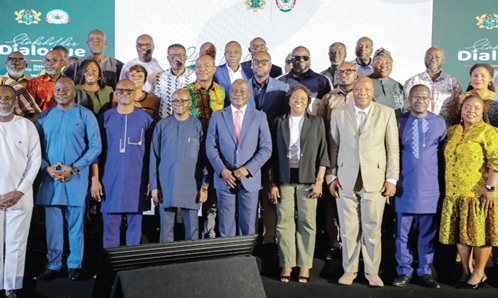
Stakeholders in the sanitation sector have called for the establishment of a National Sanitation Fund to ensure structured and sustainable financing for waste management in the country.
They also called on the government to sustain the Sanitation and Pollution levy, while providing tax waivers for imported sanitation equipment.
The stakeholders made the call during a stakeholder dialogue on landfill operations and sustainable solid waste management in Accra on the theme, “Alleviating Waste Disposal Crisis in the Greater Accra Metropolitan Area”.
The meeting brought together government officials, Metropolitan, Municipal and District Chief Executives (MMDCEs), sanitation experts and private sector operators.
Solid waste
The Minister of Local Government, Chieftaincy and Religious Affairs, Ahmed Ibrahim, pointed out the rapid population growth and the increase in solid waste generation in the Greater Accra Metropolitan Area (GAMA), stating that current daily solid waste generation was approximately 4,400 tonnes, representing about 1.6 million tonnes annually, with an average collection rate of 80 per cent.
He said projections had revealed that waste generation in the GAMA would increase to about 5,186 tonnes daily by 2036, representing nearly 1.9 million tonnes annually.
He said although progress had been made in promoting recycling initiatives and sanitation infrastructure, waste disposal and treatment remained the weakest link in the entire waste management value chain.
Mr Ibrahim indicated that the ministry was in discussion with the Ministry of Finance to develop practical financing solutions to support sanitation infrastructure and the operation and maintenance of existing facilities.
He called for stronger collaboration, regular information sharing and enhanced accountability mechanisms among stakeholders to improve service delivery.
MMDAs Visit
Meanwhile, Mr Ibrahim announced that his ministry would intensify monitoring of sanitation performance across the country and would hold local authorities accountable for their responsibilities.
“From tomorrow, we will be moving from district to district, one year after the John Mahama administration, you will account for what you have done on sanitation,’ he said.
Investment
The Executive Chairman of the Jospong Group of Companies and President of the Environmental Service Providers Association (ESPA), Joseph Siaw Agyepong, called for increased investment in the country’s waste management sector.
He said the global waste management industry was currently valued at about $1.6 trillion and was projected to grow to $2.5 trillion by 2030.
Unlike finite resources such as oil and gold, he said, waste generation continued to increase, making the sector a sustainable source of economic value.
Mr Agyepong stressed that waste management should be viewed as a public good requiring sustainable government financing, as cleaner communities improve public health, productivity and overall national development.
He said despite challenges, the country was seen as a leader in environmental sanitation technology across Africa, with the country boasting more than 50 waste treatment and composting facilities.
Landfill sites
Mr Agyepong stated that reliance on landfills was not a sustainable solution to the country’s waste disposal challenges, stating that 17 landfill sites across the country had limited lifespans, lasting between one and 10 years before they became unusable.
He said composting and recycling were the most suitable waste management options, as about 62 per cent of Africa’s waste was organic.
The president of ESPA also defended charges imposed by environmental service providers, stressing that the country’s waste management fees were among the lowest in West Africa.
He said while the World Bank recommended charges of between $20 and $50 per household in low-and middle-income countries, the highest fee charged in the country was about $18.
The Vice Dean of MMDCEs and Municipal Chief Executive for Ayawaso West, Dr Michael Mensah, expressed the commitment of MMDCEs to tackle waste management challenges, improve sanitation and protect communities.
In a speech read on her behalf, the Greater Accra Regional Minister, Linda Ocloo, also called for coordinated and sustainable interventions to protect public health, preservation of the environment and improvement in livelihoods.
