
Parliament has approved a $300 million credit facility agreement to finance the Secondary Education Transformation for Access, Relevance and Results for Jobs (STARR-J) project.
The facility aims to increase equitable access to secondary education and ensure adequate investment in school infrastructure to eliminate the double-track system.
The facility is an agreement between the Government of Ghana and the International Development Association (IDA) of the World Bank Group to improve teaching quality and workforce readiness.
Upgrade of schools
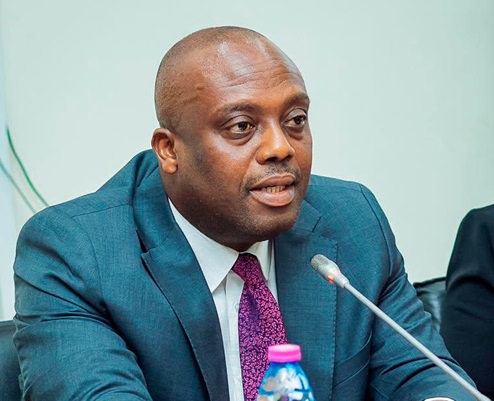
Justifying the loan in the House, the Deputy Minister of Finance, Thomas Nyarko Ampem, expressed satisfaction that both sides of the House were supporting the motion for the country to access the facility to improve secondary education.
He said the loan would be used to establish 10 “new, virgin” secondary schools, with each school having classroom blocks, dormitories for boys and girls, an assembly and dining hall complex, and accommodation for teachers on campus.
Each of the schools, he said, would also have bungalows for headmasters and headmistresses, health posts and sick bays, and science laboratories that would make them a standard for quality education.
He pointed out that due to poor infrastructure in most second cycle schools, many parents desired that their children went to Category “A” schools, which had limited space to absorb many students.
“As part of this, we are going to upgrade 20 Category B schools into Category A schools, and we are also upgrading 30 Category C schools into Category B schools so that we will be able to get a lot more students into some of these important schools,” he said.
Real infrastructure works
Acknowledging that it was not the first time Ghana had taken a loan from the World Bank, Mr Ampem described the terms of the facility as highly concessional and long-dated, with 30 years and a five--year grace period.
“This is probably the best facility you can get now,” he said, pointing out that $257.7 million, which represented 86 per cent of the $300 million, would be used for what he described as “real infrastructure works and provisions of classrooms and dormitories”.
“This is a sharp contrast to what we used to see when you borrowed these funds, and you used about 50 per cent for consultancy, training and travels.
“This is not happening, and when we say we are spending 86 per cent of this money on school infrastructure,” he said.
The Deputy Finance Minister informed the House that the remaining $20 million would be used to provide furniture and textbooks for every secondary school across the country.
The Minority Leader, Alexander Afenyo-Markin, said it was positive to invest in education to ensure equitable access to quality teaching and learning.
He, however, said the facility vindicated the New Patriotic Party’s commitment to the Free Secondary School Education policy by former President Nana Addo Dankwa Akufo-Addo’s administration.
“The NDC did not believe in the Free SHS policy, and they doubted its success, but if today they have come and think that it is a good policy, we welcome it. Because we already know that Free SHS is good for this country,” he said.
