
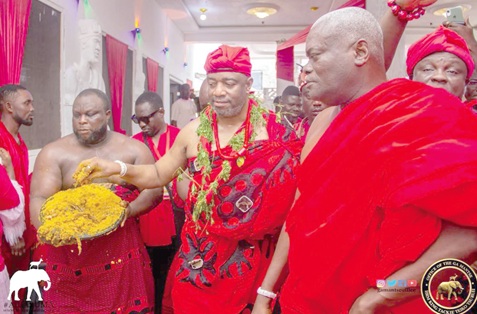
The Ga State kicked off the 200th Homowo festivities at the heart of Accra, last Saturday, as families, individuals and guests joined the traditional rulership to mark one of the enduring traditional celebrations in the country.
Spearheaded by the Ga Mantse, Nii Tackie Teiko Tsuru II, the bi-century Homowo festival was a reminder of a history that continues to live in the heart and spirit of the Ga people.
Two hundred years after the Battle of Katamanso, a triumphant watershed in the life of the people, the festival remains a reminder of the courage, strength and sacrifice of the people’s forebears who stood together in a defining moment of their history.
Their story is not only one of victory, but also one of resilience, unity and the determination to protect the identity and heritage handed down to succeeding generations.
As they marked another sacred time of remembrance, thanksgiving and renewal, honouring ancestors, acknowledging the blessings of the harvest, and giving thanks for life, peace and the strength to overcome adversity, they did so with consciousness about the need for unity.
The drums sounded, the fires were lit and the ancient traditions were observed, reconnecting with the wisdom of those who came before today’s generation.
Through prayers, libations, rituals and the preparation of kpokpoi, the Ga State invoked traditions that continue to attract tourists from around the world.
Nii Tackie Teiko Tsuru led the events by sprinkling the traditional kpokpoi meal at designated clan homes as the people celebrated another year of life.
With a sea of red and black cloths predominant in the Homowo fashion gear, the crowd of youth and adults mixed freely in a lively bridging of the ages.
Preserving culture
The kpokpoi sprinkling event provided an opportunity for traditional leaders and the wider community to come together and observe customs that have been handed down through generations.
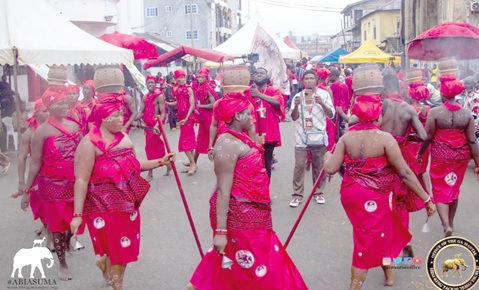
Maidens of the Ga Mantse Palace bearing pots of fire to cleanse the path before Nii Tackie Teiko Tsuru II, the Ga Mantse, walks along it
The ceremony is referred to in the ritual context as akpiti, akpɔtɔ ni ashwa, to wit fetch, mash and sprinkle.
It involves taking the kpokpoi, mixing it with palm-nut soup and sprinkling the mixture as part of the ceremonial observance.
By morning last Saturday, communities across the Ga State were already alive with singing, drumming and jubilation, creating the atmosphere associated with the Homowo celebration.
As custom demands, by afternoon, the Ga Mantse, Nii Tackie Teiko Tsuru, who performed the sacred kpokpoi sprinkling ritual at selected clan houses, was received at a special traditional setting.
History, culture
Homowo, meaning “to hoot at hunger” or “jeer at hunger” in the Ga language, is one of the most vibrant and significant annual festivals of the Ga people.
It commemorates the ancestors’ triumph over a devastating famine during their historical migration and settlement in the area.
After enduring scarcity, the Ga people celebrated bountiful harvest, turning hardship into a lasting tradition of gratitude, abundance, resilience and communal unity.
The ritualistic sprinkling of kpokpoi honours ancestors, appeases the gods, invokes blessings for prosperity, and symbolises sharing abundance while “hooting” at past hunger.
The natives, often dressed in red (the festival’s signature colour symbolising seriousness and vitality), parade through streets and clan houses in Ga Mashie, including areas like Jamestown.
Homowo is also a homecoming. Families prepare kpokpoi together, settle disputes, honour twins (through related pre-festival rites like Yeyeeye/Akwele Suma) and reaffirm identity through song, dance and costume.
Warriors in red regalia highlight resilience, while the sprinkling ritual directly remembers ancestors.
The Ga Mantse leads processions, performs libations, and shares in the communal joy, helping to preserve the customs amid modernisation.
Celebrations draw politicians, tourists, the diaspora, and other ethnic groups, turning Ga Mashie into lively hubs of culture, music and feasting.
Homowo is a powerful expression of living culture, where history meets celebration, and tradition fuels community bonds.
Other activities
This year's observance began last Thursday with the arrival of Soo bii which refers to the return home of family members from various satellite villages on Thursday.
The Soo bii returned to the city carrying foodstuffs for the celebration.
Their first major gathering point was CMB in Accra, where members of the community met the returning relatives and helped to bring the foodstuffs home.
Friday was observed as the Yam Festival, known as Haajii Yɛlɛ Yeli, a celebration for twins throughout the Ga State.
Last Saturday was dedicated to the sprinkling of kpokpoi, which is a particularly important ritual in the Homowo cycle and takes precedence in the traditional observance.
Notable among the attendees were the Obaatan (father and elder of the state) of the Abura Traditional Area in the Central Region, Nana Kwame Tsipo Amanfo VIII, who was the special guest of honour; the Abura Nyinfahene, Nana Budukuma V; the Abura Paramount Queenmother, Naa Otua Osaanii I; Abola Shianye, Naa Wansah Namoale I; Abola Oblayei Amanye, Naa Ayawa Niiatse I, and Abola Dzaasenye, Naa Dedei Ojalawa I.
