
The government generated GH¢57.53 billion in revenue and grants in the first quarter of this year, falling short of its target by 4.51 per cent.
This is against a target of GH¢60.25 billion, representing a shortfall of GH¢2.72 billion, although it was 32.93 per cent higher than the GH¢43.28 billion recorded during the same period last year.
Data sourced from the first-quarter fiscal policy review of the Ministry of Finance showed mixed outcomes for some of the major tax components.
While taxes on income and property exceeded their target by mobilising GH¢24.86 billion against a programmed GH¢24.39 billion, taxes on domestic goods and services underperformed, generating GH¢17.47 billion compared with a target of GH¢20.09 billion.
Similarly, taxes on international trade yielded GH¢6.22 billion, falling short of the projected GH¢7.24 billion.
It was also noteworthy that despite the government failing to secure any grants during the period, the abolished COVID-19 Health Levy still contributed GH¢280.29 million to the revenue basket in the first quarter of 2026.
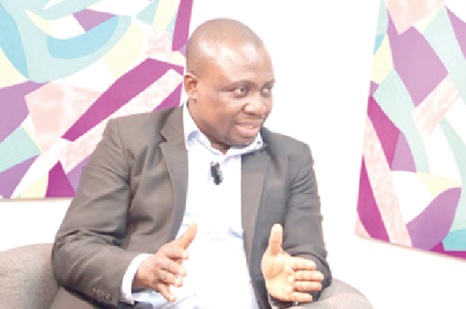
A Senior Tax Partner at PwC, Abeku Gyan-Quansah, in an interview with the Daily Graphic in Accra, stated that the revenue recorded under the abolished COVID-19 Health Levy did not necessarily mean the tax was still being imposed on consumers after its repeal.
“The figure was largely attributable to the time lag between the collection of taxes and their remittance to the government, as well as transitional arrangements contained in the repeal legislation,” he said.
Transition period
Mr Gyan-Quansah explained that taxes due for a particular period were often paid to the state after the period in which they were collected.
He cited the example of Pay-As-You-Earn (PAYE) deductions, which employers remitted to the government after salaries had been paid to workers.
Applying the same principle to the COVID-19 Health Levy, he said purchases made in December 2025 remained subject to the levy because the tax was still in force at the time.
However, he said businesses were allowed until the end of January 2026 to remit those collections to the government.
“If there is anything being reported there, it is being reported because of the time lag between when the taxes were collected and when the monies ought to be remitted to the Government of Ghana,” he said.
Mr Gyan-Quansah stated that some businesses might also have delayed the settlement of outstanding tax obligations, while others might have been slow in reprogramming their invoicing systems following the repeal of the levy.
He added that the repealed law itself contained transition provisions that preserved existing rights, liabilities and obligations until they were fully discharged.
Revenue growth
Commenting on the revenue shortfall recorded in the first quarter, Mr Gyan-Quansah said missing a quarterly target was not unusual and should be viewed within the broader context of revenue performance.
He explained that budget projections were estimates based on assumptions and that actual collections could vary depending on economic conditions and taxpayer behaviour.
Rather than focusing solely on the GH¢2.72 billion shortfall, he said policymakers should pay closer attention to the strong year-on-year growth in revenue mobilisation.
He said the increase from GH¢43.28 billion in the first quarter of 2025 to GH¢57.53 billion in the corresponding period of 2026 demonstrated significant progress in domestic revenue generation.
He stressed that the growth was particularly encouraging because inflation had moderated considerably during the period.
He added that the increase reflected genuine expansion in revenue rather than merely inflation-driven gains.
Sustaining momentum
On measures needed to sustain revenue growth, Mr Gyan-Quansah argued that increasing tax rates should not be the primary strategy.
He cautioned that higher taxes could encourage evasion and reduce compliance.
Instead, he advocated the effective implementation of reforms already outlined in the national budget, including the use of technology to improve tax administration and stronger taxpayer education.
He stressed the need for a more customer-friendly approach by the Ghana Revenue Authority, saying taxpayers were more likely to comply voluntarily when they felt respected and well-informed.
He said citizens needed confidence that tax revenues were being used prudently and for their intended purposes.
Touching on the recent VAT reforms, he said the new framework had simplified Ghana’s tax system and made it easier for businesses and consumers to calculate their tax liabilities.
