
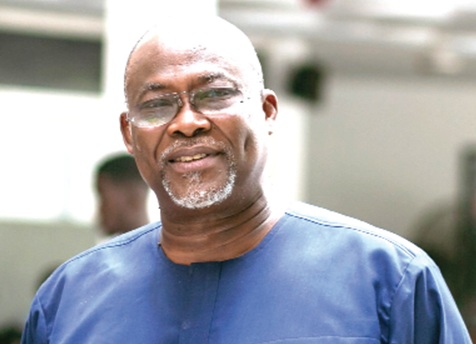
Ghana’s Presidential Special Envoy for Reparations, Ekwow Spio-Garbrah, has said the country has begun positioning reparations as a wider economic and financial issue, with discussions extending beyond direct monetary compensation to restitution, development financing and the role of institutions that benefited from the transatlantic slave trade.
In an interview with the Daily Graphic last Wednesday, he disclosed that Ghana’s approach had been shaped by President John Dramani Mahama’s role as the African Union’s Champion for Reparations, and his decision to take the issue to the United Nations, where Ghana had helped advance an international resolution on reparatory justice.
Mr Spio-Garbrah’s appointment as Special Envoy had provided a dedicated presidential platform for coordinating Ghana’s work on the issue.
According to him, the economic dimension of reparations was becoming an important area of work, particularly as discussions moved towards what he described as “reparations financing”, involving questions of banking, lending, investment and development support.
Financing
Mr Spio-Garbrah said he and officials from his office had attended the IMF and World Bank Spring Meetings to engage with stakeholders and examine the financial dimensions of the reparations agenda.
“We are beginning to look at reparations financing as a field of economics and banking, because the issue is not limited to a payment of money. It involves how financial systems can support repair and development,” he said.
He said Ghana had also participated in international engagements in the Caribbean and Latin America as part of efforts to build cooperation around reparations.
Those engagements had included discussions with countries and organisations dealing with the historical consequences of slavery and colonial exploitation.
The Special Envoy said Ghana had deliberately avoided presenting financial compensation as the sole objective of its campaign.
He said reparations could take several forms, including restitution of stolen cultural property, development support, debt-related measures and other forms of economic repair.
Restitution
He said the return of African artefacts held in foreign museums had also become an important part of Ghana’s reparations discussions.
He cited information from a museum in the Netherlands which had identified more than 1,200 artefacts taken from Ghana.
He said the figure demonstrated the scale of the restitution issue and the potential need for investment in museums and conservation facilities if more artefacts were returned.
Mr Spio-Garbrah said Ghana was expected to participate in a proposed side event at the United Nations General Assembly this month, where restitution was expected to feature prominently.
Wider obligations
The Special Envoy said the reparations debate could not be restricted to governments because businesses, financial institutions, insurance companies, universities and religious organisations had also been involved in systems that supported slavery and the slave trade.
He cited the involvement of shipping businesses and insurers in the historical trade and said those institutions could form part of future research into the economic dimensions of reparations.
He said the African Union had designated a 10-year period for reparations, providing time for governments and other stakeholders to examine the historical, legal, economic and social dimensions of the issue.
Ghana’s role had followed former President Nana Addo Dankwa Akufo-Addo’s appointment as the African Union’s Champion for Reparations, with President Mahama subsequently taking up the responsibility after assuming office. The appointment of a Presidential Special Envoy had since given Ghana a specific institutional structure for advancing the agenda.
Mr Spio-Garbrah said the process was expected to involve extensive research and negotiations because different countries and institutions had different positions on the reparations question.
