
The Ministry for Gender, Children and Social Protection has urged residents of Chorkor to report cases of Gender-Based Violence (GBV) rather than suffer in silence.
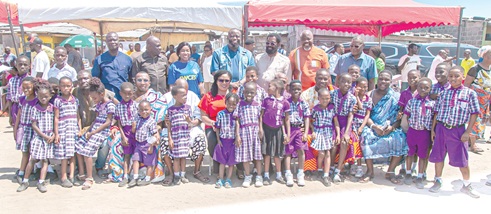
The appeal was made at a community engagement held at Chorkor in the Greater Accra Region as part of the ministry's community dialogue series.
The Greater Accra Regional Director of the Department of Gender, Matilda Banfro, said GBV could take different forms, including physical, emotional, economic and sexual violence, as well as harmful social and cultural practices.
She added that GBV was increasingly showing up in technology-facilitated forms, including blackmail and online harassment and urged victims of all forms of abuse to come forward.
Reporting channels
Ms Banfro said victims could report cases to the Domestic Violence and Victim Support Unit (DOVVSU), visit Orange Support Centres or seek assistance from social workers and psychological support personnel.
She gave the Orange Support Centre's toll-free number as 0800 111 222 and the ministry's lines as 0800 800 800 and 0800 900 900.
She said addressing GBV required the collective efforts of government, local assemblies, traditional and community leaders, civil society organisations and citizens.
Wider concerns
The dialogue brought to the fore several social challenges affecting Chorkor residents, including poverty, teenage pregnancy, drug abuse, school dropout, human trafficking and child labour.
The Gender and Social Protection Minister, Dr Agnes Naa Momo Lartey, said the challenges identified in Chorkor mirrored those raised in earlier dialogues held at Ada, Kuo, Tema East, Bolgatanga and other districts in the Northern Region.
She said community dialogues were not merely platforms for sharing information but also provided opportunities to examine how social protection interventions were being implemented at the local level.
The Head of Human Trafficking/Social Protection, Abena Asare, cautioned parents and guardians against individuals promising children opportunities abroad, particularly through offers of jobs or travel to Libya, Europe and the United States.
She said such arrangements could expose victims to exploitation, forced labour and dangerous journeys across deserts and seas, and urged parents to ensure children remained in school rather than being withdrawn prematurely for unregulated apprenticeship or labour.
The Director for the Department of Children, Christian Mawusi, stressed that school-age children must remain in the classroom.
Community role
The Director of Mental Health, Dr Yaw Arthur, spoke on the psychological impact of exploitation and abuse, urging the community to reduce stigma and make greater use of counselling services.
The Member of Parliament for Ablekuma South, Dr Alfred Okoe Vanderpuije, said the dialogue gave residents an opportunity to raise concerns about social protection implementation and seek solutions with the relevant authorities.
He said communities should be actively involved in social protection efforts rather than treated merely as beneficiaries.
The Chorkor Chief Fisherman, Nii Lantey Wulu I, other traditional and community leaders participated, alongside representatives of the ministry, the NHIA, the Ghana Health Service and civil society groups.
