
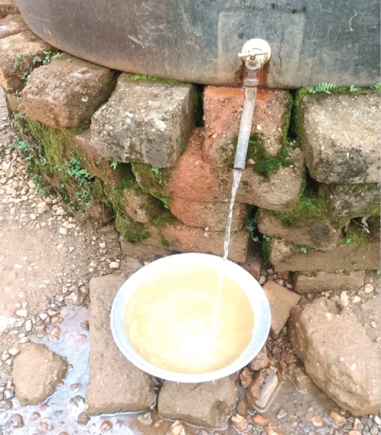
More than 300 people still live in horrible conditions at a relief camp at Appiatse, near Bogoso, in the Prestea Huni Valley Municipality in the Western Region, four years after mining explosives reduced the community to rubble.
Although the government relocated some of the residents who were displaced after the January 20, 2022 explosion back to the reconstructed Appiatse township, the others have been left to their fate.
With Phase Three of the rehabilitation effort in limbo, a good number of the victims still live at the relief camp because of the lack of accommodation in the new town.
With the rainy season at its peak, they are at the mercy of the weather, as some of the roofs leak profusely while the poor drainage infrastructure in the area has left behind stagnant water that breed mosquitoes.
The campers lack access to potable water, compelling them to rely on unclean water for domestic use.
Their plight has been compounded by erratic supply of electricity to the camp, a situation that compels them to sleep in darkness.
A member of the Appiatse Disaster Relief Committee (ADRC), Mary Appiah, told the Daily Graphic that the fate of the affected residents hanged in the balance because dozens of houses that were supposed to be built as part of phase three of the Appiatse Reconstruction project had not been done.
“We still have 58 houses to be built in the phase three of the reconstruction works. =
Some of us live here at the relief camps where we are exposed to harsh weather conditions and water scarcity; our situation is terrible,” she added.
Worrying development
The spokesperson for the Victims of Appiatse Phase Three, Kingsford Philip Amponsah, said it was disappointing that more than four years after the calamity, some of the victims of the disaster had been left to their fate.
“Some of the people are still walking with metals in their bodies; those who lost their family members have not received any sustainable livelihood support; while those who suffered life-threatening injuries have also not received any form of compensation,” he said.
He added that efforts made by the association to know the current state of the local fund set up to support the victims’ livelihood restoration had not yielded any fruits.
Context
On January 20, 2022, explosives on a truck en route to the Chirano Gold Mines in the Western North Region, exploded.
The explosion occurred at Appiatse, which is between Bogoso and Bawdie in the Western Region, killing 16 people and completely destroying the community.
Following that explosion, the government set up the Appiatse Support Fund to mobilise funds for the rebuilding of the community, while the Appiatse Reconstruction Committee was to oversee the reconstruction of the community.
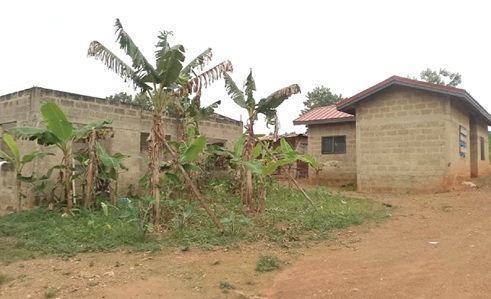
Some of the structures at the Appiatse relief camp
On May 2, 2024, former Vice-President, Dr Mahamudu Bawumia, inaugurated and handed over 124 houses completed under the first phase of the Appiatse Reconstruction project to accommodate about 870 residents of the community.
The first phase of the reconstruction of residential infrastructure and social amenities for the farming community consists of 124 housing units, a kindergarten, a six-unit classroom block with sanitation facilities and the construction of roads within the community.
The housing units, which were constructed within 18 months, were made up of 41 one-bedroom apartments, 35 two-bedrooms, 23 three-bedrooms, 15 four-bedrooms, eight five-bedroom apartments, one six-bedroom and one seven-bedroom apartments.
Phase Two of the project primarily involved rehabilitation of existing buildings impacted partially by the explosion but did not require total reconstruction.
Instead of direct rebuilding by the state, the government provided direct financial disbursements to approximately 50 affected property owners.
These funds were used to undertake individual roofing, plastering, and structural rehabilitation works based on expert valuation.
Phase Three of the project involved the periphery expansion and final resettlement and meant to accommodate the remaining displaced residents and complete the community layout.
This final phase consists of the construction of 69 additional buildings located on the peripheries of the newly constructed Phase One community. It also includes the provision of auxiliary facilities and sanitation facilities to finalise the resettlement of all affected victims.
The Daily Graphic gathered that the Ministry of Lands and Natural Resources has formed a committee for the Appiatse Phase Three Redevelopment Project.
The committee has representatives from the ministry, the Land Use and Spatial Planning Authority (LUSPA), the Lands Commission, the Prestea Huni Valley Municipal Assembly, and opinion leaders at Appiatse.
Sources within the Appiatse community told the Daily Graphic that the committee had a meeting with the beneficiaries of the project last Tuesday to discuss the proposed layout plan and local plan, land use distribution, road network in detail.
Meanwhile, when the Daily Graphic contacted the Prestea Huni-Valley Municipal Chief Executive (MCE), Dr Matthew Kofi Ayeh, he confirmed that last week’s engagement formed part of the government’s ongoing efforts to ensure the successful completion of the Appiatse Reconstruction Project.
He explained that the government was finalising processes to award the project to a contractor following the resolution of all issues regarding the acquisition of land, which delayed the start of the project, have been resolved.
“There was litigation over the parcel of land that was going to be used for Phase Three of the project as some chiefs said the previous administration did not give them anything for the land.
These issues have been resolved and I believe that in the coming months, a contract will be awarded for the project to start,” Dr Ayeh said.
He added that after the committee’s engagement, both sides were satisfied on the roadmap.
“When the team from the Lands Ministry came to engage the local people last week, critical issues related to structural integrity of the buildings in phases one and two were raised to be revised in phase three.
The team showed the community members how phase three will look like, and all sides are okay with it,” he said.
Background
The Appiatse Reconstruction Committee set up in the aftermath of the January 20, 2022 explosion contracted LUSPA to prepare a local plan for the reconstruction of the Appiatse community in conformity with the Western Regional Spatial Development Scheme.
The plan was primarily focused on residential development and blended with complementary land uses such as educational, health services, civic and cultural, commercial, open, recreational spaces and light industrial enclaves to keep the area socially and economically sustainable.
The scope of work included the construction of 124 new housing units and the rehabilitation of 416 buildings that suffered various physical and structural damages to give them a new face.
It also made adequate protection for environmentally sensitive areas, while providing 26 green spaces, made up of the Appiatse Disaster Memorial Park, recreational areas, riparian buffers and reserves.
About 13.21km of access roads and 58 road links have been created in the plan as access ways to ensure adequate route options for various modes of transport in the community.
In addition, the right of way for the access roads is expected to accommodate planting areas and utility corridors for electricity, sewage and Information and Communications Technology (ICT) infrastructure.
