
A clinical epidemiologist, Professor Fred Binka, has called for the splitting of the Food and Drugs Authority (FDA) into two separate organisations to handle food and drug regulations.
He explained that food problems in the country were now overwhelming and one organisation could not shoulder both duties adequately and effectively.
He, therefore, called for the training of more bioscientists to, among others, look into the safety of the foods being consumed in the country.
"So, let's think seriously about that. We should be thinking of splitting the FDA.
It can't manage the problems.
We should be looking at the format from the European Union where we have a biofood safety group, and then we have a medicines group,” he explained.
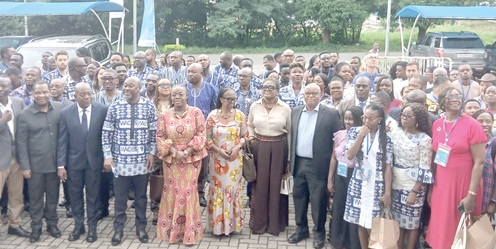
Prof. Binka made the call yesterday at the opening of the 2026 West African Centre for Cell Biology of Infectious Pathogens (WACCBIP) Research Conference ongoing at the University of Ghana (UG).
WACCBIP
WACCBIP is one of Africa’s leading biomedical research centres based at the UG.
The conference, organised each year, has evolved into one of Africa’s most prominent scientific gatherings, convening hundreds of leading scientists, policymakers, students and public health professionals. It is a platform for showcasing cutting-edge biomedical research driven by WACCBIP students and faculty, with high-achieving African scientists delivering keynotes.
This year’s conference, the 10th edition, which is on the theme, “African Bioscience at the interface of health, disease and environment,” explores how science can help solve interconnected challenges involving emerging infectious diseases, climate change, vaccine development, environmental sustainability and biotechnology and innovation.
Prof. Binka, who was delivering the keynote address, said the days when malaria and diarrhoea were problems were gone, but now there were hypertension, diabetes and cancers, all linked to the foods and drugs people were consuming, adding that the country was losing its grip on food.
He said foods that were being developed were seedless, GMO foods with no long-term follow-up on what they pertained to us.
He said bioscientists were those who collected information about what people ate, its effects on the cells, the diseases they had and how they worked, among others, and the country needed a lot of those people doing the basic tests.
Unfortunately, he explained, Ghana did not have many people trained in that area, adding that when it had enough of them, the country could consider splitting the FDA.
He, therefore, called on the research fund that had been established to look at those areas with gaps, no skills nor scientists and channel the fund there.
Later in an interview, he urged the FDA to outsource some of the tests they conduct to institutions such as Noguchi and WACCBIP that have certification to conduct them and use the results.
Studies
The founding Director of WACCBIP, Prof. Gordon Awandare, mentioned some of the significant studies that had been presented at the conference in the past, including the study that revealed that certain genetic mutation was associated with hearing impairment in Ghana; studies about compounds that were derived from plants that showed very high activity against trypanosome and studies that showed evidence of various mutations associated with drug resistance in bacterial infections and in malaria parasites.
The Vice Chancellor of the UG, Prof. Nana Aba Appiah Amfo, said since its establishment, WACCBIP had made remarkable contributions to genomics, infectious disease research, molecular biology, bioinformatics, diagnostics and capacity development across Africa.
Other speakers at the opening include the Provost, College of Basic and Applied Sciences, Prof. Yidana Mark Sandow; the Chair of WACCBIP International Advisory Board, Prof. Kirk Deitsch, and the Head of Programme, GIZ/ PharmaVax, Dr Holger Till.
