
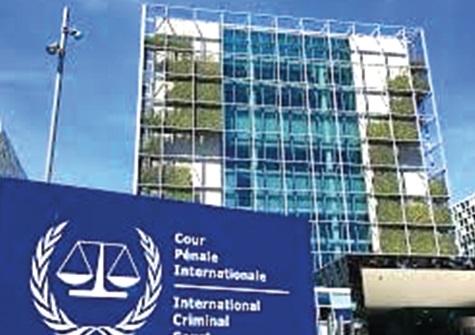
The beginning paragraphs of the opening page on the website of the International Criminal Court (ICC) read: “The Court is participating in a global fight to end impunity, and through international criminal justice, the Court aims to hold those responsible accountable for their crimes and to help prevent these crimes from happening again.
The Court cannot reach these goals alone.”
Unfortunately, the wave of withdrawals from the court in recent times seems to test this statement of the court, which is the world’s only war crimes court.
Burundi was the first country to withdraw from the ICC, leaving officially in 2017 with accusations that the court was biased and unfairly targets African nations.
The Philippines also withdrew, effective in 2019.
Since then, several other countries, including the three Sahelian African countries, have also initiated the move to leave the court.
The latest country to declare its intention to leave is Chad, which last month announced its plans.
Chad’s government claimed the court’s effectiveness was limited and uneven, and condemned its over-concentration on African countries.
Chad’s concerns are similar to those echoed by the three Sahelian states and other countries for leaving the court.
In fact, the three Sahelian states described the court as an instrument of neo-colonialist repression.
"The ICC has proven itself incapable of handling and prosecuting proven war crimes, crimes against humanity, crimes of genocide, and crimes of aggression," the BBC quotes a joint statement issued by the three leaders on their decision to withdraw.
Indeed, the four countries — Chad, Burkina Faso, Mali and Niger — are not the only ones that have spoken of the court’s over-concentration on Africans, many global leaders and institutions having expressed similar concerns in the past.
Accusations
The African Union (AU) has repeatedly accused the ICC of double standards and disproportionate attention to African situations.
In January 2012, the AU said it would oppose “double standards” in ICC investigations and prosecutions.
In 2017, the AU Assembly went further to adopt a non-binding recommendation for a collective withdrawal from the ICC, arguing that the court had unfairly targeted African countries and leaders, and that African sovereignty was being undermined.
In fact, at the 13th AU Summit in Sirte, Libya, in July 2009, the AU decided that its member states should not cooperate in arresting and surrendering then Sudanese President, Omar al-Bashir.
Certain African leaders have also levelled accusations against the court.
Rwandan President, Paul Kagame, is reported by United Nations Africa Renewal Organisation as saying the ICC had been put in place only for African countries, only for poor countries.
“Every year that passes, I am proved right. Rwanda cannot be part of colonialism, slavery and imperialism,” the organisation quoted President Kagame as saying.
Jean Ping, a former Chair of the AU Commission, is also quoted by the United Nations Africa Renewal Organisation in an interview with RFI as saying that “ICC always targets Africans.
Does it mean that you have nothing on Gaza? Does it mean you have nothing on the Caucasus?
Does it mean that you have nothing on the militants in Colombia? There is nothing on Iraq?
We are raising this type of question because we don’t want a double standard”.
Benin’s former President, Thomas Yayi Boni, in 2009 echoed similar sentiments when he was reported to have said they “have a feeling that this court (referring to ICC) is chasing Africa”.
Former AU Chair, Hailemariam Desalegn, in May 2013, is also reported by the Los Angeles Times to have said in May 2013 that ICC prosecutions “have degenerated to some kind of race hunting” against Africans.
More profound is the criticism of Ugandan President Yoweri Museveni, who, in 2013, was also reported by the Los Angeles Times to have said the ICC and Western actors were “using the institution to install leaders of their choice in Africa and eliminate the ones they do not like”.
Whether these accusations against the court are justified or not, the cases the court has handled and the nationalities behind those accused seem to give weight to the accusers’ concerns.
The majority of the people the court has tried were Africans, easily making people jump to that conclusion.
But that is not the essence of this piece.
What this piece tries to highlight are the implications the continuous withdrawal of state parties from the ICC has on the Court.
Implications
One important impact the withdrawals are likely to have on the court is the loss of cooperation.
The ICC, as published on its website, said it did not have its own police force or enforcement body; thus, it relies on cooperation with countries worldwide for support, particularly for making arrests, transferring arrested persons to the ICC detention centre in The Hague, freezing suspects’ assets, and enforcing sentences.
By withdrawing, a departing state may not be obliged to cooperate for new matters.
This can, therefore, make investigations and arrests substantially difficult for the court.
Another impact the withdrawal is likely to have on the court is loss of jurisdiction over future crimes connected to that particular state.
After withdrawal becomes effective, should the withdrawn state go back to these international crimes, they cannot be prosecuted by the court because it does not have jurisdiction over it.
Meaning, victims would be left dependent on national systems that may be unwilling, under-resourced or complicit, or on ad hoc international responses that are far less predictable.
It is important to explain that withdrawal is not immediate. Under Article 127 of the Rome Statute that established the court, a state must notify the UN Secretary-General, while withdrawal normally takes effect one year after notification.
So, in the case of Chad, if it does not change its mind, then the withdrawal will become effective next year.
Again, withdrawal does not remove the court’s jurisdiction over crimes committed while the state is bound by the Rome Statute, and withdrawal does not discharge outstanding obligations arising during membership, including financial obligations and relevant cooperation duties.
There is also a risk of contagion.
One government's exit, often justified by appeals to sovereignty or claims that the court acts politically, can embolden others to reconsider their own membership, even where the legal consequences of any single withdrawal remain limited.
Fewer states also means a smaller Assembly of States Parties, diminishing the pool of political and institutional backing the court can draw on, and a gradually narrower base of the assessed contributions that fund its work, even though departing states remain liable for obligations accrued during their membership.
Again, if states increasingly choose national courts, regional courts or ad hoc mechanisms instead of the ICC, there is likely to be inconsistency in how genocides, crimes against humanity, war crimes, among others, are prosecuted.
Due to the above implications and others, it is important that the court does an introspection of itself and correct those wrong impressions about itself.
This is not the time for the court to lose its significance.
With many wars going on now globally, there are bound to be crimes committed against humanity, genocides and war crimes, and the world, especially victims of these crimes, need justice.
The ICC is obviously the right place to seek justice, as national ones are often aligned. It must, therefore, make itself relevant so as not to lose more state parties leaving the court.
