
Every year on June 7, Ghana observes African Border Day (ABD). The day is commemorated to raise awareness on eliminating all sources of conflicts along international borders.
For many, the day passes unnoticed. There are no parades, no public holidays. But for the farmer in Hamile, Pusiga, and Aflao, whose farm straddles an unclear boundary, for the trader in Elubo who faces harassment at unofficial crossings, and for the immigration officer patrolling a porous frontier, ABD is about security, livelihood, and peace.
This year’s national commemoration will take place in the Upper East Region under the theme- "Strengthening Human Security along Border Communities between Ghana and Burkina Faso through Sustainable Water Access.”
This is a reminder that well-managed borders are not lines on a map. They are about people, safety, and shared resources.
What is African Border Day?
The African Border Day was adopted by the African Union Border Programme (AUBP). The day is commemorated every year on June 7 to promote an integrated, peaceful and well managed borders across Africa.
The idea is to harmonize the 55 African countries that share over 100,000 km of borders, most of which were inherited from colonial agreements.
Many of these borders remain unclearly defined. Unclear borders spark conflicts, give rise to trafficking, smuggling, among communities that feel caught between two countries.
The day, therefore, seeks to raise awareness, share progress on boundary work, and promote the AU vision of “Borders as Bridges, not Barriers.”
For us at the Ghana Boundary Commission (GhBC), it is an opportunity to explain what we do and why it matters to daily life in border districts.
This Year’s theme
The 2026 theme focuses on the Ghana-Burkina Faso boundary, where water access is both a daily need and a source of tension.
In parts of the Upper East and West, communities on both sides share boreholes, rivers and dugouts. During the dry season, competition for water can result in dispute.
When the boundary is unclear, it is difficult to determine which district is responsible for maintaining a water point or mediating access disputes.
Demarcation and joint water resource management change that. They allow Ghana and Burkina Faso to plan together so that a borehole or dam serves both communities without becoming a flashpoint.
This cooperation is what it means to “strengthen human security.” It is not just about preventing violence. It is about ensuring that people in border communities have safe access to water, markets, and public services, regardless of which side of the line they live on.
Land and maritime boundaries
A country’s boundary is more than a line. It defines where Ghana’s laws apply, where public services are delivered, and where communities can live and work without fear of dispute.
Land boundaries secure livelihoods and peace.
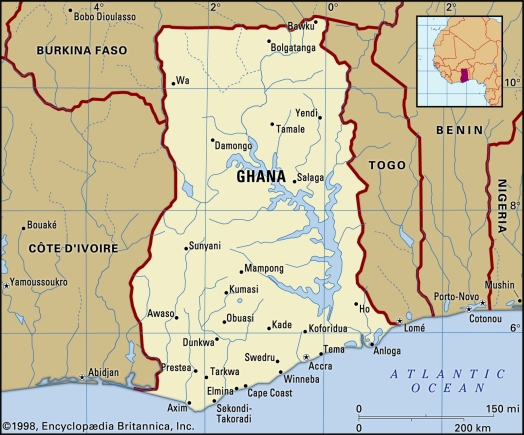
Ghana shares 2,094 km of land boundary with Côte d’Ivoire, Togo, and Burkina Faso. In the Upper East, Upper West, Oti, and Volta regions, communities live and farm right up to these lines.
When the boundary is unclear, it sparks disputes over farmland, grazing routes, and water points, and turns neighbours into rivals.
When it’s well defined, it tells a farmer in Pusiga exactly where Ghana ends and Togo begins. It allows district assemblies to plan schools, clinics, and roads without overstepping into another country. It also helps security agencies respond faster when they know their jurisdiction.
On the maritime front, Ghana occupies a strategic position in the Gulf of Guinea and shares maritime boundaries with Côte d’Ivoire and Togo.
With an Exclusive Economic Zone of approximately 225,000 square kilometres, Ghana's maritime domain is an important component of the wider Gulf of Guinea region, linking our interests with those of neighbouring coastal States, including Benin and Nigeria, in promoting maritime security, sustainable resource management, and regional cooperation.
A clearly defined maritime boundary is critical to safeguarding Ghana's national interests at sea. It promotes peaceful relations with neighbouring States, protects Ghanaian fisherfolk from inadvertently crossing into foreign waters, and provides the legal certainty needed to attract investment in the blue economy.
Clear maritime limits also enable the effective management and protection of marine resources. In contrast, the absence of clearly defined maritime boundaries can create uncertainty, give rise to competing claims, and expose valuable maritime resources to dispute and unsustainable exploitation.
Both land and maritime boundaries are therefore foundations for trade, investment, and security. They are tools for national development.
Role of GhBC
The Ghana Boundary Commission is the guardian of the line and the partner of the people. The Commission’s mandate under Act 1123 authorises the Commission to demarcate, delimit, reaffirm, and maintain Ghana’s land and maritime boundaries through technical, peaceful, and consultative processes.
However, our role is often confused with that of our partner agencies such as the Ghana Armed Forces (GAF), Ghana Immigration Service (GIS), Lands Commission, etc. We do not give land titles. We do not patrol borders or arrest people.
What the GhBC Does
We determine and demarcate the international land boundaries of Ghana and delimit the maritime and airspace boundaries in accordance with accepted principles of international law, and to secure and protect the interests of Ghana.
We do this by negotiating with neighbouring countries concerning a boundary between Ghana and that country or advising the government on the most appropriate strategy for the negotiation of an international boundary.
We engage border communities. No boundary is sustainable without local ownership. Our teams hold consultations with chiefs, assembly members, and residents before and during demarcation. We explain the process, listen to concerns, and document community input.
We support human security and regional integration. A well-defined border makes it easier to manage water resources, control disease spread, and coordinate security responses. They also enable safer cross-border trade under the ECOWAS free movement protocol.
What you should know
As we mark African Border Day, here are a few things every Ghanaian should understand:
Clear boundaries reduce disputes, make trade safer, and help security agencies respond faster.
The Commission works with partners including traditional authorities, district assemblies, security agencies, and our neighbour countries.
Communities are consulted at every stage. You have a role in the consultation process. Share your local knowledge when invited, and report encroachment or disputes to your assembly or the commission.
The Ghana Boundary Commission will use this year’s commemoration to commission two boreholes in the Paga and Sapelliga District in the Upper East Region, hold community durbars, health screening exercises, and sensitize the local communities on boundary awareness. Our goal is to make the border a zone of opportunity, not conflict.
Well-managed borders are quiet. By investing in demarcation, community engagement, and shared resource management, Ghana is building a border that protects its people and promotes peace.
The writer is with the Corporate Affairs Unit, Ghana Boundary Commission
