
“If the walls hadn’t cracked, scorpions wouldn’t have entered.”
A debate over Justice Amadu Tanko’s Supreme Court vetting comments in 2020 on hijab and inheritance exposed a painful truth: the Muslim/Zongo community is speaking with many voices, and not all of them represent us well.
While some criticised the Judge, others defended him poorly, and a few used the moment to grandstand. The real issue, however, is not one man’s answer. It is who we have allowed to become our mouthpiece.
From centres of knowledge to centres of noise
Zongos are settlements across West Africa populated largely by migrants from the Sahel Northern Nigeria, Niger, Mali, and Burkina Faso. The word Zongo comes from the Hausa Zango, meaning “settlement of traders.”
Historically, Zongos were respected for three things: knowledge, trade, and piety. Leadership was earned. It rested with scholars, the elderly, and men of God people like Sheikh Ibrahim Niasse, Sheikh Abubakar Gumi, and today, His Eminence Dr. Sheikh Osman Nuhu Sharubutu, the National Chief Imam, Ghana.
The old norm was clear: to lead, you had to be grounded in the Qur’an and Hadith. Secular education was viewed with suspicion, for fear it would weaken faith. That fear is gone. Today, Zongos produce medical doctors, lawyers, engineers, and professors. This should have been our golden moment to hand leadership to a new, educated, and principled elite. Instead, we did the opposite.
The rise of the “Agbada/Alhajis Group”
In many Zongos today, leadership is no longer about knowledge. It is about appearance. Wear a big designer agbada, a long cap, and call yourself “Alhaji,” and you are automatically qualified to speak for the community whether you can read the Qur’an or not, whether you have any formal education or not. The consequence is dire. In some communities, leadership positions are occupied by illiterates, fraudsters, drug peddlers, and land guards. The “Agbada Group” now controls community decisions, represents us on radio and TV, and even stands in the front rows of the mosque positions the Sunnah reserves for those who can correct the Imam if he errs.
They talk blindly. They sideline professionals. And they parade themselves as representatives of the entire Muslim community at national functions.
The cost of unqualified spokespersons
This crisis plays out daily in our media space. Producers rarely ask, “Is this person qualified?” The only qualification is visibility and an agbada.
We saw this in a 2020 Daily Guide article titled “Radical Muslim Cleric Incites Youth in Kumasi.” A self-styled media personality made sweeping, unverified claims linking respected Ghanaian scholars to foreign extremist figures, with no dates, no evidence, and no authority.
At a time when Muslims globally are under scrutiny, such reckless commentary damages our image and gives our critics ammunition. It is historical bankruptcy.
What we can learn
Compare this with our Christian brothers. Despite theological differences, they have the Christian Council of Ghana a body of professors, bishops, and PhD holders who resolve differences internally and speak with one voice. They advocate on health, education, and women’s empowerment. They commission research. When they announce that Christians are 71.2% of Ghanaians, we cannot challenge it because the people leading us cannot even interpret the census data. Meanwhile, we continue to insult, ignore, and push our own intellectuals to the background.
The way out
The Zongo must return to merit. Four things must happen urgently:
1. Restore the standard for leadership
Leadership must be based on Islamic knowledge, secular competence, integrity, and service not cloth and titles.
2. Form a United Zongo/Muslim Council
We need a credible council of scholars, professionals, and chiefs to speak for us, mediate disputes, and engage government just like the Christian Council.
3. Professionalise our public voice
Train Zongo communicators. Media houses must verify who they platform. No more giving microphones to anyone in an agbada.
4. Empower the educated
Doctors, lawyers, academics, and youth must be deliberately brought into Zongo governance, education, and advocacy. They are our future.
Conclusion
Zongos were once known for wisdom and trust. Today the walls have cracked. If we do not repair them, the scorpions will take over completely. The Qur’an commands: “Ask the people of knowledge if you do not know” [16:43]. It is time we returned leadership to the people of knowledge.
Our children deserve schools, clinics, and leaders they can be proud of not just loud voices in expensive clothes.
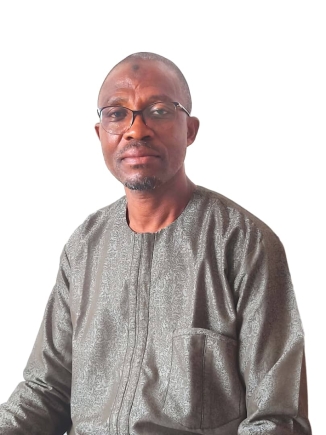
Author: Mohammed Nnabaale Iddrisu
Management Consultant (Nabson Consult Ltd)
Email:
Accra
