
The role of the military in African states has evolved significantly beyond its traditional responsibility of defending national sovereignty and territorial integrity.
This paper examines the changing dynamics of military engagement in peace and security through the theoretical lenses of Realism, Security Sector Reform (SSR), Human Security, and Civil-Military Relations.
It analyses the historical development of African militaries and their traditional functions, while highlighting their expanding contributions to international peace operations, socio-economic development, and capacity building through specialised centres of excellence.
The study further explores the growing involvement of military officers in civilian leadership and diplomatic roles, as well as emerging responsibilities in cyber security, intelligence, and technological defence.
The paper argues that contemporary African militaries have become multifaceted institutions that contribute to security, governance, and development.
However, these expanded roles require strengthened democratic oversight, professionalism, and accountability to prevent undue military influence in governance.
The paper concludes that comprehensive reforms aimed at enhancing operational effectiveness, civil-military cooperation, and institutional adaptability are essential for enabling African militaries to respond effectively to contemporary and emerging security challenges while supporting sustainable peace and development.
Introduction
In most African states, the function of the military has evolved beyond the traditional task of defending national territories and securing governments from internal threats.
The current security situation in African states involves challenges such as civil unrest, terrorism, ineffective governance, climate change effects, and susceptibility to cyberattacks.
Therefore, multifunctional military activities are required, including peace operations and assisting in governance, economic and social development, capacity building, and cybersecurity.
Thus, the military remains an integral part of the larger peace and security system of the continent.
Traditionally, African military organizations were focused on security of the state, largely inspired by the practices of colonial counterparts.
In the post–Cold War era, however, the prevalence of civil wars and complex humanitarian emergencies necessitated a shift from conventional defence to participation in international and regional peace operations.
Under United Nations, African Union, and regional mandates, African militaries engage in multidimensional tasks, including disarmament, demobilization and reintegration, security sector reform, protection of civilians, human rights monitoring, and electoral assistance.
These developments suggest a basic change in the foundation of military roles, from coercion to stabilization and peacebuilding.
Beyond traditional peace support operations, African militaries have gradually taken on non-traditional socio-economic roles, including infrastructure development, disaster management, food and water security, and participation in industrial production.
In certain democracies, military officers are appointed to assume civilian state roles or as ambassadors.
The simultaneous creation of the Military Affiliated Centres of Excellence in Ghana, Mali, Nigeria, Kenya, and Egypt, has enabled African militaries to emerge as the main actors in the process of the professionalization and capacity building of military, police, and civilian actors.
In the modern security environment, the military role has adapted to meet the growing challenges posed by cyber threats and technological developments.
This paper examines various dimensions of the role of the military in peacebuilding and security in Africa.
The paper employs the integrated theoretical model to address the issue.
The model consists of four major concepts: realism, human security, civil-military relationship, and security sector reform.
Realism emphasizes the role of the military in enhancing the sovereignty and security of the state.
Human security involves the physical security and the economy of persons.
Civilian-military relations and the security sector reform models are some of the key mechanisms that are employed to analyze the institution of governance involved in military undertakings.
The efficacy and the legitimacy of military operations is tied to institutional changes.
By applying the integrated theoretical model to the study of the role of the military in Africa, the discussion contributes to the prevailing discourse on security transformation and the possible configuration of the role of the military.
Theoretical Framework: The Evolving Role of the Military in African
Understanding the role of the military in African states can be done effectively only by applying an eclectic theory that combines aspects of Realism, Human Security, Civil-Military Relations (CMR), and Security Sector Reform (SSR).
Through this combination, a holistic view emerges about the traditional role of the military regarding protection and peacekeeping operations and the change in socio-economic roles, clearly distinguishing where the lines separate parts of the eclectic theory.
Realism remains the main theory for assessing the traditional role of the military.
[i] Under the realist paradigm, the military serves primarily as a means for ensuring the survival of the state and deterring any perceived danger. In the African context, the framework remains pertinent since many countries have been operating in a complex security environment characterized by porous borders, weak institutions, and the possibility of interstate tensions. National armies continue to play a major role in border security, insurgency control, and management of security issues, thus, emphasizing the relevance of the imperative of state survival.
[ii] Therefore, realism explains why the military remains an important component of national defence and acts as the protector of state sovereignty. Nevertheless, addressing contemporary African security challenges demands a different theoretical framework. In this regard, the concept of human security provides an extensive basis for analysing the issue of security by emphasizing the protection of individuals against numerous security threats, such as terrorism, crime, environmental factors, and humanitarian challenges.
[iii] This perspective is relevant to understanding the role of the military in international and regional peace operations, such as those deployed by the United Nations and the African Union. In terms of practice, such roles imply broadening the responsibility of the military to include the protection of people from these threats, conflict stabilization, and disaster relief activities, all of which indicate the multi-faceted nature of the challenge of security. With the help of the ideas inherent to human security, analysis of how militaries combine traditional and emerging tasks of protecting society is enhanced.
[i] Buzan, B., & Waever, O. (2003). Regions and powers: The structure of international security. Cambridge University Press. / Claude, I. L. (1984). Swords into ploughshares: The problems and progress of international organization. Random House.
[ii] Ebo, A. (2005). The military and African democracies. Lynne Rienner Publishers.
[iii] United Nations Development Programme (UNDP). (1994). Human development report 1994: New dimensions of human security. Oxford University Press./ Cooper, N., & Fleisher, C. S. (2019). Human security and peacebuilding in Africa. Routledge.
Currently, African armies perform social and economic roles in addition to their traditional tasks. These roles include, seconding military personnel to key posts in civil organizations, building roads, and providing citizens with water. This trend in military operations may be analysed in the context of CMR and SSR frameworks.[i] The SSR framework complements the CMR framework in emphasizing military professionalism, institutional capacity-building, and institutional reorganization to enhance effectiveness in security and non-security situations.[ii] Both frameworks explain the manner through which militaries can contribute to state development without compromising professional ethics.
Nevertheless, these frameworks have limitations when applied. Realism potentially overlooks the security challenges within and outside the armed forces in favor of national power and survival considerations.[iii] On the other hand, the comprehensive Human Security framework may face challenges in implementation, particularly since its scope stretches military forces beyond their limits in non-military activities.[iv] Moreover, CMR and SSR demand that democracy exist in advance; hence, these frameworks cannot be applied in certain African states due to the lack of political will to implement.[v]
However, there is convergence in the theories, creating a holistic approach to analyzing the changing role of armed forces in Africa. The combination of Realism and Human Security offers insights on the dual role of African armed forces: the protection of the nation-state and the provision of human security.[vi] Additionally, CMR and SSR complement each other as far as military professionalism in non-traditional security roles is concerned.[vii] Combining all the theories enhances the understanding of the various dimensions of the role of military involvement in Africa: traditional security functions, peace operations, socio-economic development, and governance fragilities.
In a nutshell, Realism, Human Security, Competing Mandates of Reform, and SSR are comprehensive theories on the changing role of African militaries in peace and security missions. This is because the perspectives provide an understanding of the paradox between the traditional role in defense, the evolving multidimensional role,
Currently, African armies perform social and economic roles in addition to their traditional tasks.
These roles include, seconding military personnel to key posts in civil organizations, building roads, and providing citizens with water.
This trend in military operations may be analysed in the context of CMR and SSR frameworks.
The SSR framework complements the CMR framework in emphasizing military professionalism, institutional capacity-building, and institutional reorganization to enhance effectiveness in security and non-security situations.
Both frameworks explain the manner through which militaries can contribute to state development without compromising professional ethics.
Nevertheless, these frameworks have limitations when applied. Realism potentially overlooks the security challenges within and outside the armed forces in favor of national power and survival considerations.
On the other hand, the comprehensive Human Security framework may face challenges in implementation, particularly since its scope stretches military forces beyond their limits in non-military activities.
Moreover, CMR and SSR demand that democracy exist in advance; hence, these frameworks cannot be applied in certain African states due to the lack of political will to implement.
However, there is convergence in the theories, creating a holistic approach to analyzing the changing role of armed forces in Africa.
The combination of Realism and Human Security offers insights on the dual role of African armed forces: the protection of the nation-state and the provision of human security.
Additionally, CMR and SSR complement each other as far as military professionalism in non-traditional security roles is concerned.
Combining all the theories enhances the understanding of the various dimensions of the role of military involvement in Africa: traditional security functions, peace operations, socio-economic development, and governance fragilities.
In a nutshell, Realism, Human Security, Competing Mandates of Reform, and SSR are comprehensive theories on the changing role of African militaries in peace and security missions.
This is because the perspectives provide an understanding of the paradox between the traditional role in defense, the evolving multidimensional role,
as well as the non-traditional role in governance, while also understanding the constraints inherent in the theories.
Historical Context of the Military in African States
Over the years, the military in African states has been characterized by colonial legacies, state formation in the post-independence period, and security issues in the region.
In the colonial period, armies were mainly employed to support the colonial government, crush local insurrections, and protect economic areas instead of offering full-scale security services.
African nation-states that emerged following independence retained these armies and reformed them to strengthen state power, eliminate domestic dissent, and preserve national cohesion.
In certain cases, the armies were directly involved in state governance, undertaking a coup d'état, or creating an authoritarian political regime, especially in nations with poor institutional structures and weak legitimacy.
After independence, African nation-states were confronted with interstate conflicts.
For instance, the border dispute between Nigeria and Cameroon over the Bakassi Peninsula and the 1998–2000 Eritrea–Ethiopia war represent situations when African armies defend state territories against foreign aggression.
This threat demonstrates the security challenges confronting African nations remain conventional, like those recognized by Realism for securing national territories against potential enemies.
In subsequent decades, however, the nature of threats shifted from traditional interstate threats to emerging issue of intra-state violence caused by ethnic strife, political grievances, and economic deprivation along with the growth of non-state actors.
Thus, the Liberian civil war (1989–1997), along with civil conflicts in South Sudan, the Central African Republic, and Sierra Leone (1991–2002), illustrates the growing tendency of intra-state threat for African armies to counter.
Similarly, in Nigeria, the Boko Haram insurgency in the northeast, armed banditry in the northwest, and violent disputes between farmers and herdsmen in the Middle Belt demonstrate contemporary intra-state threats.
These developments imply the emergence of new threats that require multi-dimensional military response, including terrorism, climate-induced migration, cyber-threats, and pandemics, besides traditional state security issues.
African armies are involved not only in combat missions but also in humanitarian assistance and disaster relief efforts and developmental activities.
Thus, the notion of militarized state-centric security has shifted to human security involving the state and the individual.
These trends underscore the need to combine conventional military capabilities with governance, peacekeeping skills, and civil-military cooperation, all within the frameworks of such modern approaches as Human Security, CMR, and SSR.
In sum, the evolution of African armed forces from colonial domination through post-independence national development, defense against external aggression, and evolving security challenges within the continent reveals a responsive and flexible approach to changing security threats.
Such background is essential for understanding the broader role of the military in the peace and security environment of African states.
Traditional Role of the Military in African State
The armed forces have played a crucial role in sustaining the existence of African states, ensuring internal security, and safeguarding independence.
The armed forces were set up to establish hegemony over the colonies, ensure financial gain, and suppress resistance from the indigenous population.
The post-colonial period witnessed the revival of the military forces in the context of an independent nation, involving dominance and defense against external threats.
In many cases, the military did not only defend the territorial boundaries of the nation but also maintained internal peace amidst political instability, especially in nascent democracies.
From a Realist perspective, the traditional role of the military is framed as the principal instrument for state survival in an anarchic international system.
African militaries have always been tasked with the defense of national boundaries and deterrence from external aggressions.
For instance, the Nigeria-Cameroon conflict over the Bakassi Peninsula and the 1998-2000 Ethiopia-Eritrea conflict demonstrate African military forces are preoccupied with the protection of national sovereignty and interests.
According to realist theories, the emphasis on military capabilities and the traditional role played by armies derives from their main source; at the same time, however, several other roles for the militaries have developed over the years.
Historically, among the security duties of the military organization is the stabilization of the political regime during political instability.
For instance, in Ghana, Nigeria, and Liberia, the military has played a role in maintaining state authority and order.
According to CMR, this aspect of the military shows the importance of effective military function control such that the military does not act arbitrarily.
Simultaneously, SSR focuses on professionalization, institution building, and lawfulness to ensure these functions are effective.
However, unlike in conventional roles wherein the military is only interested in its defense-related activities, certain alternative roles are linked to conventional roles.
Within the scope of Human Security, the military performs its defensive role in ensuring the safety of civilians from threats of insurgencies, bandits, or political clashes.
Human Security is an indicator of modern role-playing of the military.
Overall, the traditional military function in African countries revolves around defending national territory, internal order, and sovereignty.
Realism explains the concerns of the military with external aggressors, while Human Security prescribes the responsibilities of the military regarding civilians. CMR and SSR, in turn, provide for good military sector governance.
Since the 1960 Congo Crisis, the military in African sates has over the time expanded its role to international peace operations. .
Role Of the Military in International Peace Operations
In the past three decades, African armies have increasingly taken part in multidimensional peace missions, thereby highlighting their move in terms of mission mandate from defending the state to undertaking complicated missions with emphasis on the civilian.
The multifaceted peace missions include Disarmament, Demobilization and Reintegration (DDR) of former combatants, SSR, civilian protection, human rights, and electoral assistance.
The UN Mission in Liberia, for instance, deployed soldiers from Ghana, Nigeria, and South Africa to secure post-conflict zones, protecting civilians from fighting groups, assisting in the DDR process, and organizing democratic elections.
Similarly, the African Union Mission in Somalia deployed troops from Kenya, Uganda, and Burundi to fight Al-Shabaab, protecting the lives of civilians, and improving local governance systems, thereby highlighting the integration of both the state- and individual-centric mission mandates.
The concept of multidimensionality in peace missions is also linked to Human Security since it emphasizes on the protection of people, as opposed to focusing on their countries.
CMR remains essential while undertaking peace missions because collaboration among civilians, military forces, international bodies, and communities is key to ensuring the success of such peace operations.
For instance, while undertaking electoral missions in Liberia and Sierra Leone, military forces collaborated with electoral commissions run by civilians, as well as civil police forces, in protecting voters' rights during the peace operation. SSR contributes to peace missions through training and professionalization of forces.
African forces that have participated in peace missions in the Democratic Republic of Congo and South Sudan have benefited tremendously from these initiatives.
This is because these initiatives enhance the efficiency and collaboration of forces, and equip them for activities such as DDR and civilian protection.
However, despite the advantages brought about by these initiatives, several challenges exist that are associated with military participation in peace missions.
Insufficient resources such as funding, equipment, and logistics remain one of the main challenges.
Training inadequacies, where forces are trained more in combat skills than civilian skills is also a challenge.
Moreover, coordination may be difficult when working in international or interagency environments, especially in cases of poor civilian oversight.
As a result, the focus of African militaries has shifted from a traditional emphasis on the state defense to multidimensional peace operations involving the implementation of DDR programs, SSR, civilian protection, human rights support, and election monitoring assistance.
This demonstrates the way in which the concepts of Human Security, CMR, and SSR have been integrated into modern military practice, thereby exemplifying the new reality wherein contemporary military forces are required to act at the intersection of defense, governance, and civilian security.
Socio-Economic Roles Of the Military in Africa
Apart from defense roles and peace operations, military conduct in non-traditional missions has undergone transformations, including infrastructure development, humanitarian work, administration services, and manufacturing operations.
This shows the role of the military goes beyond conventional operations into the realm of stability maintenance.
On the other hand, CMR and SSR are instruments that enhance military professionalism and coordination with civilian authority.
The military has been involved in inter-state developmental projects. For instance, in Nigeria, military engineers undertake road construction, focusing on areas affected by conflicts.
Similarly, in Ghana, the armed forces engineer regiment has undertaken water projects, road construction, and school construction as well as assisting in disaster relief initiatives.
In Liberia and Sierra Leone, after the conflicts, military-led post-conflict rebuilding efforts entailed cooperation between the military and civilian government in building infrastructure, improving local governance, and conducting humanitarian endeavors’.
In Egypt, the involvement of the military in non-traditional economic activities suggests the activities of the military have now expanded to development.
Non-traditional economic activities undertaken by the Egyptian Armed Forces include the Watanya Petroleum project, a national project aimed at ensuring energy security; the Chillant Program project for building cold store houses and logistics; and industrial activities such as the production of mineral water, and silo projects.
Such non-traditional economic endeavors enhance economic security and continuity of services and create job opportunities.
This indicates the involvement of the military in development and Human Security ensures physical security and livelihood of citizens.
Non-traditional tasks performed by the armed forces are guided by principles such as CMR and SSR, which emphasize civilian oversight to avoid possible governance or military over-reach and militarization of any development activities.
For instance, military activities in Egypt and Ghana have been planned in such a way that the military complements the respective defense ministries in accordance with national development strategies to ensure the absence of military governance whatsoever.
Even though military activities in African states have great possibilities, they also encounter challenges.
Insufficient resources and capacity, along with overlapping functions, remain a barrier to achieving their objectives.
Moreover, the military may become overextended and indulge in economic activities without a clear focus their security responsibilities.
Hence, effective governance and strict adherence to the SSR framework and CMR principles are essential.
These socio-economic activities are clear examples of how military skills are continuously growing in diverse dimensions.
Regarding Human Security, CMR, and SSR frameworks, it is evident socio-economic military activities in Africa reveal a complex aspect of military involvement in Africa.
Establishing Centers of Excellence for Peace and Security
Over the past few decades, the militaries of African states have understood the essence of ensuring sustainable peace and security hinges upon the availability of competent professionals within all stakeholder institutions.
Although traditional training on combat and internal security remains relevant in many ways, the development of Centers of Excellence has proved to be a valuable mechanism for enhancing the capacity of security organizations, fostering civil-military relations, and regional and national stability.
It is crucial the centers function as platforms for learning, training, developing doctrines, conducting research, and policymaking in a bid to prepare security officials to handle the multifarious security challenges including international warfare, civil war, terrorist activities, and humanitarian crises.
An example of such a center is the Kofi Annan International Peacekeeping Training Centre (KAIPTC) established in Ghana in 1998.
The Centre has conceptualized multidimensional peace operations through the integration of theoretical and practical knowledge on DDR; civilian protection; and governance support.
The Centre has research and policy advisory departments to inform peace operations deployed by the AU, ECOWAS, and UN. In other words, KAIPTC advocates evidence-based practices to reform the security sector and ensure stability in the region.
Likewise, peace centers such as the Ecole de Maintien de la Paix "Alioune Blondin Beye" (EMP-ABB) in Bamako, Mali provide training for civilians, police, gendarmerie, and the military on crisis management, conflict resolution, and peace and security operations.
The EMP-ABB focuses on regional cooperation by training West African personnel to enhance their capacity for regional coordination, regional security mechanisms, and professionalization.
In East Africa, peace centers in Kenya and Ethiopia established by the military focus on security, anti-terrorist operations, and regional stability.
Egypt has adopted the concept of military Centres of Excellence (CoEs) to train for counterinsurgency, civil protection, and disaster management.
Courses include operational planning, logistic preparation, and protection of civilians in peace support operations as well as CMR and Human Security.
For instance, the Peace Support Operations Training Centre in Jaji (Nigeria) provides advanced training on Human Security and CMR.
The goals pursued by such CoEs include professionalization and capacity building, multidimensional preparedness, regional integration and interoperability, synergy between the military and civilians, and influencing policymaking processes and research.
Nevertheless, challenges exist, such as lack of resources, inadequate faculty, poor infrastructure, and coordination difficulties with partner countries.
However, the emergence of new threats such as terrorism, cybercrime, climate-related conflicts, and hybrid warfare requires constant update of the curricula and building the capacities of such military academies.
Nonetheless, the strategic use of CoEs proves the military has been shifting its focus from defense organizations to building peace and leading the way in terms of development, professionalization, and security sector innovation.
In sum, CoE, including KAIPTC, EMPABB, and military peace centers in Egypt, Kenya, Ethiopia and Nigeria, prove the role of the military in promoting peace and security in Africa through training in Human Security, CMR, and SSR.
Military Officers in Civilian Leadership and Diplomatic Roles in African Democracies
Across many African democracies, serving military officers are appointed to civilian posts such as ambassadors, especially in areas that touch on national security matters, governance, and foreign affairs.
Such appointments have taken place in Ghana, Uganda, Rwanda, and Togo and other countries where military skills are applied to improve institutional performance and enhance diplomacy.
It is important to note that such appointments are independent of military organizations to ensure civilian command over officers.
The reasons for making such appointments lie in the special abilities of the military officers.
Military officers have unique abilities and experiences that enable them to manage complicated situations within institutions.
In Ghana, military officers have been assigned positions in state agencies and national commissions, in addition to serving as ambassadors in various parts of the world.
A similar practice exists in Togo, where serving military officers have been assigned posts in government institutions and as ambassadors in strategic positions.
The benefits of having active-duty officers serve in civilian capacities include several aspects.
Firstly, such appointments help benefit from military expertise to positively influence the policy development process and its implementation in security-related spheres.
Secondly, the officers possess the skills and knowledge to help them deal with emergencies and to respond quickly to natural disasters and security threats.
Thirdly, such appointments promote civil-military cooperation by fostering coordination and collaboration between civilian and defense establishments.
Additionally, the officers tend to inject certain discipline, order, and management principles into the institutions they lead.
However, certain drawbacks are inherent in this practice.
First of all, such appointments blur the lines between civilian and military authorities, which threaten civilian supremacy if the process is not controlled.
Public perception remains one significant challenge as the recruitment of military officials for civilian jobs potentially leads to militarization of governance in nations with experiences of authoritative military interference.
Furthermore, such appointments tend to provoke negative public reactions due to the associated militarization process.
Furthermore, the issue of divided loyalties - while serving civilians, officers are required to remain loyal to their military orders.
Also, there might be the challenge of applying the officers' experience and skills, as it usually pertains to military matters rather than specific civilian areas such as economy, healthcare, and education.
Finally, using active-duty officers extensively poses a risk to their overextending, which can harm the military mission implementation in a long run.
In African democracies, the viability of such an arrangement depends upon the clarity of mandate, the existence of laws, and effective civil-military relationships.
If properly handled, such an arrangement contributes to the improvement of institutional capacity, professionalism in governance, and diplomatic effectiveness.
It shows the role of adaptation played by the military in Africa in extending its usefulness from defending the state to supporting governance and diplomacy.
The Emerging Role of the Military in Cyber and Technological Defence
The rapid advancement in economic digitization, the extensive application of internet-based technologies, and the reliance on key digital infrastructure have altered the security landscape in Africa.
The traditional role of armed forces, which includes the protection of national boundaries and sovereignty, is insufficient to tackle the modern technological and cyber challenges.
Such challenges include cybercrime, espionage, misinformation operations, and attacks on vital infrastructure like power grids, financial institutions, and telecommunication infrastructure.
As a result, the military in Africa has assumed new roles concerning cybersecurity and associated technological matters.
South Africa, Kenya, Ghana, and Nigeria have engaged their military forces in cyber warfare through the creation of specific cyber warfare units, information warfare departments, and technology research institutions to protect their cyberspace.
In South Africa, the Defence Forces has deployed cyber capabilities for both intelligence and information infrastructure protection operations.
The Nigerian Armed Forces Cyber Command collaborates with statutory cybersecurity institutions to safeguard cyberspace against the onslaught of terrorists such as Boko Haram and ISWAP.
Cyberspace-related initiatives are aspects of Human Security because they emphasize the need to protect citizen information, privacy, and access to basic services in cyberspace.
Moreover, the initiatives highlight the importance of CMR because the need to successfully defend against cyberattacks means there must be collaboration with civilian bodies In addition, SSR is related to the initiatives because military forces undergo reforms in technology and personnel training.
Military forces in African states incorporate cyber capabilities because there is recognition on the part of the militaries that the conventional, non-traditional, and technological dimensions of security are interconnected.
The need for cyber capabilities is especially evident during peace operation missions, humanitarian assistance, and socio-economic stability because many extremist groups are resorting to social media channels to undertake criminal actions.
To illustrate, the Ghana army collaborates with the Cyber Security Authority to secure information infrastructures but also provides cybersecurity training for civilians and private companies.
Despite the diversity of the uses of cyber capabilities, African military forces face numerous challenges relating to the protection of cyberspace and technologies.
A limited budget, lack of manpower, poor expertise and knowledge, absence of regulations, and rapid technological advancement constitute the main obstacles confronting military entities around cybersecurity.
However, militarizing cyberspace defense remains a potential threat arising out of the military’s role as the major actor in addressing cybersecurity challenges.
Cyber protection missions conducted by African armed forces demonstrates how emerging threats and needs determine organizational changes made in army structures.
The concepts of Human Security, CMR, and SSR are now used by African armies to extend the scope of their responsibility and protect civilian cyber-based resources as well as build required capacity.
As Africa becomes increasingly connected digitally, this topic must not be abandoned in the future.
Opportunities for Reform to Enhance Efficiency and Effectiveness of African Militaries
The changing roles of African military forces ranging from defensive activities to multi-dimensional peace support operations, socio-economic development, civilian leadership, and technological defense provide both opportunities and challenges.
The need to address shortcomings associated with lack of resources, skills, and inefficiency requires radical reforms.
Indeed, reforms can significantly improve the effectiveness of these forces and enable them to contribute towards the development and stability of their respective nations.
Perhaps, one major advantage is the restructuring of military organizations such that each role, whether operational, administrative, or developmental, is defined.
For instance, the creation of special units or departments responsible for cybersecurity, peace support operations, infrastructural development, and diplomacy helps overcome the challenge of overlapping responsibilities and ensure specialization.
Additionally, the adoption of CMR principles in military governance will enable civilian oversight of civilian roles, emergency management, and service delivery functions.
Training, education, and capacity building in terms of professional development is crucial.
The expansion of CoEs like KAIPTC, EMP-ABB, and PSOTC (Nigeria) provide structured training for the military, police, and civilians for an interdisciplinary perspective of issues of peace, security, and governance.
The curriculum of these institutions should include peacebuilding, human rights, cybersecurity, governance, and socio-economic management to enable officers to operate in multidimensional capacities.
The growing threat of cyber warfare and cyberattacks requires an upgrade in the technology employed by the military.
Investing in advanced technology for surveillance, cybersecurity and data analysis, along with the establishment of special units to deal with digital threats contributes to Human Security, as it helps protect civilians' infrastructure and public services from technological attacks.
Collaboration with universities, research institutions, and technology companies will promote innovation and keep up with legal and ethical standards.
The success of any reform process entails the integration of transparency mechanisms in budgets, effective monitoring, and oversight processes, especially where the military assumes socio-economic responsibilities or undertakes functions within the civil service.
The workability of these reforms could be guaranteed through legislative committees, auditing mechanisms, and laws regulating civil-military relations to ensure military resources properly appropriated.
In addition, SSR reforms potentially benefit the military through professionalization and decreased corruption, overstretch, and abuse of power.
A strategy that can improve the effectiveness of the militaries of Africa states is the use of regional cooperation to conduct military operations such as joint use of military training grounds, information exchange, and the adoption of best practices.
Regional organizations like the ECOWAS Force, African Standby Force, and cyber defense systems help achieve greater interoperability among armed forces, reduce redundancies, and increase the ability to address both traditional and non-traditional threats, including terrorist attacks and cyberattacks.
For non-traditional roles, including construction, infrastructure development, water production, and manufacturing operations public-private partnerships could be employed. Such an approach encourages the efficient use of resources while reducing unnecessary civilian involvement.
It also encourages collaboration with the government and improves human security.
CONCLUSION: OPERATIONAL AND STRATEGIC POLICY IMPLICATIONS
The increasing diverse functions of African militaries indicate an effort to adapt to complex security situations characterized by civil war, international threats, poor governance, and technological weaknesses.
While this development increases the role of militaries, it also poses serious challenges associated with efficiency, legitimacy, and democracy.
These challenges must be resolved through an explicit policy direction.
Regarding operational policy issues, African countries are encouraged to prioritize specialization and role definition within the ranks of the military.
The creation of units for specific missions such as peacekeeping, cyber warfare, civil-military cooperation, and development aid would minimize the issues of overstretching and inefficiencies.
Doctrine and training should include and emphasize elements of human rights, civilian protection, and interagency coordination.
The CoEs will be crucial for developing joint capabilities among military, law enforcement, and civilians in executing complex missions.
Strategic reforms must focus on issues of governance, accountability, and civilian control.
As military operations expand into socio-economic activities, civilian bodies and diplomatic services, legislation, legislative oversight, and sound financial planning are vital for ensuring the predominance of civilians.
The approach to SSR requires attention not only to post-conflict reconstruction but also to security sector reform in governance-related contexts where professionalization is associated with democratic governance and good performance.
In addition, African states must pursue regionalism and the development of cybersecurity capacities to counter transboundary and cyberspace threats.
Coordinated actions in the form of regional economic communities and the African Union are key towards achieving efficiency in the mission, avoiding overlap, and enhancing regional security.
The capability of the military to perform many tasks largely depends on reconciling state and human security requirements with the power of the military.
The strategic reform, function specialization, and regionalism are effective options for keeping African militaries sustainable and effective.
Endnotes
Buzan, B., & Waever, O. (2003). Regions and powers: The structure of international security. Cambridge University Press. / Claude, I. L. (1984). Swords into ploughshares: The problems and progress of international organization. Random House.
Ebo, A. (2005). The military and African democracies. Lynne Rienner Publishers.
United Nations Development Programme (UNDP). (1994). Human development report 1994: New dimensions of human security. Oxford University Press./ Cooper, N., & Fleisher, C. S. (2019). Human security and peacebuilding in Africa. Routledge.
Fayemi, K. (2010). Civil-military relations and security sector reform in Africa. African Security Review, 19(1), 3–16. https://doi.org/10.1080/10246029.2010.9627434.
Krahmann, E. (2005). States, citizens and the privatization of security. Cambridge Review of International Affairs, 18(1), 31–49. https://doi.org/10.1080/09557570500040377.
Buzan, B., & Waever, O. (2003). Regions and powers: The structure of international security. Cambridge University Press. / Claude, I. L. (1984). Swords into ploughshares: The problems and progress of international organization. Random House.
United Nations Development Programme (UNDP). (1994). Human development report 1994: New dimensions of human security. Oxford University Press./ Cooper, N., & Fleisher, C. S. (2019). Human security and peacebuilding in Africa. Routledge.
Fayemi, K. (2010). Civil-military relations and security sector reform in Africa. African Security Review, 19(1), 3–16. https://doi.org/10.1080/10246029.2010.9627434./ Krahmann, E. (2005). States, citizens and the privatization of security. Cambridge Review of International Affairs, 18(1), 31–49. https://doi.org/10.1080/09557570500040377.
Buzan, B., & Waever, O. (2003). Regions and powers: The structure of international security. Cambridge University Press. / Claude, I. L. (1984). Swords into ploughshares: The problems and progress of international organization. Random House.
Fayemi, K. (2010). Civil-military relations and security sector reform in Africa. African Security Review, 19(1), 3–16. https://doi.org/10.1080/10246029.2010.9627434./ Krahmann, E. (2005). States, citizens and the privatization of security. Cambridge Review of International Affairs, 18(1), 31–49. https://doi.org/10.1080/09557570500040377.
Aboagye, F. (2015). Civil-military relations in Africa: Challenges and prospects. Routledge./ Ebo, A. (2005). The military and African democracies. Lynne Rienner Publishers.
lapham, C. (1996). Africa and the international system: The politics of state survival. Cambridge University Press.
Decalo, S. (1990). Coups and army rule in Africa: Motivations and consequences. Yale University Press.
About the Author
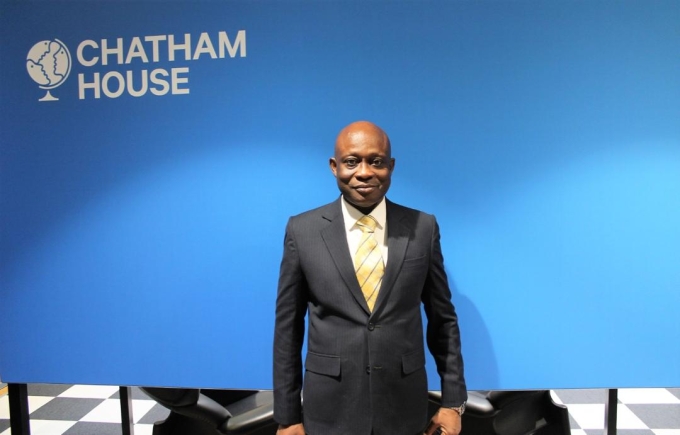
Emmanuel Wekem KOTIA is a retired Major General of the Ghana Armed Forces with over 41 years of distinguished military service. He is a consultant in strategy, security, and defence, and a respected international security analyst, lecturer, and speaker with expertise in international security, peace operations, intelligence governance, and border management. He is the Founding
Commissioner-General of the Ghana Boundary Commission and holds a First-Class BA in Political Science and a PhD in Political Science from the University of Ghana, as well as an MSc in Global Security from Cranfield University, United Kingdom.
He has taught International Security andConflict Management at Kennesaw State University (USA) and the University of Bedfordshire (UK). Emmanuel Kotia has extensive United Nations peacekeeping experience, having served in missions in Lebanon, Liberia, Western Sahara, Cambodia, Rwanda, and the Democratic Republic of Congo. He has published widely on peace operations, terrorism, intelligence oversight, democratic governance, and security studies. His book, Ghana Armed Forces in Lebanon and Liberia Peace Operations, is widely used in postgraduate studies. He currently serves as an Adjunct Lecturer at
the University of Ghana School of Law and the University of Professional Studies, Accra (UPSA), where he teaches courses in national security, peace, security, and intelligence. His forthcoming books, to be published by Bloomsbury Publishing (USA), are National Security Frameworks for African States and Establishing National Boundary Institutions in Africa.
