

The Ghana Prisons Service is looking beyond prison walls for partners in its efforts to reform inmates, challenging musicians, actors, filmmakers, broadcasters and social media influencers to use their talents and platforms to help give prisoners a second chance at life.
The Director-General of Prisons, Mrs Patience Baffoe-Bonnie (Esq), says the creative arts and media industries have a crucial role to play in changing public perceptions about inmates, equipping them with practical skills and creating opportunities for their reintegration into society after serving their sentences.
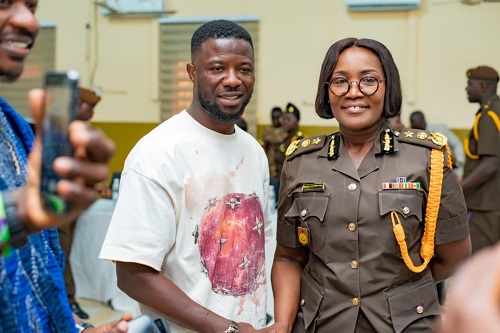
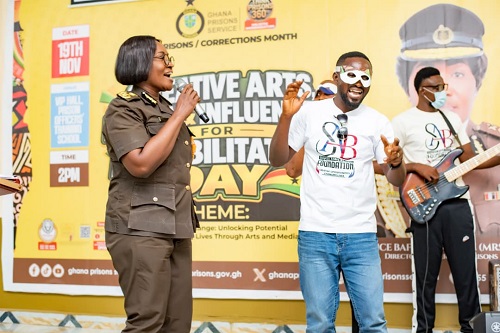
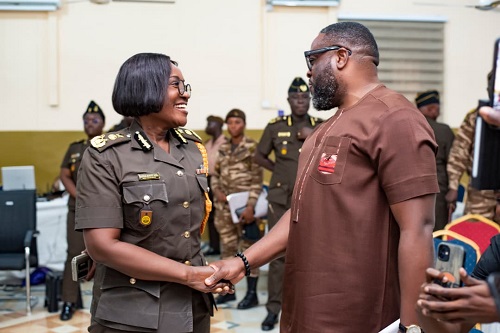
She made the call at the Creative Arts, Media and Influencers for Rehabilitation Day held at the VIP Hall of the Prisons Service Training School on Thursday, November 19.
The event, organised as part of activities marking the 2026 Prisons/Corrections Month celebrations, was held on the theme, “Creativity for Change: Unlocking Potential and Transforming Lives through Arts and Media”.
Mrs Baffoe-Bonnie said the Service was keen on building meaningful partnerships with creative industry players as part of its Think Prisons 360 Degrees transformation agenda, which seeks to broaden the approach to correctional services beyond security and confinement to include rehabilitation and reintegration. (Read Prisons Service hosts maiden forum to engage creatives in inmate rehabilitation)
“Behind these walls are human beings, people with talents, dreams, stories and potential, but who are in the grasp of the law and, most importantly, have the capacity to change,” she said.
She noted that creative expressions such as music, film, poetry, theatre and visual arts could offer inmates opportunities to express themselves, develop their talents and acquire skills that could become sources of livelihood after their release.
“A song can communicate what a lecture cannot. A film can make society understand what statistics cannot. A poem can express pain, hope and transformation. A painting can tell a story without saying a word,” she said.
She added that documentaries, social media campaigns and theatre performances could also challenge stereotypes, change public perceptions and help inmates reflect on their actions.
“Creativity is therefore not merely entertainment. It can be an instrument of social change, and the same can happen within our scope of corrections,” she said.
She explained that reformation focused on changing attitudes, values and behaviour, while rehabilitation was about equipping inmates with the skills and capacity to lead productive lives.
Reintegration, she added, required society to give people who had served their sentences genuine opportunities to rebuild their lives.
Mrs Baffoe-Bonnie observed that stigma and public rejection often followed former inmates long after their release, making it difficult for them to secure employment and become productive members of their communities.
She therefore urged media practitioners, filmmakers and content creators to use their platforms to challenge negative stereotypes and tell stories that reflected the possibility of personal transformation.
“Such efforts must not excuse wrongdoing, but rather reinforce the principle that accountability and rehabilitation can coexist,” she said.
Partnerships with creatives
The Director General said the Service was interested in partnerships covering creative arts training, music, drama, poetry, storytelling, film and documentary production, fashion, visual arts, digital content creation, photography and graphic design.
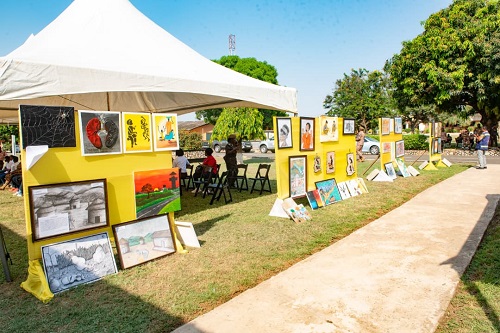
Other areas included mentorship by established creative professionals, creative entrepreneurship, exhibitions of inmates' works and opportunities to market legitimate products made by inmates.
She, however, emphasised that the engagement must go beyond speeches and expressions of goodwill to produce measurable results.
“I do not want today's engagement to end with photographs, speeches and applause. I want it to produce something tangible,” she said.
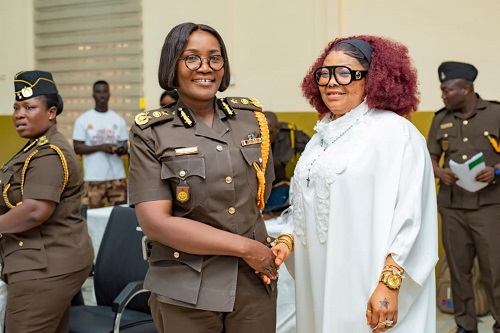
She urged stakeholders to identify programmes that could begin immediately, institutions willing to partner the Service, creative professionals ready to mentor inmates and facilities where pilot programmes could be introduced.
“If, after today, we can say that a filmmaker has committed to a documentary project, a musician has committed to a rehabilitation programme, an influencer has committed to a public education campaign, or a creative organisation has committed to training inmates, then this engagement will have achieved something meaningful,” she said.
She proposed that the event become an annual fixture at which stakeholders would present scorecards to assess progress and benchmark achievements.
The gathering also featured solidarity messages from playwright Ebo Whyte, media personalities Israel Laryea and Nathaniel Attoh, President of the Musicians Union of Ghana (MUSIGA), Bessa Simons, content creator Agradaa, Kumawood actor Kwaku Manu and music producer Mix Masta Garzy.
A highlight of the event was a creative showcase by inmates, who demonstrated their talents through music and poetry.
Michelle, an inmate of the Nsawam Female Prison, delivered a poetry recital, while Gifty Chinyere performed Tuface's song, No Man Can Curse. Another inmate, Bismark Ato Kwamena Forson, also performed an original song to the admiration of patrons.
The event also featured a fund-raising activity towards the construction of a media school being undertaken by the Ghana Prisons Service. An artwork produced by an inmate was auctioned, with the East Legon Young Executive Club emerging as the buyer.
