

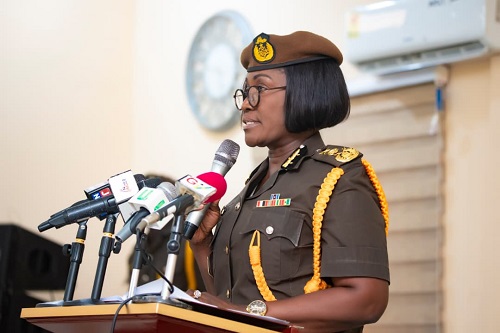
The Ghana Prisons Service is seeking stronger partnerships with musicians, actors, filmmakers, media practitioners and digital content creators to help transform the lives of inmates and prepare them for reintegration into society.
The Service wants the creative industry to move beyond occasional performances in prisons and become an active partner in developing inmates’ talents, equipping them with employable skills and creating livelihood opportunities for them after their release.
The call was made by the Director-General of Prisons, Mrs Patience Baffoe-Bannoe (Esq), at a forum dubbed Creative Arts, Media & Influencers for Rehabilitation Day, held at the Ghana Prisons Service Training School on Thursday, November 19.
The programme, which formed part of activities marking Prisons/Corrections Month 2026, was held on the theme, “Creativity for Change: Unlocking Potential and Transforming Lives through Arts and Media”.
It was organised to mobilise the expertise, networks and influence of creative industry players to support the Service’s Think Prisons 360 Degrees transformation agenda.
Addressing participants, Mrs Baffoe-Bannoe said public perceptions of the prison system should not be limited to reports of overcrowding, escapes, contraband and other negative incidents.
She said there were equally important stories of inmates acquiring vocational skills, pursuing education, graduating from university, discovering their talents and leaving prison with renewed purpose.
“That story deserves to be told. And we need you to help us tell it,” she said.
She urged industry players to see themselves not merely as an audience invited to listen to the Service, but as potential partners who could identify opportunities and develop practical interventions to support rehabilitation.

She challenged musicians to consider how their work could promote rehabilitation, filmmakers to tell stories of second chances, fashion designers and visual artists to explore creative training in correctional facilities, and content creators to use their platforms to educate young people about crime, responsibility and transformation.
Mrs Baffoe-Bannoe said the Service’s ambition was to move from talent discovery to talent development, production and, ultimately, sustainable livelihoods.
She cited the example of an inmate discovering a talent for songwriting, receiving professional training, producing and releasing a song, and leaving prison with a creative portfolio and a legitimate source of income.
“That is what rehabilitation should look like. It is not simply about keeping someone busy during incarceration. It is about preparing someone for life after incarceration,” she said.

Media, influencers urged to change perceptions
The Director-General also called on media practitioners and influencers to use their platforms responsibly to promote a better understanding of the correctional system and the importance of rehabilitation.
She noted that a social media post, photograph or headline could either reinforce stigma or help the public appreciate inmates’ potential for change.
She urged the media to report the challenges facing the Prisons Service while also highlighting progress in rehabilitation and inmates’ efforts to rebuild their lives.
“Do not only tell stories about prisoners. Help create stories of transformation. Do not only show the walls. Show what can happen behind them. Do not only show the offence. Show the possibility of rehabilitation,” she said.
She added that the Service also had a responsibility to create an enabling environment for constructive creative interventions by identifying talent, providing appropriate spaces, developing programmes and working with professionals.
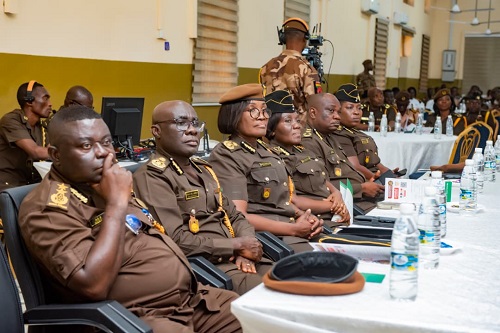
She stressed that inmates should not be treated merely as performers for special occasions but as beneficiaries of genuine skills development and economic opportunities.
Mrs Baffoe-Bannoe further announced that the engagement would become an annual event, with the Service expected to evaluate progress and publicly share its findings at next year’s session.
Participants, she said, would be expected to return with scorecards to assess the partnerships and measure their achievements.
Inmates showcase creative talents
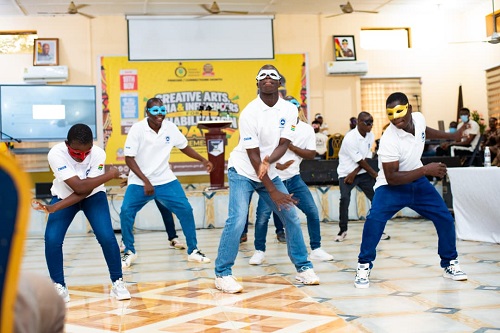
The event also provided an opportunity for inmates to demonstrate their creative abilities through poetry and music performances.

Michelle, an inmate of the Nsawam Female Prison, delivered a poetry recital, while Gifty Chinyere performed Tuface’s No Man Can Curse. Another inmate, Bismark Ato Kwamena Forson, performed an original song.
Solidarity messages were delivered by playwright Ebo Whyte, media personalities Israel Laryea and Nathaniel Attoh, MUSIGA President Bessa Simons, content creator Agradaa, Kumawood actor Kwaku Manu and music producer Mix Masta Garzy.
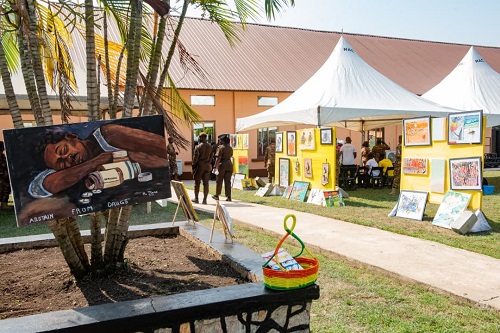
The programme also featured fundraising towards the construction of a media school being undertaken by the Ghana Prisons Service. An artwork produced by an inmate was auctioned, with the East Legon Young Executive Club emerging as the successful bidder with a bid of GH¢10,000.
Earlier, the Director of Public Affairs of the Ghana Prisons Service, Chief Superintendent of Prisons (CSP) Abdul Latif Adamu, said the Service recognised the influence of musicians, actors, filmmakers, broadcasters and digital content creators in shaping public attitudes and inspiring social change.
He said the forum was intended to explore practical areas of collaboration, including creative skills development, mentorship, public advocacy and sponsorship of rehabilitation programmes.
