

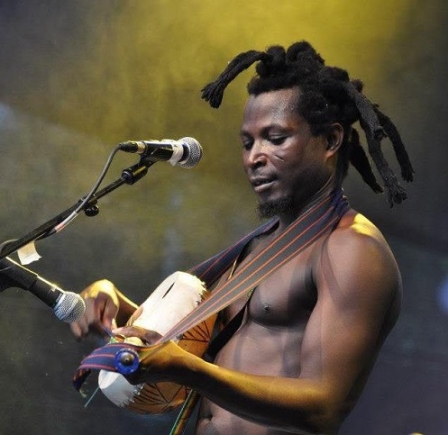
From the traditional sounds of northern Ghana to one of the world's biggest music stages, King Ayisoba and Rocky Dawuni have earned a Grammy nomination for their collaboration, No Tradition, No Africa, putting indigenous Ghanaian music in the international spotlight.
The nomination marks a career milestone for King Ayisoba, who earns his first Grammy recognition, while extending Dawuni's record as Ghana's most-nominated artiste with his fifth career nomination.
The Ghanaian duo secured a place in the Best African Music Performance category at the 69th Annual Grammy Awards, following the announcement of nominees by the Recording Academy on Monday, November 16, 2026. (Read No show again! Rocky Dawuni fails to win a Grammy for the fourth time)
The Recording Academy announced the nominees on Monday, November 16, 2026, placing the Ghanaian duo among five contenders in the category.
The nomination marks a major career milestone for King Ayisoba, whose music is deeply rooted in the traditional sounds of northern Ghana, particularly the Frafra musical tradition and the distinctive two-stringed kologo lute.
It also gives international recognition to a musical identity that has remained central to his work over the years.
Born Albert Apoozore in Bongo Soe in the Upper East Region, King Ayisoba has built a reputation for his distinctive raspy vocals, energetic performances and commitment to traditional Ghanaian sounds.
His musical journey spans several albums, including Modern Ghanaians (2006), Africa (2008), Wicked Leaders (2014), 1000 Can Die (2017) and Work Hard (2023).
His debut album, Modern Ghanaians, earned him the Song of the Year award at the 2007 Ghana Music Awards, helping establish him as one of Ghana's notable traditional music performers.
Over the years, he has continued to take his unique sound to audiences beyond Ghana, combining indigenous instrumentation with contemporary influences without losing the cultural identity that defines his music.
A collaboration rooted in African identity
Released earlier this year, No Tradition, No Africa brings together King Ayisoba's distinctive vocals and traditional kologo instrumentation with Rocky Dawuni's Afro-Roots and reggae influences.
Beyond the musical collaboration, the song carries a message about African heritage, cultural identity and the importance of preserving indigenous traditions.
The title itself reflects the central message of the recording: the need for Africans to recognise, protect and celebrate their cultural roots.
For Dawuni, the nomination marks his fifth career Grammy recognition, extending his record as Ghana's most-nominated artiste in the Recording Academy's history.
His previous nominations include Branches of the Same Tree, which earned a nod in the Best Reggae Album category in 2016; Voice of Bunbon, Vol. 1, nominated for Best Global Music Album in 2022; Neva Bow Down, featuring Blvk H3ro, in the Best Global Music Performance category in 2023; and Rise, nominated in the same category in 2025.
The latest recognition further strengthens Dawuni's international profile while introducing King Ayisoba to an even wider global audience.
Ghana against Africa's biggest names
The Ghanaian duo will face competition from some of Africa's leading contemporary music acts in the Best African Music Performance category.
Other nominees are Gratitude by Asake; Aye Kan (Are You Coming Back?) by Angélique Kidjo and Ayra Starr; Big Daddy by Tems; and Jogodo by Wizkid and Asake.
The nominations bring together different expressions of African music, from contemporary Afrobeats to indigenous and culturally rooted sounds.
For King Ayisoba, the recognition is particularly significant as it places a traditional Ghanaian musician alongside some of the continent's biggest contemporary music stars.
It also highlights the growing international reach of African music and the importance of preserving the sounds and traditions that shape the continent's musical identity.
The 69th Annual Grammy Awards are scheduled for February 7, 2027, at the Crypto.com Arena in Los Angeles, United States.
