
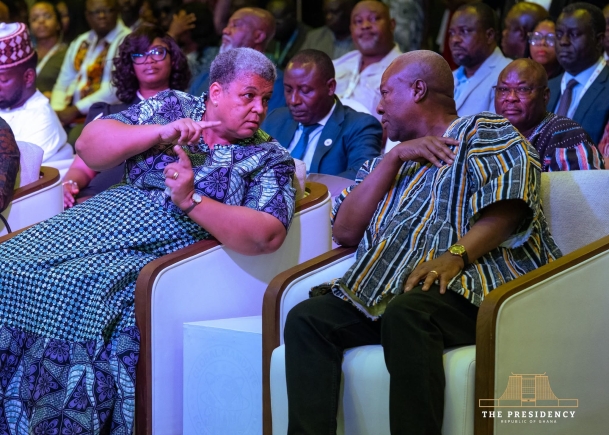
President John Dramani Mahama yesterday made a major announcement that, if implemented well, could change the face of housing in Ghana.
Speaking at the opening of the National Housing Finance Conference 2026 in Accra, the President said he had directed the Minister of Finance to allocate GH¢1 billion in the 2027 Budget as the government’s contribution to a GH¢3 billion revolving fund for the National Housing Fund.
It comes at a time when the country’s housing crisis has become one of the most stubborn development challenges of our time.
We welcome the President’s directive. It shows that the government recognises the depth of the crisis.
But GH¢1 billion, while significant, is only a seed.
The real question is how that seed will be planted, watered, and protected from being eaten.
Let us put the crisis in perspective.
The country’s housing deficit is estimated at over 1.8 million units and growing by about 100,000 units a year.
It is not just a deficit of numbers; it is a deficit of affordability.
Most of the houses built in the regional capitals are not for the average formal sector worker, trotro driver or trader.
They are for the top 10 per cent.
Why? Because of the three intertwined problems that the conference rightly identified: rising construction costs, limited access to long-term financing, and high mortgage rates.
Land is expensive, and litigation is common.
Infrastructure — roads, water, electricity to new sites — is often absent, so developers add that cost to the house.
Then comes financing. Ghana’s mortgage market is almost non-existent.
Mortgage interest rates vary, from 25 per cent upwards, with tenors of 10 to 15 years.
Who can borrow at, for instance, 30 per cent to buy a house?
Banks prefer to lend to government or to importers for 90 days rather than to a young family for 20 years.
There is no long-term money.
The result: Only a tiny fraction of Ghanaians can access a mortgage.
Most build incrementally over five to 20 years, buying one trip of blocks at a time, leading to unplanned, uncompleted residential building sprawl.
Others remain trapped in rent, paying two years' advance rent in a country where salaries are monthly.
Rent has become a major driver of poverty and urban stress.
It is against this background that the National Homeownership Fund and its revolving fund idea must be judged.
A revolving fund of GH¢3 billion, if properly structured, could be a catalyst.
Here is what it must do: First, it must lower the cost of housing finance, not just increase its supply.
It is important to state that GH¢1 billion from the government is intended as anchor capital to crowd in another GH¢2 billion from pension funds, banks, development partners and the private sector.
The fund must not lend at commercial rates. Its purpose must be to provide long-term, single-digit or low double-digit cedi financing to developers of affordable housing and to home buyers, especially low- and middle-income earners.
It must also be insulated from politics.
This is why. Our country’s history with housing schemes is littered with abandoned projects.
Governments start them, new governments abandon them.
Beneficiaries are often party loyalists.
Boards are politically appointed. If the GH¢3 billion revolving fund becomes another political cookie jar, it will collapse like the others.
It must have independent, professional management, transparent qualification criteria, public auditing, and parliamentary oversight.
Housing finance alone cannot solve the housing crisis.
The fund must work with the Ministry of Lands, District Assemblies and traditional authorities to make titled, serviced land available.
Government can contribute land, not just money. It must also support the use of local building materials — burnt bricks, pozzolana cement, clay — to reduce costs.
This is where the New Economy agenda about — jobs, decent jobs — meets housing. Building 100,000 affordable houses a year with local materials creates hundreds of thousands of jobs for masons, carpenters, electricians and suppliers.
Finally, the fund must be inclusive.
The conference theme says “Adequate housing for all.
“All” must include public sector workers — teachers, nurses, security personnel — informal sector workers, persons with disabilities, and young people starting life.
President Mahama’s directive is a bold start.
Allocating GH¢1 billion in the 2027 Budget in this fiscal environment will not be easy.
It shows commitment. But commitment must now be matched with design, transparency and discipline.
Ghanaians do not need another announcement.
They need keys to houses they can afford; with mortgages they can pay.
Let this GH¢3 billion revolving fund be the beginning of that journey — not another footnote in the long story of Ghana’s housing promises.
