

The euphoria is gone because the month of October, christened ‘the pink month,’ has passed so soon.
It was good to hear all the buzz and see various efforts to mark October as the breast cancer awareness month.
Several women have expressed their joy for having a first-time breast examination whiles others showed up for check-ups as an annual routine.
With October coming again next year, it is my fervent hope that we do not have to wait for a year to raise breast cancer awareness again.
It will be good to continue the campaign on creating awareness and educating women in particular and everyone else on the subject.
Is it possible to mention breast cancer once a week for the rest of the year?
Thirty-one days of awareness creation is good but we can increase the number of days in the year in order to intensify education on the subject and encourage more women to get examined and in fact seek early treatment in order to save more lives.
Role of the media
According to the World Health Organisation (WHO), breast cancer continues to be the most common cancer in women worldwide, both in developed and developing countries.
Majority of deaths caused by breast cancer occur in low and middle-income countries where most women are diagnosed in late stages due mainly to lack of awareness on early detection and barriers to health services.
Media houses should include the subject in their programming.
We can dedicate a minute every Friday for example on radio or television to the subject.
Newspapers may similarly dedicate a small column of their paper to the cause, likewise online portals.
Standard vital check-ups
Hospitals, clinics and other health centers may include breast examination in the standard vital check-ups in the doctor’s office for all women in particular because they are the most prone to the disease. Churches and other organised bodies are also encouraged to carry the message across on regular basis to support the cause.
In no time at all a lot more people will become aware of the issues surrounding breast cancer like other health conditions such as malaria and common colds.
The role of women in society cannot be emphasised enough. Losing them to preventable or treatable diseases go a long way to affect the entire society, not just families and the economy.
I will also encourage our men, that is husbands, fathers, brothers and sons, to support the ladies in this regard.
They must also do well to examine themselves because men are also prone to the disease although the percentage of cases compared to women is very negligible.
Reaching the rural communitiesDuring the period of the campaign this year and in other years past, very little attention is given to women in the rural communities.
It is sad to see the exercises around the awareness programme centered in the capitals.
It is worthy to note that cancer has no territory.
In the rural areas where people, due to illiteracy and ignorance, easily misconstrue such diseases as curses from the gods, it is important that efforts are made to demystify that notion by reaching them with the messages.
It is a fact that women are seen more on the farms than men, and therefore the inability of a woman suffering from breast cancer in the village to go to the farm will have dire consequences on not just her family but society as a whole.
It is pathetic to see women with breast cancer in the rural communities being subjected to all manner of inhumane treatments at the hands of pastors and herbalists who have no clue as to what can cure the disease.
In the end they die because their situation deteriorate faster, and once they can no longer bear the pain, they give up.
Like the good book says, for lack of knowledge my people perish.
This is real but it is not a hopeless situation.
What is past must go but the future lies ahead with hope once frantic and deliberate efforts are made to reverse the trend.
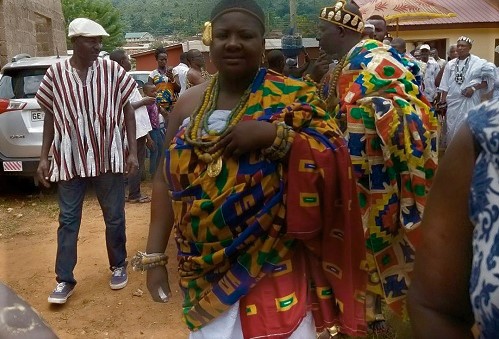
As queenmothers, we can play a role to effectively champion that cause.
Against this background we prevail on corporate institutions to devote a part of their budget on corporate social responsibility activities to the rural communities to ensure that our sisters, mothers and daughters also have access to such important knowledge.
The writer is the Queenmother of Taviefe Tsetse (Mama Kotoku) and a Cashew Development Consultant
