
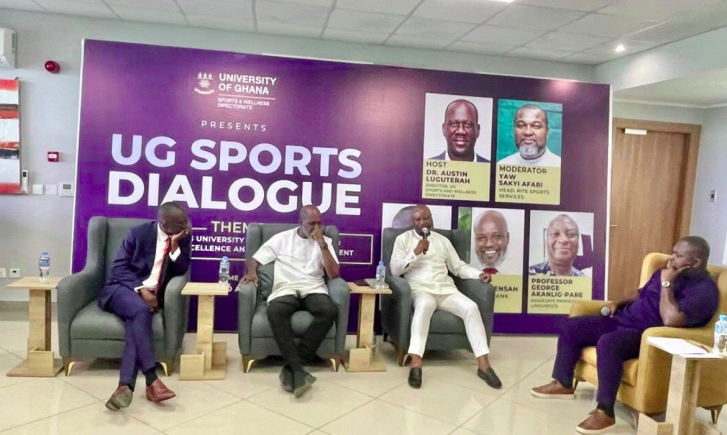
Dr Kwame Baah Nuakoh, Chairman of the Ghana Football Association Club Licensing Committee, has called on universities to deliberately use sports as a tool to strengthen alumni engagement and attract sustainable funding for sports development.
Speaking at the maiden University of Ghana Sports Dialogue on the theme "Repositioning University Sports as a Driver of Institutional Excellence and National Development," Dr Baah-Nuakoh said one of the major challenges facing university sports was the inability of institutions to market sports effectively to students and alumni, thereby missing opportunities to generate financial and corporate support.
He noted that successful universities around the world had leveraged sports to build institutional pride that continued long after students graduated. "We have not sold university sports to our alumni. The reason why we are not getting funding is that somebody must want to buy into what you have. When sports become an integral part of a university's culture, they create pride and lifelong attachment," he said.
He urged university authorities to make students feel connected to sports from the onset, stressing that alumni who maintained strong ties to their alma mater were more likely to contribute to sports infrastructure, scholarships and other development projects.
"It is not just about winning medals. It is about creating pride among students through sports. Once alumni are attracted back to campus, they will support not only sports but other aspects of university life," he added. He described sports as a strategic marketing and relationship-building tool capable of reconnecting universities with influential alumni who now occupied leadership positions in business, politics and other sectors.
Mr Kojo Addae-Mensah, Chief Executive Officer of Databank, urged policymakers to review Ghana's educational structure, arguing that the current system was limiting the development of student-athletes.
He said while funding challenges had long existed in Ghanaian sports, the more fundamental issue was the educational system, which had reduced opportunities for young people to discover and nurture their sporting talents. He noted that under the previous five-year secondary school system, students had more time to participate in various sporting disciplines and identify their strengths before facing major academic pressures. He called for a non-partisan reassessment of educational policies to better integrate sports into the learning process.
Dr Austin W. Luguterah, Director of Sports and Wellness at the University of Ghana, said university sports should be viewed beyond competitions and medals and recognised as an investment in human capital, innovation and national development.
He noted that sports played a vital role in promoting discipline, teamwork, resilience and leadership among students while contributing to wellness and social inclusion.
He said achieving the full potential of university sports would require effective governance structures, sustainable partnerships and innovative financing models.
