
The Government’s decision to allocate GH¢600 million for the construction of 10 regional stadia raises an important question about Ghana’s sporting future: are we investing in a sustainable sports development system or simply adding to the country’s growing inventory of public infrastructure?
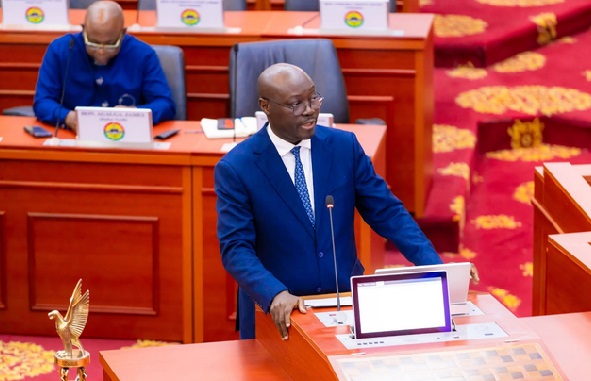
Announcing the allocation in the 2027 Budget Statement and Economic Policy, Finance Minister Dr Cassiel Ato Forson said the GH¢600 million formed part of a GH¢782 million provision for the Ministry of Sports and Recreation.
The projects comprise seven 5,000-seater stadia in the Western North, North East, Ahafo, Upper East, Upper West, Bono East and Oti regions; two 10,000-seater facilities in Savannah and Bono; and a 12,000-seater stadium in the Volta Region.
Expanding access to sporting facilities is a legitimate national development objective. However, the timing of the announcement, as Ghana approaches its 70th Independence anniversary, must not allow political symbolism and the fulfilment of manifesto commitments to overshadow the more fundamental question of long-term value for money.
Ghana's experience with sports infrastructure should make us cautious about equating construction with development.
We have repeatedly built facilities without adequately addressing the systems required to make them productive. The result has been expensive public assets whose sporting potential remains largely unrealised.
Until its recent renovation at a huge cost to the taxpayer, the Essipon Stadium was left to the vagaries of the weather to deteriorate.
The Youth Resource Centres constructed under the previous administration at Ho, Koforidua, Kaneshie and Hinahin illustrate the problem.
Facilities conceived as catalysts for regional sports development have struggled to fulfil their intended purpose.
Too often, their most visible uses have been ceremonial events and occasional public gatherings rather than sustained sporting activity, community participation and athlete development.
A stadium without a utilisation strategy, maintenance model, programming calendar, revenue plan and connection to a talent-development pathway is not necessarily an investment in sport.
It can quickly become an expensive public liability, consuming scarce resources through maintenance costs while delivering little measurable public benefit.
The country possesses a deep reservoir of sporting talent, established national federations and considerable public enthusiasm for competitive sport.
What remains deficient is a properly financed, accountable and integrated system that identifies talent, develops athletes, protects their welfare and creates sustainable sporting enterprise.
Infrastructure must therefore follow the needs of the sporting ecosystem, not precede it.
Every proposed facility should demonstrate how it will serve grassroots programmes, school and university competitions, regional leagues, talent identification, national federations and, where appropriate, the sporting programmes of the security services.
Government must also explain who will operate these stadia, how they will be maintained, which competitions will occupy them, how communities will access them and what revenue streams will support their upkeep.
These are not administrative afterthoughts; they are essential components of the investment decision.
The debate, therefore, should not be reduced to whether Ghana needs more stadia. We need quality sporting infrastructure, but we need an architecture of sports development capable of making that infrastructure productive.
Every cedi invested in sport must serve a clearly defined public purpose, support a viable delivery system and produce independently verifiable outcomes.
This requires transparent feasibility studies, realistic lifecycle costing, professional facility management and measurable performance targets.
The Government should resist the temptation to treat the GH¢600 million commitment as a political achievement in itself.
The real achievement will be whether these facilities produce athletes, strengthen regional competitions, widen community participation and generate sustainable economic value.
