
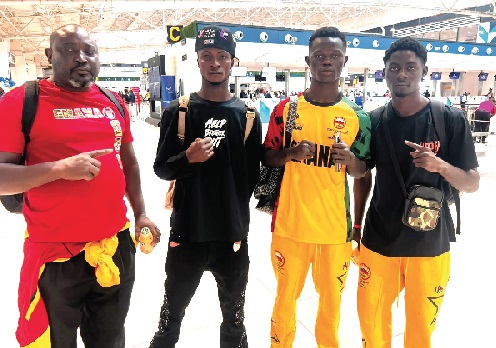
Ghana’s decision to send just three boxers to the IBA Africa Elite Championships in Kinshasa, with no female representation, is another troubling reminder of a chronic failure in our sports development system: the inability to provide sustained financial support for disciplines that have consistently brought the nation international recognition.
For a country with Ghana’s proud boxing heritage, this is an indictment of our priorities. Only three of the 13 men’s weight categories will feature Ghanaian competitors, while all 12 women’s divisions will have no Ghanaian representation.
Even more disturbing is that financial constraints have also scuttled Ghana’s participation in the World Boxing African Championships in Kenya.
These are not isolated setbacks. They reflect a longstanding pattern in which athletes prepare for international competitions, only to discover that inadequate funding has rendered months of sacrifice meaningless.
Boxing has historically been one of Ghana’s most dependable sources of international sporting success. From Olympic medals to Commonwealth Games and African Games triumphs, the sport has repeatedly justified the nation’s investment in its athletes.
Yet the financial commitment to sustaining that tradition remains woefully inadequate. The frustration expressed by Ghana Boxing Federation President Dauda Fuseini and former world champion Joshua Clottey deserves serious attention.
Their concerns expose the disconnect between our national expectations of sporting excellence and our willingness to finance the preparation required to achieve it.
Athletes cannot develop through training alone. They need quality coaching, modern facilities, equipment, nutrition, medical support and, crucially, regular international competition.
Without these essentials, talent stagnates, promising careers collapse and the country loses opportunities to develop future champions.
The consequences extend beyond immediate medal prospects. International competitions provide valuable exposure, ranking opportunities and potential financial rewards. They also help prepare athletes for the demanding qualification process towards major events such as the Los Angeles 2028 Olympic Games.
The Graphic Sports acknowledges that government resources are limited and competing national priorities demand difficult choices.
However, scarcity should encourage smarter allocation, not perpetuate a system in which promising sporting disciplines survive on uncertainty and last-minute appeals.
Football commands considerable national attention and investment, understandably so because of its popularity and commercial appeal. But this must not condemn boxing, athletics and other disciplines to perpetual financial neglect.
Indeed, the central challenge is not simply how much government spends on sport, but whether available resources are distributed strategically, transparently and with measurable development objectives.
We believe Ghana needs a properly structured, multi-year sports development funding framework that guarantees predictable support for priority disciplines, particularly those with proven competitive potential.
Such a framework should establish transparent funding criteria, protect essential athlete preparation budgets and link investment to credible development programmes and measurable outcomes.
Corporate Ghana must also recognise the commercial and social value of investing in emerging sporting talent. Federations, for their part, must develop compelling sponsorship propositions, strengthen governance and demonstrate accountability for every cedi received.
Government cannot shoulder the entire burden, but neither can it abdicate its responsibility to create the conditions for sporting success.
Above all, Ghana must abandon the culture of celebrating athletes after victories while neglecting them throughout the difficult journey towards those achievements.
The three boxers competing in Kinshasa deserve our support. So do the many talented athletes left behind.
Our sporting ambitions will remain hollow unless we find a sustainable way to fund them. Ghana cannot continue demanding world-class performances while financing sporting preparation as an afterthought.
