
The Minority in Parliament has challenged the government to account for the tax incentives announced under the 24-Hour Economy programme, demanding details of companies that have benefited and the revenue lost through the concessions.
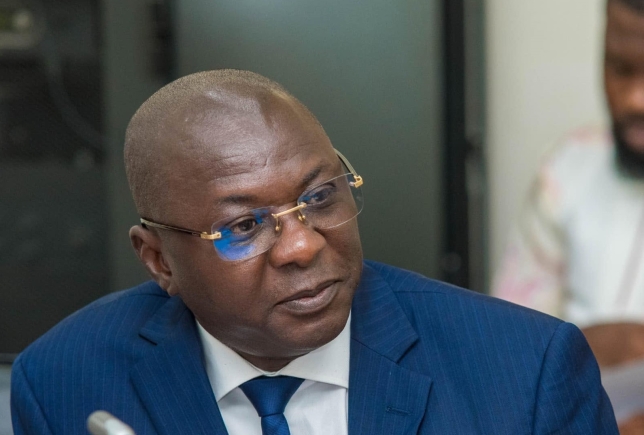
The Ranking Member on Parliament’s Finance Committee, Dr Mohammed Amin Adam, raised the concerns when he addressed the media on behalf of the Minority on Tuesday (November 10, 2026).
Under the programme, the government announced a 50 per cent tax rebate for companies operating three shifts and a 25 per cent rebate for those running two shifts. Other incentives included import duty waivers on machinery, discounted night-time electricity tariffs and round-the-clock port clearance.
However, Dr Amin Adam said the Minority wanted to know whether the proposed incentives had been submitted to Parliament for approval, how many companies had been certified to benefit and the total revenue the government had forgone through the arrangements.
He also questioned whether the promised Time-of-Use electricity tariff had been implemented for businesses operating at night, and called for the publication of the full list of beneficiary companies.
Attached below is the full copy of the press statement by the Minority
PRESS STATEMENT BY THE NEW PATRIOTIC PARTY (NPP)
THE 2027 BUDGET MUST ACCOUNT BEFORE IT ANNOUNCES: THE FISCAL TEST GHANAIANS WILL USE TO JUDGE IT
To the People of Ghana,
On Thursday, 12 November 2026, the Finance Minister, Dr Cassiel Ato Forson, will present the 2027 Budget Statement and Economic Policy to Parliament. Government has already told the country what to expect: a new wave of job programmes, more infrastructure, and a US$10 billion "New Economy".
Before the applause is organised, the New Patriotic Party (NPP) sets out, plainly and with Government's own figures, the test this Budget must pass: has Government spent what it budgeted, paid what it owes, delivered the flagships it announced, and created the jobs it promised? We invite Government to dispute any figure here with a better one.
The Government has signalled its intention to unveil a US$10 billion “New Economy” programme, promising jobs, investment and economic transformation. The ambition is welcome. Indeed, Ghana urgently needs to expand productive capacity, create opportunities for its growing youth population, strengthen agriculture and industry, and build an economy that delivers prosperity beyond the headline statistics.
But ambition is not a substitute for execution, announcements are not investments, and projected jobs are not jobs created. Unfortunately, the NDC Government is notorious for playing these tricks on Ghanaians for political capital hence the need for this scrutiny.
Before the Finance Minister presents another ambitious programme, Ghanaians deserve a clear account of what has become of the promises made in the 2025 and 2026 Budgets. What happened to the NDC’s flagship 24-Hour Economy initiative? How much of the promised investment has actually been mobilised? How many sustainable jobs have been created? Why have important development programmes experienced delays and expenditure shortfalls? And what assurance is there that the proposed New Economy will deliver where earlier commitments remain incomplete?
These questions are particularly important at this stage of Ghana’s economic recovery. The completion of the IMF programme does not mean that our fiscal constraints have disappeared. Revenue mobilisation remains challenging, debt-service obligations continue to compete with development spending, and access to affordable external financing cannot be taken for granted. The Government must therefore explain how it intends to finance its new ambitions while meeting existing commitments, protecting debt sustainability and preserving macroeconomic stability.
There is also a more immediate test. Economic stability must ultimately be measured not only by what appears in the national accounts, but by what changes in the lives of ordinary Ghanaians. For the farmer, it is the cost of inputs and the returns from the harvest. For the trader, it is the purchasing power of customers. For the young graduate, it is the availability of a decent job. And for the ordinary worker, it is whether earnings can meet the rising costs of essential services.
This is the distinction between the ‘paper economy’ and the ‘pocket economy’ that our Flagbearer, Dr Mahamudu Bawumia, has recently drawn attention to. Both matter. But the true measure of economic progress is whether improvements in the former translate into meaningful and sustained gains in the latter. The Government will understandably point to lower inflation, a stronger external position and improved reserves. These indicators matter, but they are not a complete measure of economic welfare. The real test is whether stabilisation is being converted into jobs, real earnings, affordable essentials and viable businesses. Ghanaians are entitled to demand that the 2027 Budget demonstrate this transmission rather than merely celebrate headline indicators.
As the 2027 Budget approaches, the central issue is therefore not whether Ghana needs a ‘New Economy’. It does. The issue is whether the Government has demonstrated the capacity, financing and policy discipline to deliver one, especially when they inherited a programme which had already taken the tough decisions, started implementation and was delivering the anticipated results.
Ghanaians deserve more than another catalogue of promises. They deserve a credible plan, backed by realistic financing, measurable outcomes and accountability for results.
BEFORE ANNOUNCING A NEW ECONOMY, THE GOVERNMENT MUST FIRST ACCOUNT FOR THE PROMISES OF THE OLD ONE.
1. Promises Made, No Results Delivered: The 24-Hour Economy
The 24-Hour Economy was presented to Ghanaians as the heart of the NDC’s economic plan. At its launch in July 2025, it was backed by a projected US$4 billion investment, with Government committing between US$300 million and US$400 million as seed capital. It promised 1.7 million jobs by the end of 2028 under the “1-3-3” model of one job, three shifts, three workers. The record so far is as follows.
• The US$4 billion was not raised. Against a US$4 billion financing requirement, the 2026 Budget allocated only GH¢110 million to the programme, an amount the Institute for Economic Research and Public Policy described as insignificant. What the Secretariat now presents are “Joint Development Agreements” worth US$5.5 billion, which are agreements on paper, not money mobilised.
• The 1-3-3 jobs did not materialize. On 19th October 2026, the Chief Programme Officer of the 24-Hour Economy Secretariat told the nation that he could not give a figure for the total number of jobs the programme has created. The headline achievements cited are 268 filling stations and 33 manufacturers running shifts, yet filling stations in Accra and Kumasi were open at midnight long before this Government arrived. The 160,000 jobs announced are jobs “expected” from four projects, one of which, the Buipe solar project, is not due to generate power until the third quarter of 2027.
• Even the 24-hour markets have been renamed. On 5th October 2026, the Minister for Local Government redesignated the 24-hour economy markets as “District Economy Markets” (also reported as “District Model Markets”), re-scoped them into two phases and pushed completion to 2028, financed from the District Assemblies Common Fund. The designs are being remodelled “to fit readily available budget”.
It is therefore no surprise that a “new” 24-Hour Economy is about to be announced. The pillars of the proposed New Economy, namely commercial agriculture, energy, critical minerals, textiles and garments, tourism and pharmaceuticals, overlap with projects already listed under the 24-Hour Economy, such as the Buipe solar plant and the oil palm and garment projects, and with the commercial agriculture already claimed under Feed Ghana. It is the same promise with a new label and a fresh starting point from which the Government can measure itself.
The Government must reconcile its own descriptions of the New Economy. The 2027 Fiscal Strategy Document sets out investment of about 1.5 percent of GDP annually for four years, while the President has described US$2 billion annually for five years and referred to a different number of priority pillars. Although these envelopes may be broadly comparable in aggregate, their coverage, financing sources, fiscal treatment and implementation timetable require clarification. In particular, Parliament should be told what is additional to existing budget allocations and what depends on private financing.
Accountability for the 24-Hour Economy
The Government must account to the people of Ghana for what it has achieved under the original 24-Hour Economy initiative. At a minimum, it must disclose:
• how much of the US$4 billion has actually been mobilised, from which sources, and into which projects it has been disbursed;
• how much of the promised US$300 million to US$400 million in seed capital has been released, and how the GH¢110 million 2026 allocation was spent;
• the status of each of the US$5.5 billion Joint Development Agreements, including which have reached financial close and which remain memoranda; and
• the number of 24-hour markets started and completed, the amounts paid to contractors, and the real reasons for renaming and re-scoping the project.
Implementation of Tax Incentives
The Government must account for the implementation of the tax incentives it promised the private sector under the original 24-Hour Economy before it talks about new incentives in the 2027 Budget. The President announced a 50 percent tax rebate for firms moving to three shifts, a 25 percent rebate for two shifts, import duty waivers on machinery, Time-of-Use night electricity discounts and 24-hour port clearance. He also stated that the comprehensive package would be brought to Parliament for approval, because only Parliament can grant tax waivers and exemptions. The Presidential Adviser on the programme further promised that beneficiary companies would be publicly identified. The Government must therefore tell Ghanaians:
• whether the incentive package has been laid before and approved by Parliament;
• how many firms have been certified, how many have actually received rebates or duty waivers, and the total revenue forgone;
• whether the promised Time-of-Use electricity tariff has been implemented for any 24-hour business; and
• the full list of beneficiary companies, as promised.
Verification of Jobs Created
The Government must state the number of jobs created under the original 24-Hour Economy. Proponents of the policy projected that it would absorb at least 300,000 new labour-market entrants every year and cut unemployment by 120,000 each year. Yet nearly two years on, the Secretariat cannot provide a figure. Meanwhile, national unemployment stood at 13.0 percent in the third quarter of 2025, youth unemployment averaged 21.9 percent, and nearly 2 million young Ghanaians are not in education, employment or training. We demand a verifiable register of 24-Hour Economy jobs that can be checked against payroll and SSNIT contribution records.
Evidence of Improved Living Standards
Finally, the Government must account to the people of Ghana for how its economic policies have improved their living conditions: in real incomes, in the cost of food, rent, transport and utilities, in farmers’ earnings and in workers’ take-home pay. As we set out below, the evidence points in the opposite direction.
Attached below is full copy of the statement
