
The Inter-Parliamentary Union (IPU), the global organisation of national parliaments, has urged members of the ECOWAS Parliament to hold governments accountable for the persistent exploitation of children in West Africa.
The union warned that the adoption of laws and parliamentary resolutions without effective implementation would do little to protect vulnerable children.
It said the effectiveness of parliamentary action must be measured not by the number of resolutions adopted but by the number of children rescued from exploitation, kept in school and protected from abuse.
"Parliaments must not be limited to adopting laws or supporting declarations of principle but they must also ensure that the commitments made are translated into political action, budgetary resources and measurable results on the ground," the union said.
Move beyond declarations
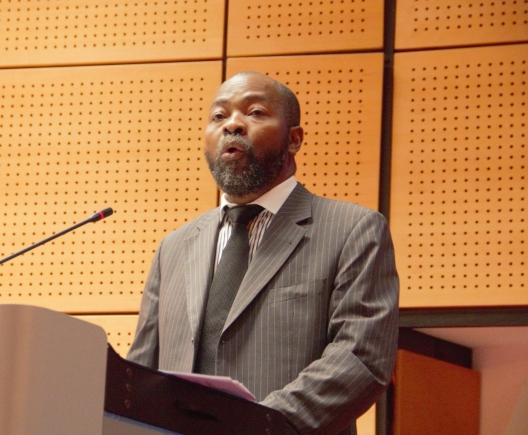
In address read on his behalf at a workshop on strengthening action against human trafficking and child labour on the second day of the 2026 Ordinary Session of the ECOWAS Parliament in Abuja today (Nov 28), Secretary-General of the IPU, Anda Filip, said parliaments must move beyond declarations of commitment to ensure that governments backed their promises with adequate budgetary allocations, effective policies and measurable results.
In his view, the scale of the problem required stronger political commitment, coordinated regional action and more rigorous parliamentary oversight.
The workshop is aimed at strengthening the capacity of the ECOWAS Parliament to tackle increasingly complex challenges associated with human trafficking and child labour in the sub-region.
It is also to allow members of the House to assess progress made since an earlier engagement between the IPU and the ECOWAS Parliament in May 2023.
Alarming scale
Mr Filip reminded legislators that they had a responsibility to scrutinise government interventions and demand evidence of progress in protecting children, particularly those in vulnerable communities.
"The true measure of your commitment does not lie in the number of resolutions adopted, but in the number of children effectively protected, in schools and away from exploitation," he said.
Saying that the scale of child labour remained alarming, he cited estimates published in 2025 by the International Labour Organisation (ILO) and the United Nations Children's Fund (UNICEF) which put the global number of children engaged in child labour at nearly 138 million.
Of that number, he said, approximately 46.6 million were in sub-Saharan Africa, a situation he described as a serious indictment of the progress made by countries towards protecting children's rights.
"Despite the progress made and the commitments undertaken, millions of children continue to see their childhood sacrificed and their future compromised," he said.
Deprivation of rights
The Secretary-General pointed out children continued to be deprived of education, exposed to exploitation, forced into dangerous occupations and, in some cases, abducted from their families and communities.
"Behind the expressions of child trafficking and child labour are painful human realities.
“Children are deprived of education, exposed to exploitation, forced into dangerous jobs, sometimes abducted from their families and communities," he said.
Mr Filip warned that no society could claim to be building a prosperous and sustainable future while millions of its children were denied their fundamental rights.
He described child labour not only as a violation of human rights but also as a major obstacle to economic development and social cohesion.
The practice, he explained, perpetuated cycles of poverty, deepened inequalities and weakened the human capital needed to drive the development of the West African sub-region.
Facilitate regional response
He pointed out that the challenges confronting West Africa, including poverty, population displacement, security crises, economic disparities and inadequate social protection systems, created conditions that made children particularly vulnerable to trafficking and exploitation.
He said the cross-border nature of the problem made it impossible for individual countries to address it effectively without cooperation.
"Faced with these realities, no exclusively national response will be sufficient," he said.
He consequently called on the ECOWAS Parliament to use its regional mandate to mobilise national legislatures, encourage the adoption of coherent public policies and strengthen cooperation among member states.
Demand accountability
The Speaker of the ECOWAS Parliament, Hadja Mémounatou Ibrahima, warned that the continued trafficking and exploitation of children in West Africa undermine their fundamental human rights and threaten the future of the sub-region.
She, therefore, challenged national parliaments and the ECOWAS Parliament to move beyond declarations of commitment and demand accountability from institutions responsible for child protection.
She said lawmakers must scrutinise budgets, strengthen legal frameworks and monitor the implementation of policies to ensure that vulnerable children were protected.
“How many children have been protected? What arrangements are there in place in terms of prevention, identification of victims and monitoring of cases?” she asked.
