
The Local Government and Rural Development Committee of Parliament has directed all assemblies to disburse funds allocated to persons with disabilities (PWDs) within seven days of receiving the money.
It warned that disbursement must not exceed 14 days since delays denied beneficiaries timely access to funds meant for their welfare.
The directive, it said, was to ensure PWDs received their allocations promptly and to prevent diversion for other expenditure.
"We insist that when the money comes, disbursed within a minimum of seven days and a maximum of 14 days.
Do not leave it in the account as you will be tempted to spend it," the committee directed.
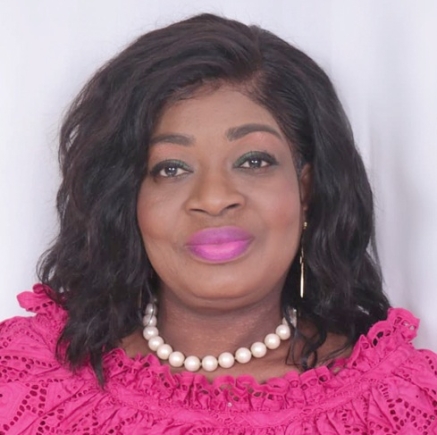
The Chairperson, Queenstar Pokua Sawyerr, issued the directive after it emerged that several assemblies appearing during the committee's two-week public hearing had withdrawn PWD funds to finance other activities, with some taking considerable time to refund the amounts.
The Savelugu Municipal Assembly, which appeared last Friday, withdrew GH¢45,000 from its disability fund to address security challenges arising from an influx of Sahelian herdsmen into the municipality in April 2025.
The committee asked why the assembly did not rely on the Common Fund and its internally generated revenue instead.
Purpose of hearing
The hearing allowed assemblies to respond to infractions in the 2025 Annual Statements by audit committees of assemblies across all 16 regions.
It brought together regional ministers and assembly officials to account for their activities, financial management and development projects, including 24-hour economy markets, borehole drilling, internally generated revenue, school infrastructure and disbursement of funds to PWDs.
It was aimed at addressing challenges and strengthening accountability and local governance.
Funds for the vulnerable
Mrs Sawyerr said a number of assemblies had substantial PWD funds sitting undisbursed in their accounts.
She reminded chief executives and management that the funds were meant to support vulnerable persons and should not be treated as readily available resources for meeting other financial obligations.
Keeping the money for extended periods, she explained, could create opportunities for officials to use it for other purposes.
"I mean we all get tempted when the money is sitting in the account, and you need money to do something.
"Assuming you have shared the money, would you go back and collect it and use it?" she asked, adding, "Do not do that to the ordinary and poor people".
Mrs Sawyerr, who is also the Member of Parliament (MP) for Agona East, warned that diversion could expose chief executives to public criticism and undermine confidence in the management of public resources.
"Do not spoil somebody's father or mother's job," she cautioned, urging officials to ensure the practice did not recur.
Savelugu explains
The Coordinating Director for Savelugu Municipal Assembly, Mohammed Awal Suhuyini Abdul-Samed, said the money was used following security concerns raised by the Municipal Security Council (MUSEC) after the influx.
He said the assembly had inadequate resources and resorted to the disability fund as the only available source at the time.
"With the recommendation of MUSEC, we had no resources, and so that was the only fund we had available," he explained.
He said the GH¢45,000 was borrowed and refunded when the next DACF allocation was received the following month, although he could not immediately establish the exact period between withdrawal and repayment.
The committee, however, questioned why the assembly had not explored alternative funding sources.
