
The Convention People's Party (CPP) has called on the government to use the 2027 Budget to advance the country’s economic independence, arguing that macroeconomic stability and private sector-led growth alone cannot deliver meaningful national transformation.
The party said the country needed a people-centred development strategy that prioritised Ghanaian ownership of productive assets, local industrial capacity and greater control over national resources.
In a statement assessing the 2027 Budget, the CPP welcomed the government's emphasis on industrialisation, agriculture, energy infrastructure and local processing of natural resources.
However, it maintained that the critical question was not only how much the economy grew, but also who owned the productive assets and benefitted from the country's wealth.
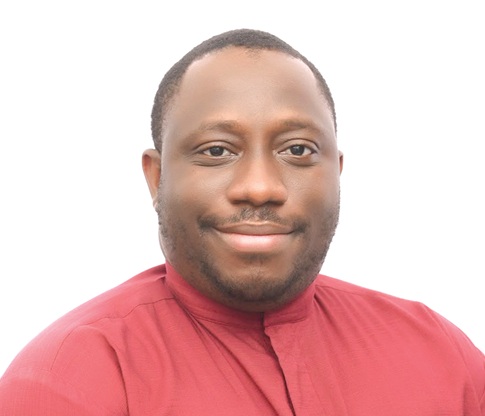
The statement was signed by the Secretary of the party's Interim National Committee, Yirimambo Moses Ambing.
The CPP drew on the Nkrumaist tradition and its Seven-Year Development Plan to argue for a more active developmental State.
It said it should be driven by public enterprises, national industrial planning, indigenous businesses and agricultural cooperatives, alongside private participation.
It called for a national industrialisation programme built on Ghanaian ownership, technology transfer and value addition.
The party expressed concern about the projected GH¢61 billion in interest payments, which it said is about 62 per cent of proposed capital expenditure. It warned that debt servicing could crowd out investment in factories, hospitals, schools and roads, and urged stronger domestic revenue mobilisation.
Education
The CPP described the GH¢48 billion education allocation as inadequate without clear targets. It noted that 10,370 public basic schools, serving about 3.05 million pupils, reportedly lack classroom blocks.
It questioned priorities, contrasting GH¢600 million for ten stadia with GH¢166 million for the Capitation Grant, GH¢169 million for BECE fees and GH¢50 million for special schools.
The party proposed ring-fencing GH¢4 billion yearly from GETFund to end under-tree schooling in three years. It also proposed raising the Capitation Grant to GH¢500 million, recruiting 20,000 teachers and setting up a GH¢2 billion TVET Retooling Fund.
On health, the CPP acknowledged the GH¢40.3 billion allocation to the Ministry of Health and GH¢10.2 billion to the National Health Insurance Scheme. It said performance should be judged by access, affordability, medicine availability and quality of care.
It demanded disclosure of outstanding NHIS arrears, enforceable reimbursement timelines, and the completion and staffing status of all Agenda 111 hospitals. It also called for a recruitment plan for unemployed health professionals.
Agriculture
The party called the Budget's agricultural focus "promising, but incomplete", arguing it prioritises output over building technological and industrial capacity. Importing tractors, distributing fertiliser and building silos are not enough, it said.
The CPP proposed a national agricultural mechanisation and innovation programme and an autonomous agricultural engineering research institute within the Council for Scientific and Industrial Research (CSIR). It also proposed a cassava, yam and plantain industrialisation programme.
