
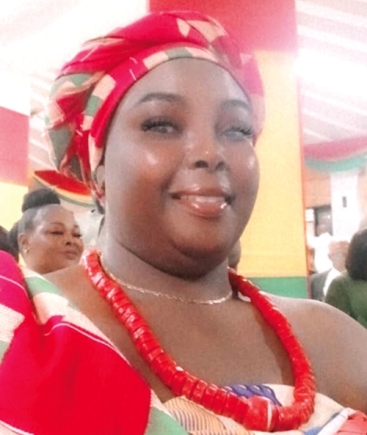
A leading member of the Convention People's Party (CPP), Joyce Larbie, has commended the government and the Bank of Ghana (BoG) for retaining the portrait of Ghana's first President, Osagyefo Dr Kwame Nkrumah, on the GH¢200 note in the newly unveiled Heritage Series.
She has, however, urged the government to translate the ideals of the country's founding leader into practical economic policies, particularly in the areas of self-reliance, industrialisation and African unity.
In an interview with the Daily Graphic, Mrs Larbie described the decision as significant to the country’s history, national identity and pride, saying Dr Nkrumah was not only a former President but also the founder of modern Ghana and a champion of African liberation.
Heritage recognition
She also welcomed the inclusion of other distinguished Ghanaians in the Heritage Series, including former United Nations Secretary-General Kofi Annan; the national flag designer, Theodosia Okoh Justice Annie Jiagge, Dr James Emman Kwegyir Aggrey and the Makola Queen, Agnes Oforiwa Tagoe-Quarcoopome.
She said the selection recognised the contributions of Ghanaians to commerce, peace, justice, education and women's development.
According to her, the country's history extended beyond any one individual and deserved to recognise the contributions of the various personalities who had played a role in national development.
Cedi performance
On the economy, Mrs Larbie acknowledged the relative stability of the cedi compared with the sharp depreciation experienced in 2022.
She said the currency's appreciation of about 41 per cent against the US dollar in 2025 had provided relief to businesses and households.
However, she expressed concern that the cedi had surrendered between nine and 10 per cent of those gains in 2026.
She cited interbank and forex bureau rates of approximately GH¢11.69 and GH¢12.35 to the dollar, respectively, saying the disparity continued to put pressure on importers, traders and consumers.
She also expressed concern about the rise in inflation from 3.2 per cent in March 2026 to 5.5 per cent in October 2026.
Although inflation remained within the target range, she said the upward trend required attention, particularly as households continued to grapple with the cost of goods and services.
"Do not just redesign the cedi. Strengthen the cedi," she stressed.
Mrs Larbie called for increased domestic production, industrialisation and support for local agriculture to reduce the country's dependence on imports and demand for foreign exchange.
She also urged the Bank of Ghana to manage the country's international reserves prudently, noting that reserves exceeding US$14 billion earlier in the year should be used strategically to support currency stability.
Additionally, she advocated low-interest credit for Ghanaian traders, farmers and manufacturers to strengthen local businesses and boost productivity.
She urged the government and the central bank to address the disparity between interbank and forex bureau exchange rates, describing it as an additional burden on ordinary Ghanaians.
Nkrumah's legacy
Mrs Larbie said the best way to honour Dr Nkrumah was to implement policies that promoted economic independence, industrial growth and African cooperation.
She reaffirmed her commitment to the Nkrumahist vision, saying she would support policies that advanced national development while speaking out on areas requiring improvement.
She maintained that Ghana's currency should carry not only Dr Nkrumah's portrait but also reflect the economic strength and vision associated with his leadership.
