
The Ghana Federation of Disability Organisations (GFD) has backed a proposal to increase the membership of Parliament from the existing 276 to 300, with 24 additional seats allocated through proportional representation to increase the representation of women, young people and persons with disabilities (PWDs).
The proposal forms part of the Government’s response to recommendations of the Constitution Review Committee (CRC), which was appointed in 2025 to undertake a comprehensive review of the 1992 Constitution.
The Government has proposed that the 276 existing constituency seats be retained, while the additional 24 seats would be filled through a proportional representation arrangement involving women, PWDs and young people.
The CRC’s own recommendation was slightly different.
It proposed that Parliament be capped at 276 elected members, while separately endorsing proportional representation as a means of creating greater opportunities for women, youth, other politically marginalised groups and smaller political parties to gain representation.
It recommended an independent study to determine the suitability and design of proportional representation for Ghana.
The Government’s proposal would, therefore, retain the current first-past-the-post constituency system while creating a separate proportional representation component.
The Government has said an independent study would be commissioned to determine how that component would be designed.
GFD supports plan
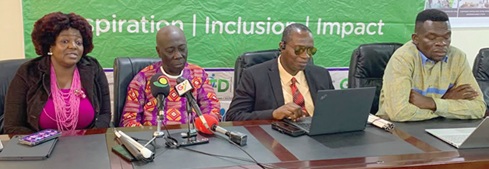
The GFD stated its position on the proposal at a press conference attended by representatives of disability organisations and the media to examine ways of improving political participation and representation for marginalised groups.
The proposed arrangement would give groups that face barriers to entering Parliament greater opportunities to participate directly in law-making and national decision-making.
The former President of the GFD and disability rights activist, Yaw Ofori Debrah, said the organisation had advocated greater representation of PWDs and other underrepresented groups in Parliament for years.
He recalled that the GFD first presented its case to the Constitutional Review Committee around 2013/2014, arguing that historically underrepresented groups needed a stronger voice in Parliament.
The Chairperson of the GFD National Advocacy Committee, Alex Williams, said the current electoral system did not automatically guarantee representation for groups facing barriers such as campaign financing, political networks, accessibility and social attitudes.
He said the proposed arrangement would enable PWDs and other marginalised groups to participate more directly in law-making, parliamentary oversight and national policy decisions.
Mr Williams cited Uganda, Kenya, Rwanda and Zimbabwe as examples of countries that had adopted various forms of reserved or proportional representation to improve the participation of underrepresented groups in their legislatures.
Safeguards
The Executive Director of the Ghana National Association of the Deaf (GNAD), Juventus Duorinaah, called for safeguards to ensure that the proposed system was implemented fairly and inclusively.
He said the GFD had made nine recommendations to the government, including a transparent selection process, gender balance, a clear definition of “youth”, accessible information, adequate funding and the full involvement of PWDs in consultations.
