
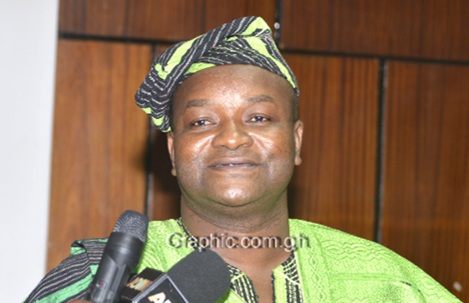
The All People’s Congress (APC) has asked the government to clarify whether the “24-Hour Markets” concept remains an integral part of its 24-Hour Economy policy following the decision to redesignate the projects as “District Economy Markets”.
The Founder and Leader of the APC, Hassan Ayariga, said the change in terminology required a clear explanation to Ghanaians, given the strong association of the market projects with the government’s flagship 24-Hour Economy policy.
Explain change
Mr Ayariga said if the government was broadening the initiative to focus on modern markets and local economic development across all districts, it should clearly communicate that objective.
The government announced the change on October 5, 2026, with the Minister of Local Government, Chieftaincy and Religious Affairs, Mahama Ayariga, explaining that the original name had created the impression that the broader 24-Hour Economy programme was primarily about markets.
The government also said the markets are intended to support local economic activity and ensure that every Metropolitan, Municipal and District Assembly (MMDA) has a modern market.
The projects are being re-scoped into two phases, with stores, sheds and essential commercial spaces prioritised under the first phase, followed by social amenities such as police and fire stations. The aim is to speed up delivery and achieve full completion by 2028.
APC position
Mr Ayariga said dropping the “24-Hour” identity without adequate explanation could create the perception that the original concept was being abandoned or had become less central to the policy.
He said the change could also give political opponents and critics grounds to question the implementation of a key component of the 24-Hour Economy agenda.
New name
Mr Ayariga proposed “24-Hour District Model Markets” if the government intended to combine the 24-Hour Economy concept with a wider district market development programme.
He said the name would preserve the identity of the 24-Hour Economy while reflecting the objective of developing modern markets across the districts.
He stressed that the APC’s position was about policy consistency, accountability and clear communication rather than political point-scoring.
