
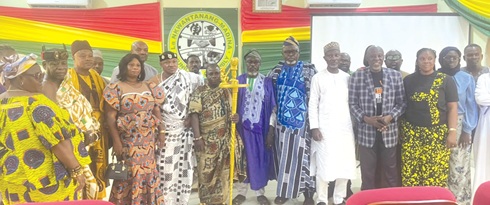
The La Nkwantanang-Madina Municipal Assembly has engaged traditional and religious leaders in the municipality to strengthen community education and prevention efforts against HIV/AIDS.
The engagement brought together chiefs and Imams to equip them with information on HIV prevention and control and encourage them to use their positions to educate residents on testing, prevention and treatment.
Available data
The Municipal HIV Coordinator, Vida Wewupadi Agoriwo, said the involvement of community leaders was critical to increasing HIV testing, particularly among men.
She said available data presented at the meeting showed that more women were testing positive for HIV than men, but that did not necessarily mean that more women were infected.
“More women are testing than men.
The men are not testing as women, so definitely, when more women are testing, the possibility of the positive going up is high than the men,” she said.
Ms Agoriwo, therefore, urged more men to undergo HIV testing to know their status and, where necessary, begin treatment.
She said early testing and treatment were also important in preventing mother-to-child transmission, explaining that pregnant women who failed to take their antiretroviral medicines or reported late for antenatal care could put their babies at risk of infection.
She encouraged pregnant women to attend antenatal care early and adhere to prescribed medication to reduce the risk of transmitting HIV to their babies.
Ms Agoriwo further expressed concern about the early exposure of some children and adolescents to sexual activity, saying it was contributing to high HIV infection rates among young people.
She called for stronger parental and community support for the education of girls, particularly those who were sent to live with men or boys at a young age.
“Girl-child education is key. We have to emphasise it and encourage our stakeholders to embrace and support it so that childhood infections will reduce,” she said.
The Chief of Okatabanman, Nii Shika Sowah Gborblor II, said traditional leaders would support efforts to educate community members about HIV prevention.
He said HIV education could also be incorporated into community festivals and other gatherings to ensure that residents received information on how to protect themselves.
He advised residents to avoid practices that could expose them to HIV and other diseases and encouraged sexually active persons to use condoms.
Knowing HIV status
The Assembly’s HIV/AIDS Focal Person, Tracy Alhassan, said the engagement was organised to give the chiefs the knowledge and tools needed to mobilise their communities for HIV testing and education.
She said the chiefs would be encouraged to organise their people to test and educate them on the importance of knowing their HIV status and how to adopt preventive measures.
She added that continued collaboration with traditional and religious leaders would help extend HIV prevention messages to more people within the municipality.
