
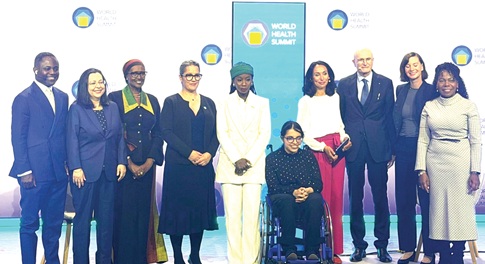
The Minister of Health, Kwabena Mintah Akandoh, has called for a fundamental shift in global health governance towards country-led health systems supported by domestic financing and shared leadership.
He urged international partners to move away from aid-dependent models and support countries to develop sustainable health systems that respond to the needs of their populations.
“Global health must not be designed for countries; it must be designed with countries and led by countries,” he said.
Dignity, solidarity and leadership
Speaking on behalf of President John Dramani Mahama at the World Health Summit 2026 in Berlin, Germany, Mr Akandoh said the call for country-led health systems reflected the spirit of President Mahama’s Accra Reset initiative.
“This is a call to move from dependency to dignity, from fragmentation to solidarity, from the promises of partnership to shared leadership, and this is exactly what we are translating into actions in Ghana,” he said.
The three-day summit, held on the theme “From Crisis to Resilience: Innovating for Health”, brought together political leaders, scientists, civil society organisations and private-sector representatives from around the world to explore collaborative and innovative solutions to global health challenges.
The summit provided a platform for cross-sectoral dialogue, evidence-based discussions and partnerships aimed at translating innovation into more equitable, resilient and sustainable health systems.
At the ceremony, Mr Akandoh received an official gift bearing the World Health Summit insignia on behalf of President Mahama in recognition of the President’s leadership and commitment to advancing global health.
As one of the key speakers at the summit, Mr Akandoh said Ghana was translating the vision of country-led health systems into action through initiatives to strengthen healthcare delivery and mobilise domestic resources.
He cited the government’s Free Primary Healthcare initiative, the Ghana Medical Trust Fund, popularly known as Mahama Cares, and increased investment in immunisation as examples of measures to build a more resilient health system.
“Resilience is not imported, and it is not donated; it must be built at home.
Therefore, at this point, I want to call on all of you, from Accra to Jakarta to Berlin, to come together to reset global health and save more lives,” he said.
Let’s work together
Mr Akandoh called on countries and international partners to work together to redefine global health priorities and develop sustainable approaches to healthcare delivery.
He said stronger international cooperation, backed by national ownership, was essential to saving more lives and ensuring that health systems were better equipped to meet the needs of their populations.
