
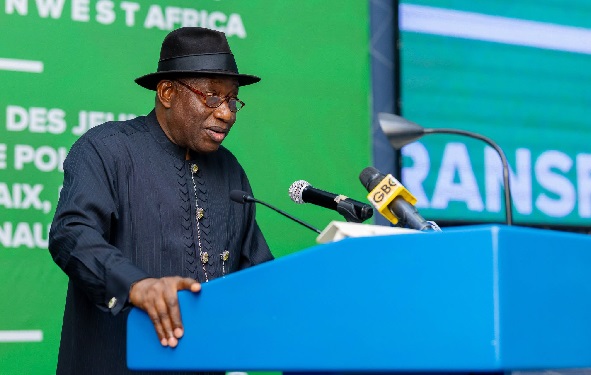
Former Nigerian President, H.E. Dr Goodluck Ebele Jonathan, has urged young people across West Africa to harness the power of social media to mobilise citizens, hold governments accountable and drive peaceful change.
He said youth participation was essential to the region’s development, peace and security, stressing that West Africa could not make meaningful progress if young people were excluded from efforts to protect and transform their countries.
Dr Jonathan said young people had the numbers, energy and influence to shape the region’s future noting that the youth could either help advance peace and stability or contribute to crises, depending on how their influence was channelled.
“We cannot move forward as a sub-region and even as a continent or society if the youth are neglected, if the youth are not involved in an effort to protect our own country,” he said.
ECOWAS Consultation
Dr Jonathan was speaking on the theme “Transformative Youth Leadership in West Africa” at the ECOWAS Ministerial Consultation on Transforming Youth Leadership and Policy Action to Advance Peace, Security and Community Resilience in West Africa in Accra on Thursday (October 29).
The event forms part of a three-day ECOWAS Ministerial Consultation on Youth, Peace and Security, held in Accra from October 27 to 29, 2026, under the theme, “Advancing Youth, Peace and Security in West Africa: Strengthening Regional Cooperation, Knowledge Sharing and Strategic Partnerships.”
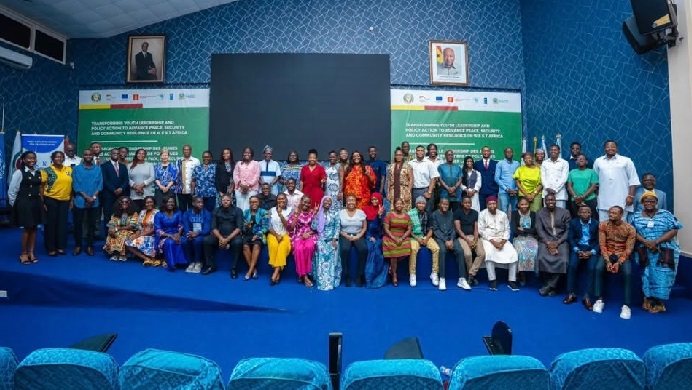
It was intended to assess progress in implementing the African Union’s Continental Framework on Youth, Peace and Security (CFYPS) and its 10-Year Implementation Plan (2020–2029) at regional and national levels, with funding and support from Germany, the European Union and Denmark through projects implemented by GIZ (AUPSG and EPSG).
Notable among the dignitaries were Commandant of the Kofi Annan International Peacekeeping Training Centre, Air Vice Marshal David Anetey Akrong, ECOWAS Commission's Head of Medition and Coordination of Regional Political Affairs Division, Directorate of Political Affairs, Dr Onyinye Onwuka, WANEP Ghana Executive Director, Mrs Levinia Addae-Mensah and Head of Programme, ECOWAS Peace, Security and Governance project at GIZ, Mrs Yvonne Akpasomz.
Youth activism
Dr Jonathan cited the role of young people in West Africa’s independence struggles, arguing that youth activism had historically contributed to major political and social changes. He encouraged the current generation to sustain that legacy through constructive engagement and peaceful advocacy.
He said social media had created new opportunities for young people to organise, influence public debate and challenge government decisions they considered harmful to the public interest.
“Today, social media is for everybody, and social media is powerful. So you can use that to mobilise young people. You can use that to stop government from doing certain things that you think are not too good for us,” he said.
However, he cautioned against physical confrontation and actions that could escalate tensions, urging young people to pursue change through dialogue, persuasion and mentorship.
“You have to take the soft approach. You have to take advocacy. You have to take mentorship. You have to take persuasion. And you will even achieve better than that confrontation,” he said.
De-escalate violent situations
Drawing on his experience in public service, Dr Jonathan recounted how dialogue and persuasion had helped de-escalate potentially violent situations involving young people.
He said leaders needed to earn public confidence to persuade people to make responsible decisions, particularly during periods of political tension.
He also urged young people not to expect immediate results, noting that meaningful change often requires sustained commitment over many years. He cited the long struggle for independence in West Africa as an example of how persistent advocacy could eventually produce significant change.
“Leadership is about commitment, the willingness and the determination to do what is right for the general public,” he said.
Dr Jonathan challenged youth leaders participating in the consultation to apply the knowledge and skills gained to their communities and countries, remain committed to peaceful change and continue advocating for accountable leadership.
He expressed confidence that young people could contribute to a more peaceful and resilient West Africa if they used their influence responsibly and remained focused on the public good.
