
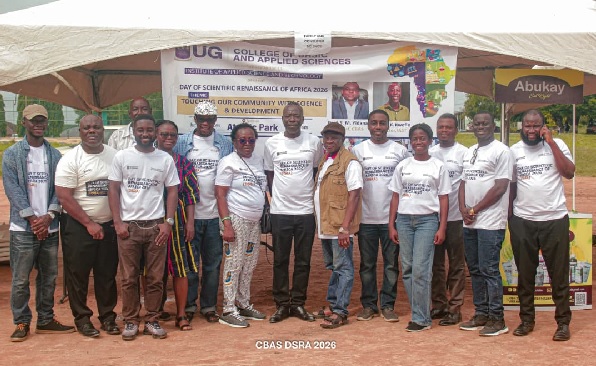
The University of Ghana, through its College of Basic and Applied Sciences (CBAS), marked the 2026 Day of Scientific Renaissance of Africa (DSRA) by reaffirming its commitment to advancing science, innovation and sustainable development.
The University’s annual DSRA celebrations, adopted in 2022, are designed to bridge the gap between science and society by taking research and technological innovations beyond the laboratory and into surrounding communities.
DSRA Fair
Held last Thursday in Accra, the fair was designed to demonstrate how research at the University is delivering practical solutions to the everyday challenges faced by communities.
The event featured speeches and exhibition of products which showcased innovations from agriculture, nutrition, engineering, artificial intelligence (AI) and other scientific disciplines, highlighting the University's commitment to translating research into real-world impact.
Some of the locally driven innovation showcased during the exhibition, including the production of coconut milk and the use of coconut residue to fortify biscuits, demonstrating how local resources can be fully utilized with minimal waste.
It brought together schools, traditional leaders and policymakers of Haatso, Kwabenya, Atomic and neighbouring communities to experience how University of Ghana research is addressing real-world challenges and contributing to national development.
Scientific heritage
A member of the DSRA Planning Committee, Dr Henry Sintim highlighted the DSRA as a celebration of Africa’s rich scientific heritage and its growing leadership in research, technology and innovation.
Speaking on behalf of the Provost, Prof. Mark Sandow Yidana, Dr Sintim underscored the African Union’s 2026 theme, “Assuring Sustainable Water Availability and Safe Sanitation Systems to Achieve the Goals of Agenda 2063,” as a reminder of the vital role of science in achieving sustainable development.
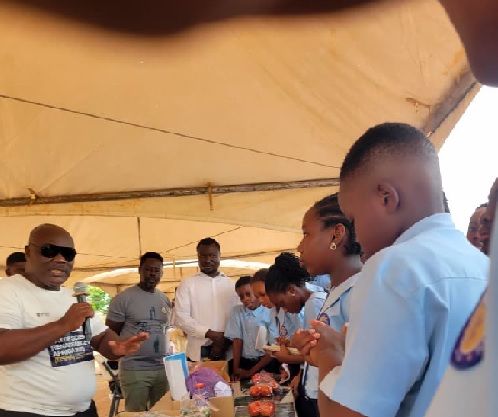
He encouraged greater investment in research, stronger partnerships between academia, industry and communities, and the nurturing of young scientists to position Africa as a global leader in innovation.
"Today, the College of Basic and Applied Sciences at the University of Ghana proudly opens its doors to showcase the power of science and technology, not as distant concepts, but as living tools that shape our daily lives and future."
"It is a reminder that science is not confined to laboratories; it thrives in our farms, our industries, our schools, and our homes. It is the heartbeat of development, the engine of progress, and the promise of a brighter tomorrow," he said.
He expressed hope that the event would inspire new ideas, collaborations and confidence in Africa’s limitless scientific potential.
Dr Sintim also called for stronger support for research, youth engagement in science, and partnerships that will position Africa as a creator—not merely a consumer—of technology.
Inspiring young minds
Nutrition expert at the Department of Food Science, University of Ghana, Prof. Matilda Steiner-Asiedu, described the 2026 Day of DSRA outreach as a highly rewarding initiative that inspired schoolchildren and strengthened community engagement in science.
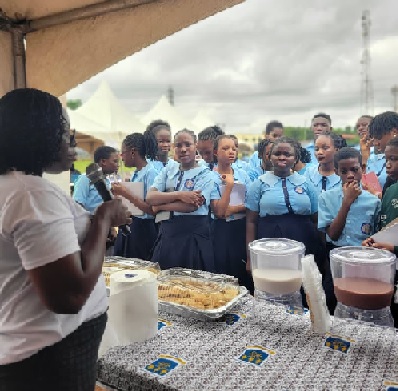
She expressed delight at the enthusiasm and curiosity demonstrated by students, particularly junior high school pupils, whose insightful and challenging questions reflected their strong interest in science.
According to her, the experience reaffirmed the importance of exposing young people to scientific innovation, noting that they represent Ghana’s future and have the potential to drive the country’s development.
Prof. Steiner-Asiedu stressed that science is essential to achieving the Sustainable Development Goals (SDGs), including ending poverty, eliminating hunger, and improving health and economic development.
She called for greater support for science outreach programmes that connect children and communities with research and innovation.
She said her greatest satisfaction came from the positive impact the programme had on the participating schoolchildren, expressing confidence that nurturing such young minds will help secure a brighter future for the country.
Developing solutions
The Director of the Institute of Applied Science and Technology (IAST), Prof. Samuel Kwofie said contrary to the perception that universities only produce academic publications, the University of Ghana is focused on developing solutions that address societal needs.
Prof. Kwofie pointed to research-driven innovations in nutrition, including fortified food products and improved agricultural produce, as well as engineering projects aimed at improving access to safe and clean water.
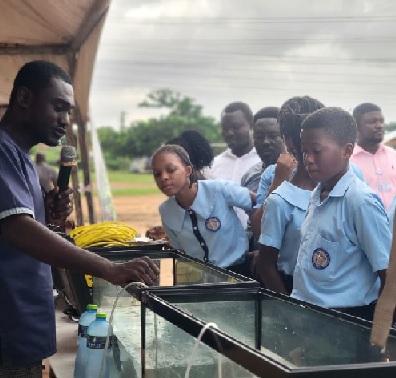
He also highlighted IAST's work in artificial intelligence, including AI-powered diagnostic tools, autonomous systems, and drone technologies, with applications in healthcare and agriculture.
He emphasized that AI has enormous potential to accelerate development and reduce poverty, describing its adoption as one of the most effective ways to improve livelihoods and strengthen the country's socio-economic progress.
