
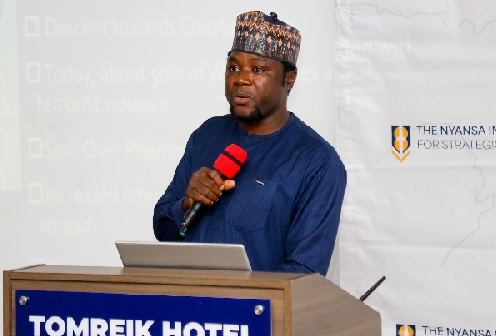
The Executive Director of the West African Centre for Counter Extremism (WACCE), Mutaru Mumuni Muqthar, has cautioned that the growing threat of terrorism and violent extremism in West Africa cannot be defeated through military action alone, urging governments to address the underlying social, economic and governance challenges that make communities vulnerable to extremist recruitment.
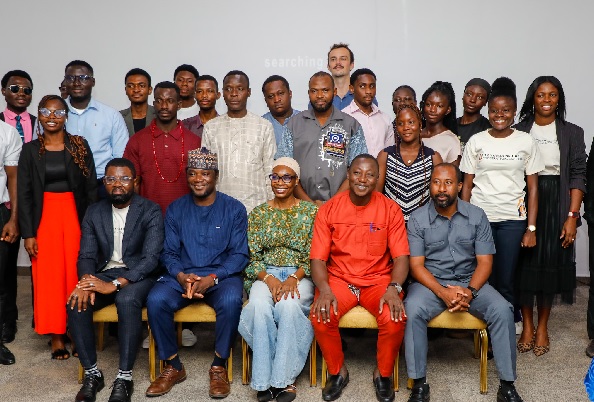
He was speaking at the Nyansa Dialogue Series III organised by the Nyansa Institute for Strategic Dialogue (NSID) in Accra last Friday.
Speaking on the theme “With Growing Instability Across the Sahel, How Can Ghana Help?”, Mr Muqthar said West Africa is facing an unprecedented security crisis, with violent extremism spreading from the Sahel towards coastal states, including Ghana.
He mentioned that while violent extremism was once concentrated in only a few West African countries, about half of the countries in the region are now affected.
The threat, he said, has become increasingly complex, intense and geographically widespread, with attacks spilling across national borders.
“The battle against terrorism cannot be won on the battlefield alone; it must be fought by addressing the conditions in our communities that drive people towards radicalisation and violent extremism,” he said.
Mr Muqthar argued that the persistence of terrorism despite years of extensive military interventions demonstrates the limitations of a predominantly militarised approach.
He cited major regional and international security operations, including MINUSMA, Operation Barkhane, G5 Sahel forces and other multinational initiatives, saying the scale of these interventions had not prevented the continued spread of extremist violence.
According to him, excessive reliance on military responses has sometimes produced human rights abuses, extrajudicial killings and loss of public trust, creating additional grievances that extremist groups exploit for recruitment.
He stressed that “the battle against terrorism cannot be won on the battlefield”, but must instead be fought by addressing the conditions that drive radicalisation within vulnerable communities.
A major concern, he said, is the growing frustration among young people who feel excluded from economic and political opportunities. He identified unemployment, governance deficits, dysfunctional institutions, inequality, marginalisation, local conflicts and human rights abuses as major factors contributing to extremist recruitment.
Mr Muqthar cited research indicating that 71 per cent of recruits into extremist groups in sub-Saharan Africa identified human rights abuses by state security forces as a reason for joining, while economic vulnerabilities also played a significant role.
He said extremist groups often understand the aspirations and vulnerabilities of young people better than governments do, enabling them to exploit frustrations over unemployment, lack of opportunities and perceived exclusion.
He therefore called for counter-terrorism strategies that place human security at the centre of national security, stressing that governments must build responsive institutions, create economic opportunities for young people and address longstanding grievances.
He also warned that insecurity has significant economic consequences, particularly through its impact on investor confidence.
Perceptions of insecurity in northern Ghana, he said, could discourage investment and further limit economic opportunities, potentially worsening the vulnerabilities that extremist groups exploit.
Despite the regional challenges, Mr Muqthar said Ghana is well positioned to play a leadership role. He cited the country's democratic stability, National Security Strategy, framework for preventing and countering violent extremism, cooperation with neighbouring countries and the Accra Initiative as important foundations.
He also welcomed Ghana's diplomatic engagement with military-led Sahelian states, including the appointment of a Special Envoy to the Sahel, which he said could help rebuild trust, improve intelligence-sharing and strengthen regional cooperation.
Mr Muqthar concluded that Ghana's response to the Sahel crisis must go beyond military preparedness and focus on good governance, youth empowerment, economic inclusion, community resilience, diplomacy and regional cooperation.
“We cannot fight terrorism with our eyes closed,” he said, stressing that sustainable counter-terrorism efforts must confront the conditions that allow extremism to take root in the first place.
Regional leadership
For his part, the Executive Director of the Nyansa Institute for Strategic Dialogue (NSID), Samuel Koranteng Adjei has called on Ghana to move beyond awareness of the growing instability in the Sahel and adopt a comprehensive strategy focused on preparedness, prevention and regional leadership.
Speaking at the third edition of the Nyansa Dialogue Series, held under the theme “With Growing Instability Across the Sahel, How Can Ghana Help?”, Mr Adjei said the worsening security situation in the Sahel could no longer be treated as a distant threat to Ghana.
He stated that the expansion of violent extremism, political instability, trafficking, displacement and the weakening of state authority in parts of the Sahel was rapidly reshaping the security environment across West Africa.
Although Ghana has maintained its position as a relatively stable democracy, he cautioned that the country’s stability should not be mistaken for immunity from the effects of regional insecurity.
“The question before us tonight is therefore not simply whether instability in the Sahel can reach Ghana, it is whether Ghana is sufficiently prepared for the changing nature of the threat, and whether we are exercising the leadership required to help prevent a wider regional crisis,” he said.
Mr Adjei stressed that the challenge extends beyond military and security responses, arguing that Ghana’s approach must also address governance, economic opportunities, border-community resilience, intelligence gathering and sharing, diplomacy, regional cooperation and public trust.
