
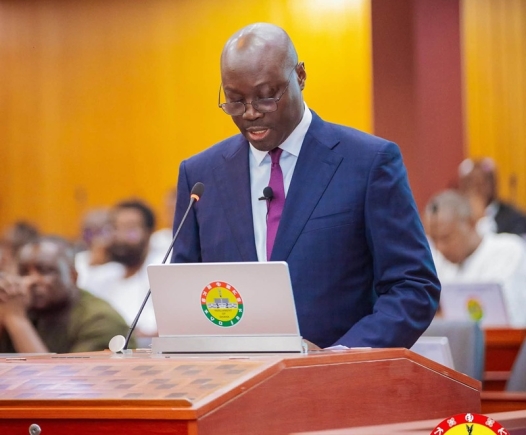
The government has proposed a three per cent discount on gold purchases from the small-scale mining sector from 2027 to reduce the cost of accumulating the country's foreign exchange reserves from five per cent to two per cent.
The Finance Minister, Dr Cassiel Ato Forson, announced the proposal when he presented the 2027 Budget Statement and Economic Policy to Parliament on Thursday, November 12, 2026.
He called on the National Association of Small-Scale Miners and the Licensed Gold Buyers Association to support the proposed changes, which are expected to lower the cost of the Ghana Gold Board's (GoldBod) gold reserve accumulation programme.
Dr Forson said the cost of accumulating foreign exchange reserves had declined from 16 per cent in 2025 to five per cent in 2026.
The government intends to reduce the cost further to two per cent in 2027 through the proposed three per cent discount, following consultations with industry stakeholders.
"Together, Mr Speaker, we can build stronger reserves at a lower cost and ensure that Ghana's gold delivers lasting benefit for our people," he told Parliament.
The proposal comes amid earlier disagreements over GoldBod's pricing arrangements for gold purchased from the artisanal and small-scale mining sector.
On January 6, 2026, GoldBod defended its decision to purchase gold from small-scale miners at prevailing spot prices, arguing that discounted purchases could encourage smuggling and undermine efforts to channel gold through official trading channels.
The Board maintained that offering competitive prices was necessary to encourage miners to sell their gold through the formal market.
Earlier, on January 27, 2026, the Ghana National Association of Small-Scale Miners had proposed a two per cent discount for licensed buyers as part of recommendations submitted to GoldBod after nationwide consultations.
The association also proposed changes to the licensing regime to address gold hoarding and market distortions.
GoldBod said it would study the recommendations and engage industry stakeholders on possible changes.
The proposal also comes amid concerns raised by the International Monetary Fund (IMF) about the cost and financial sustainability of Ghana's domestic gold purchasing programme.
In its 2026 assessment of Ghana, the Fund reported that the programme's costs had declined to 11.7 per cent in the first quarter of 2026, against a five per cent target under the memorandum of understanding.
The IMF identified service fees, assay charges, trading margins, off-taking costs and foreign exchange pricing differences as some of the factors contributing to the costs.
It said additional measures were needed to bring down the costs and contain the associated fiscal risks.
Gold exports
The Finance Minister also told Parliament that GoldBod exported 88 tonnes of small-scale gold valued at US$12 billion in January 2026.
This compared with 80.64 tonnes of gold valued at US$10.23 billion from the large-scale mining sector.
He said the earnings were increasing foreign exchange supply, strengthening the country's reserves and supporting the stability of the cedi.
The proposed discount is intended to lower the cost of accumulating foreign exchange reserves while maintaining the contribution of gold exports to the country's external position.
