
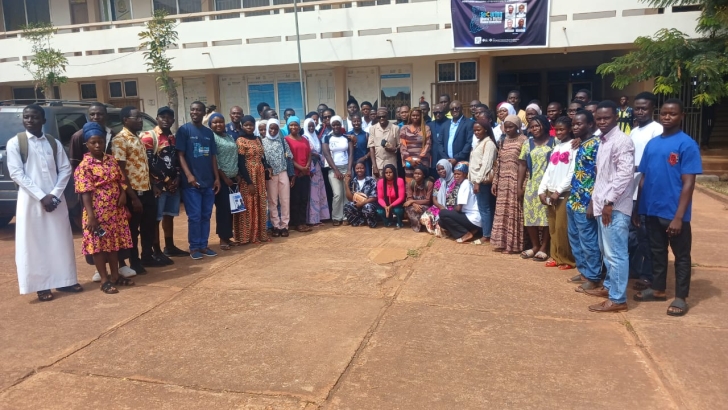
The Cyber Security Authority (CSA) has marked Cybersecurity Awareness Month in Tamale with a call on residents to remain vigilant and report suspicious activities in their communities to help identify and combat cybercrime.
The Director-General of the CSA, Dr Divine Selasi Agbeti, who made the call in a speech read on his behalf by the Director of Finance of CSA, Dr Thomas Assibi, said cybercriminals often operated from seemingly peaceful communities, making public vigilance and cooperation with security agencies critical to tackling the menace.
He urged residents to be concerned about premises where large numbers of young people appeared to work through the night with laptops, mobile phones and internet equipment, and to report such activities to the appropriate authorities.
He also encouraged the public to be alert to unexplained sudden wealth and other suspicious activities that could be linked to cybercrime.
Sensitisation
Organised by the CSA in collaboration with the Tamale Technical University and the Northern Regional Coordinating Council, the event brought together students, civil society organisation representatives, and members of the public. It seeks to sensitise them to cyber threats and promote responsible online behaviour, particularly among the youth and vulnerable groups.
Alarming cases
Dr Agbeti indicated that the CSA recorded 4,604 cybersecurity incidents in 2025, resulting in financial losses of more than GH¢22.5 million. Between January and September 2026, the Authority recorded 4,938 incidents, with reported financial losses exceeding GH¢209.7 million, more than nine times the amount recorded in the whole of 2025.
He pointed out that human error and social engineering accounted for an estimated 60 to 95 per cent of cybersecurity incidents, making public awareness essential in preventing online fraud and other cyber-related offences. He advised the public to report suspected cybercrime and seek guidance through the CSA's 24-hour shortcode, 292.
He also cautioned against sharing sensitive personal information, clicking suspicious links, and responding to unsolicited messages or offers promising unrealistic investment returns.
The CSA boss reiterated the Authority and the government’s commitment to dealing with cybercriminals through arrests and prosecutions, adding that efforts were underway to strengthen cybersecurity awareness and incident response across the country.
To that end, he said the CSA is to establish regional offices in the Northern, Volta, Central and Ashanti Regions to support cybersecurity education, incident reporting and responses.
Pledge
For his part, the Vice-Chancellor of TaTU, Professor Bashiru Imoro Ibn Saeed, said the university was ready to collaborate with the CSA to strengthen cybersecurity education and develop the expertise needed to protect Ghana's digital space. He said the university had introduced undergraduate and master's degree programmes in cybersecurity to train professionals for the sector.
He added that the institution could contribute through research, innovation, professional mentorship and practical training for students. Professor Ibn Saeed called for sustained cooperation between the two institutions, including regular public education programmes and opportunities for students to interact with cybersecurity professionals.
He urged students to protect their passwords and personal information, avoid suspicious links and exercise caution when conducting online financial transactions. He also called on parents, educators, traditional authorities, religious leaders and businesses to support efforts to promote safe online practices.
Strengthen systems
The Dean of the Faculty of Applied Science and Technology at TaTU, Professor Abukari Abdul Aziz Danaa, stressed the need for financial institutions to strengthen their cybersecurity systems to protect customers' funds and personal information. He said effective security measures, regular system updates and prompt detection of suspicious transactions were essential to reducing online fraud and financial losses.
The Northern Regional Minister, Adolf Ali John, called for stronger collaboration among public institutions, traditional authorities, civil society organisations and communities to tackle cybercrime. He said public education and community participation were important in identifying suspicious activities, protecting vulnerable people and preventing the region from becoming a safe haven for cybercriminals.
