
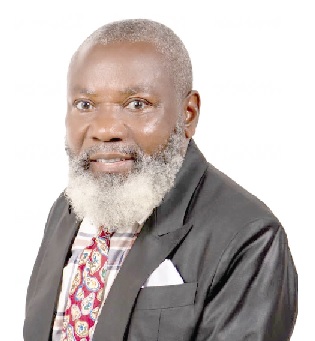
The Chairman of the Christ Apostolic Church (CAC) of Ghana, Apostle Abraham Amoh, has commended President John Dramani Mahama for proposing measures to reduce pressure on Accra, including the possible relocation of the national capital.
He, however, urged the government to ensure that the process was not politicised but pursued in line with the country’s constitutional and legal framework.
Apostle Amoh said Parliament must be fully involved in any decision on the relocation of the capital to ensure that it served the national interest and enjoyed broad consensus.
He made the call when he addressed journalists in Accra last Monday.
Ease pressure on Accra
Apostle Amoh said relocating the capital, if properly planned and implemented, could significantly reduce pressure on Accra’s infrastructure and help address the city’s perennial flooding challenges.
He attributed the strain on the city’s facilities to rapid population growth and the concentration of economic activities in the capital.According to him, the situation had contributed to indiscriminate construction on waterways and poor waste disposal practices, which had worsened flooding.
He said although human behaviour was a major contributor to the flooding problem, a well-planned new capital could provide an opportunity for improved urban development and sustainable growth.
“The pressure on Accra has become too much. A new national capital, properly planned, will help reduce congestion and create room for orderly development,” he said.
Punish officials over illegal permits
The CAC Chairman also called for greater accountability among public officials responsible for physical planning and land administration.
He questioned why officials who approved developments on waterways were rarely sanctioned while structures were demolished after disasters occurred.
Apostle Amoh argued that demolishing unauthorised structures alone would not address the challenge unless officials who facilitated such developments were also held responsible.
He appealed to Parliament to enact legislation to make Metropolitan, Municipal and District Chief Executives (MMDCEs) and other public officials criminally liable for approving developments in flood-prone areas.According to him, prosecuting such officials would serve as a deterrent and promote responsible land-use management.
Apostle Amoh proposed the Suhum-Asamankese corridor and the Suhum-Koforidua stretch in the Eastern Region as possible locations for a new national capital.
He said the areas had favourable terrain that made them less vulnerable to flooding and offered enough land for the development of government offices, industries, residential communities and other supporting infrastructure.
He added that the availability of land in the area provided an opportunity to create a modern city capable of supporting future population growth.
Background
The debate over relocating Ghana’s capital has resurfaced periodically, particularly following major flooding incidents in Accra.
The latest discussion was triggered by the June 29, 2026 floods, which caused extensive damage in Accra, Tema and other parts of the Greater Accra Region.
Following an aerial assessment of affected communities and visits to flood-hit areas with members of the Anti-Flood Task Force, President Mahama announced a number of immediate and long-term measures to tackle the recurring flooding situation.
As part of the long-term measures, the President said the government planned to reduce pressure on Accra by relocating some major government institutions outside the capital and developing a new growth centre over the next two decades.
He said the proposed city would be supported with the necessary infrastructure to make it attractive for residents, businesses and investors.
