
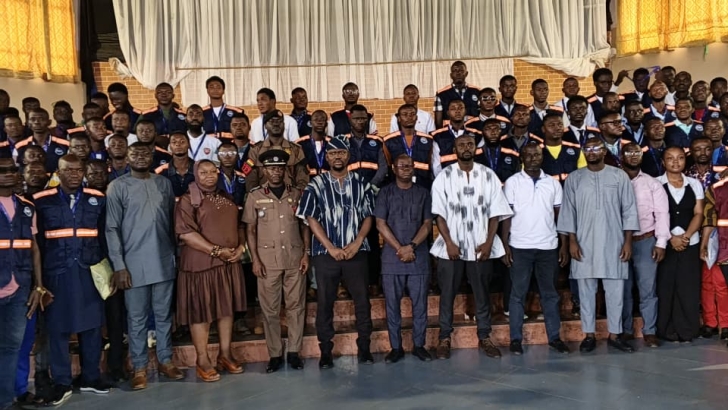
The Energy Commission (EC) has urged newly certified electrical wiring professionals to equip themselves with skills in electric vehicle (EV) charging systems, solar installations and battery storage technologies as Ghana's energy sector continues to evolve.
The call came at the 25th graduation ceremony for candidates who passed the May/June 2026 Electrical Wiring Certification Examination, where 884 practitioners were certified to practise under the Commission's regulatory framework.
Speaking at the ceremony in Tamale on the theme, "Setting the Standard: Powering Ghana's Future — EV, Solar, and Beyond," the Manager for Electricity and Natural Gas Regulation at the Energy Commission, Adolf Nii Ashong, said the future of the profession would increasingly be shaped by renewable energy and electric mobility technologies.
He disclosed that 1,036 candidates sat for the examination nationwide, with 884 passing, representing an 85 per cent success rate.
At the Tamale Technical University Examination Centre, 181 of the 192 candidates who wrote the examination were successful, recording a 94 per cent pass rate.
Mr Ashong said the successful candidates had demonstrated the competence and commitment required of certified electrical wiring professionals.
"These numbers represent more than examination results. They represent young men and women who have committed themselves to learning a trade, developing their skills and meeting the standards required to become certified electrical wiring professionals," he said.
He congratulated the graduates for completing both the theoretical and practical components of the certification process and reminded them that certification carries a responsibility to protect lives and property through quality electrical installations.
Mr Ashong said the Commission's objective since the implementation of the Electrical Wiring Regulations, 2011 (L.I. 2008), had been to reduce deaths and property losses caused by poor electrical wiring.
He noted that solar photovoltaic systems, battery storage technologies and electric vehicles were becoming more common in homes, businesses and institutions, increasing the need for electricians with specialised skills.
According to him, the revised Ghana Standard GS 1009 now includes provisions for renewable energy systems, energy storage technologies and their safe integration into electrical installations.
To keep pace with developments in the sector, he said the Commission was developing a new syllabus for future certification examinations to reflect advances in energy technologies.
"Our certification process must prepare electricians not only for conventional wiring, but also for these new technologies that are becoming part of Ghana's energy future," he said.
Mr Ashong further disclosed that draft Electric Vehicle Charging Infrastructure Regulations developed by the Commission were currently before Parliament for consideration.
He said the regulations, once approved, would create new opportunities for certified electricians as demand for EV charging infrastructure expands across the country.
He cautioned practitioners against compromising professional standards, stressing that poor workmanship and the use of substandard materials continue to contribute to electrical fires, business interruptions and the destruction of lives and property.
He urged certified electricians not to allow unqualified persons to operate under their certificates and encouraged them to pursue continuous professional development.
"Do not compromise on standards. Do not use inferior materials simply because a client wants to reduce cost. Do not allow your certificate to be used by an uncertified person, and do not stop learning," he emphasised.
The Northern Regional Manager of the Ghana Standards Authority (GSA), Basim Alhassan, announced that the Authority's Tamale office had, for the first time, been equipped with an electrical wiring cable testing machine capable of detecting substandard cables.
He said the equipment forms part of the GSA's Electro Vigilant Project, which is currently being piloted in the Ashanti and Volta regions, with plans for a nationwide rollout.
Mr Alhassan explained that the machine would strengthen the Authority's collaboration with the Energy Commission in identifying and removing substandard electrical cables and related materials from the market.
He warned that manufacturers, importers and traders found dealing in substandard electrical materials during enforcement operations would face the full rigours of the law.
