
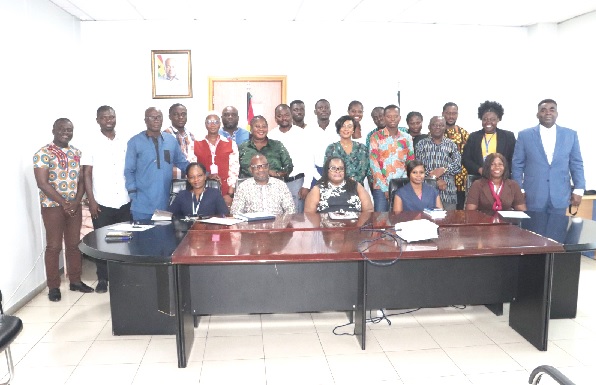
The National Labour Commission (NLC) has called for stronger collaboration with the media to improve public understanding of Ghana's labour laws and dispute resolution processes, saying informed and responsible reporting is critical to maintaining industrial peace.
The Executive Secretary of the commission, Dr Bernice Welbeck, said many misconceptions about the commission's role often fuelled public misunderstanding during industrial disputes, particularly when the commission declared strikes illegal.
She explained that such declarations were usually based on procedural breaches rather than the legitimacy of workers' demands.
Dr Welbeck made the call at a press information workshop organised by the commission in Accra last Wednesday for journalists who report on labour and industrial relations issues.
The workshop formed part of the commission's strategy to strengthen public awareness of the Labour Act, 2003 (Act 651), while building closer collaboration with the media in promoting industrial harmony.
Not a negotiating body
Dr Welbeck clarified that contrary to public perception, the NLC was not a negotiating body but an independent adjudicating institution established to facilitate the settlement of labour disputes.
She explained that the commission's responsibility was to ensure justice for both employers and employees while promoting effective labour-management cooperation to improve productivity and support national development.
Illegal strikes
Touching on industrial actions, Dr Welbeck said whenever the commission declared a strike illegal, it was referring to the procedure adopted in embarking on the strike and not the merits of the workers' demands.
"Most of the time when we say a strike is illegal, we are talking about the procedure. We are not saying the demand is right or wrong," she explained.
She said the Labour Act prescribed clear procedures for declaring industrial action, including the requirement to serve a seven-day notice on both the employer and the commission before a strike could lawfully begin.
"When we say it is illegal, we are saying stop it and come for the substantive matter to be dealt with," she added.
Dr Welbeck said the commission's work extended far beyond handling strikes, explaining that it also dealt with unfair dismissals, maternity protection, non-payment of salaries, leave entitlements and other workplace rights.
She said many workers were unaware of the protections guaranteed under the Labour Act.
Citing an example, she said some employees continued to sell their annual leave despite the practice being prohibited by law.
Dr Welbeck further explained that workers were entitled to a minimum of 15 working days of annual leave and that sick leave certified by a medical practitioner should not be deducted from annual leave.
She said employers could not lawfully discriminate against employees on grounds of pregnancy or require female employees to undertake not to become pregnant as a condition of employment.
Dr Welbeck further urged journalists to prioritise factual and balanced reporting, saying sensational coverage of labour disputes had the potential to heighten tensions.
