
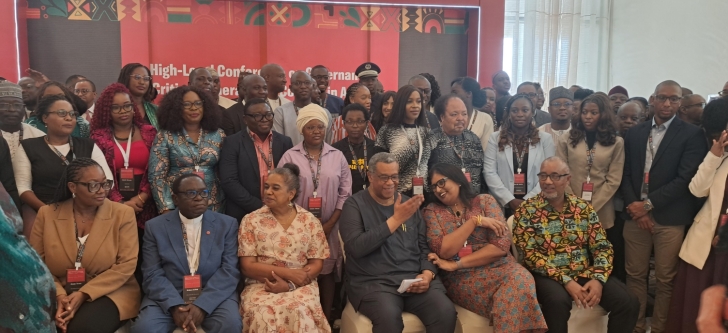
A high-level conference by policymakers, civil society actors and industry players to examine the link between governance, critical minerals and conflict in Africa has opened in Accra today, with a strong call for reforms that will place people at the centre of decision-making.
Participants from across the continent are engaging in discussions aimed at reshaping how Africa manages its vast mineral wealth amid growing global demand for resources such as cobalt, lithium, coltan and rare earth elements.
The conference is being held at a time when Africa is increasingly seen as central to the global energy transition. The continent holds about 30 per cent of the world’s known critical mineral reserves, placing it at the heart of future supply chains.
However, this opportunity comes with significant challenges. Across several African countries, mineral extraction has been linked to environmental damage, inequality and conflict, raising concerns about how resources are governed.
Speaking to these concerns, Director of Democratic Futures in Africa at the Open Society Foundations, Dr Chukwuemeka B. Eze, emphasised that the relationship between minerals and development depended largely on governance systems.
“The link between critical minerals and peace is not automatic. Where governance is transparent and inclusive, these resources can drive development. Where it is weak, they can deepen inequality and fuel instability.”
He noted that many communities, particularly artisanal miners, youth and women, remain excluded from the benefits of the sector despite playing key roles.
“Too often, those closest to the resources are the least involved in decisions about them. We must change this by ensuring community ownership and participation in governance processes.”
The conference is also addressing the growing geopolitical competition for Africa’s mineral resources, which experts say could either strengthen or weaken the continent’s position globally and is expected to produce a policy communiqué and actionable recommendations to guide governments, institutions and stakeholders.
Dr Chukwueze warned that without coordinated strategies, African countries risk entering unequal partnerships.
“Global demand is rising, and with it comes pressure.if African countries do not act together, we may reinforce dependency instead of building strength and resilience.”
Discussions on the opening day focused on the intersection of governance, democracy, conflict and development, setting the tone for deeper engagements in the days ahead.
Sessions are expected to explore key themes including democratic accountability, peace and security, economic transformation, human rights and regional cooperation.
According to organisers, the goal is to develop a shared, people-centred framework that promotes transparency, justice and inclusive growth in the management of critical minerals.
Dr Chukwueze highlighted the importance of shifting from raw material exports to value addition within the continent.
“Africa has a narrow window to transform its mineral wealth into real economic gains. We must move beyond extraction to industrialisation and ensure that revenues benefit our people.”
Participants will also examine how infrastructure projects and new technologies can support better governance and reduce conflict in resource-rich regions.
Adding his voice to the conversation during a panel discussion, Nigerian Bishop, Matthew Hassan Kukah stressed that Africa’s governance challenges go beyond individuals in leadership and are deeply rooted in weak systems.
“Africa’s problem is not simply about bad people in leadership. It is often about good people surrounded by bad systems that allow wrong things to happen.”
He pointed to the role of public institutions, especially the bureaucracy, as a major factor in determining whether leadership succeeds or fails.
“The quality of the bureaucracy is critical. You can have a good president with the best intentions, but if the system around him is weak or compromised, it becomes difficult to achieve meaningful results,” he added.
He further urged African leaders and citizens to rethink governance and political choices.
“We must begin to question how we organise our societies and the systems we build. Development will not come from slogans but from strong institutions that work for the people.”
