
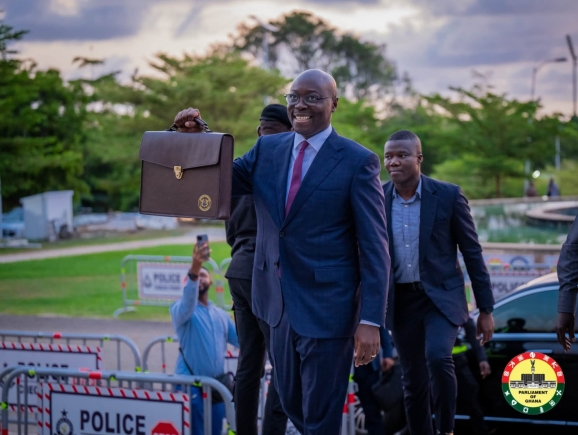
The government plans to deploy two million prepaid electricity meters and fully implement private-sector participation in electricity distribution by the end of 2027 as part of measures to reduce distribution losses and address financial challenges in the energy sector.
The Finance Minister, Dr Cassiel Ato Forson, announced the plans when he presented the 2027 Budget Statement and Economic Policy to Parliament on Thursday, November 12, 2026.
He said the two million prepaid meters would help reduce distribution losses, while private-sector participation in electricity distribution would be fully implemented by the end of 2027.
Under the proposed arrangement, private-sector expertise would be introduced to improve operational efficiency, while strategic public assets would remain protected.
The Minister did not provide details of the cost of the meter deployment, installation schedule, geographical coverage or whether the meters would be supplied free of charge.
The announcement comes against the background of existing smart prepaid meter procurement by the Electricity Company of Ghana (ECG).
In January 2025, ECG issued a procurement notice for the supply and installation of smart prepaid meters across four geographical packages under the Ghana Energy Sector Recovery Programme.
The 2027 Budget announcement does not clarify whether the two-million-meter target represents additional installations, replacement of existing meters or an expansion of ongoing programmes.
Dr Forson said Ghana's energy sector recorded an annual shortfall of approximately US$1.4 billion in January 2025, while arrears owed to Independent Power Producers and fuel suppliers stood at about US$1.7 billion.
He said investments in electricity generation, transmission and distribution would help eliminate the annual financial shortfall and reduce the burden on taxpayers.
The government is also targeting a reduction in the cost of power generation from approximately 16 US cents per kilowatt-hour to eight US cents or less.
To improve electricity transmission, the government has earmarked US$500 million between 2027 and 2030 to modernise the national transmission network.
The investment will support the Ghana Grid Company Limited (GRIDCo) to strengthen the North-South transmission corridor, connect new generation facilities to demand centres and provide reliable electricity connections to strategic industrial enclaves.
Dr Forson said the measures would improve electricity supply and support industrial activities, including mineral processing, steel production, cement manufacturing and agro-processing.
