
The Network for Women's Rights (NETRIGHT) has observed that despite the country's commitments to gender equality under national and international frameworks, gender considerations remain insufficiently integrated into budget planning, implementation, monitoring and evaluation.
Stating its position on the upcoming 2027 Budget Statement and Economic Policy, it said the budget must move beyond gender-neutral public spending and institutionalise gender-responsive budgeting as a requirement for equitable resource allocation, accountability, and inclusive development.
According to the women's rights group, the problem was not the absence of programmes that supported women and vulnerable groups, but the limited evidence that these interventions were designed, implemented and monitored using gender analysis, measurable targets, and gender-disaggregated data.
Public forum
The Executive Director of NETRIGHT, Patricia Blankson Akakpo, made this known in Accra at a pubic forum on the National Budget on the theme: "Promoting Inclusive and Gender-Responsive Budget Priorities through Citizens' Engagement".
The forum forms part of NETRIGHT's project on Influencing for Change: Integrating Women's Voice in Inclusive Development", which is being implemented under the Renewed Women's Voice and Leadership (RWVL)/Initiative in partnership with Plan International Ghana and with funding support from Global Affairs Canada.
The forum provided a platform for citizens and key stakeholders to reflect on the performance of the 2026 National Budget from a gender perspective, identify priority policy and budget actions, and generate evidence-based recommendations to inform advocacy towards the 2027 National Budget.
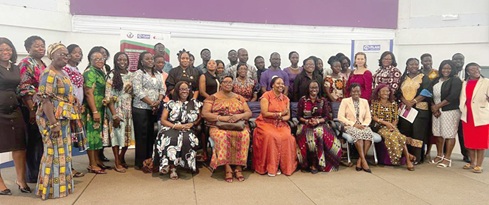
It brought together women's rights organisations, civil society organisations, youth-led organisations, government officials, development partners, researchers, academics and the media.
Independent analysis
Mrs Akakpo, who presented NETRIGHTs independent analysis of the 2026 Budget Statement and Economic Policy, focusing on economic and fiscal policies and agriculture, to influence inputs to the Ministry of Finance, clarified that its presentation was based on three studies it conducted ahead of the budget and did not include the mid-year review presented by the minister in August, but highlighted findings and recommendations already submitted to the ministry as part of its advocacy for a gender-equitable economy.
Although she acknowledged efforts by the Ministry of Finance to include interventions targeting women, youth and the vulnerable in the 2026 budget, she warned that having specific programmes alone would not unlock the economic potential of marginalised groups if they were not effectively designed and implemented.
She stressed that gender-responsive budgeting was not about merely inserting the words 'women' and 'youth' into budget lines, but required intentional, evidence-based analysis that ensured the budget responded to the lived realities of all citizens.
She said the group's position was that the 2027 budget must move beyond gender-neutral public spending and institutionalise gender-responsive budgeting as a requirement for equitable resource allocation, accountability and inclusive development.
Fiscal policy
On fiscal policy, the analysis focused on tax, VAT rate cuts and domestic revenue mobilisation, and she pointed out that women were disproportionately represented in the informal economy and small-scale enterprises and were likely to experience tax reforms differently due to lower incomes, limited access to formal finance and unequal care responsibilities.
She cited other studies on the 2026 budget and NETRIGHTS' own research, which all showed that emphasis on tax efficiency and compliance over new taxes in the draft budget fell short of addressing gender equality in fiscal objectives.
The organisation, she said, was, therefore, calling for a reframing of Ghana's budget statement from social spending to a gender-equitable economy and a gender-responsive agriculture agenda that prioritised women in the informal sector.
She, therefore, urged the government to ensure that domestic revenue mobilisation did not deepen pre-existing inequalities or increase the vulnerability of poor households, and to adopt intentional, data-driven budgeting that addressed long-standing inequalities.
Writer's email:
