
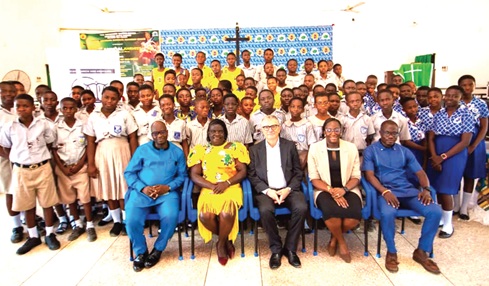
Pupils from seven basic schools in the Weija-Gbawe municipality have been sensitised to Project Ethics, a values-based learning initiative designed to support schools, teachers and communities.
The project, empowering tomorrow’s heroes with integrity, citizenship and service (ETHICS), seeks to develop ethical awareness among learners through storytelling, digital learning tools, teacher training and educational resources.
It is a partnership between Ghana and Malta to strengthen ethics education and promote integrity, citizenship and service among young people.
It also aims to help young people build critical thinking skills, understand civic responsibilities and make responsible choices in their communities.
The beneficiary schools were the Weija M/ A 1 Junior High School (JHS), Weija M/A 2 Basic School, Weija M/A 3 JHS, Presbyterian JHS, Weija Methodist 1 Basic School, Weija Methodist 2 Basic School and the Weija Model Basic School.
Partnership
Speaking at the event, the High Commissioner of Malta to Ghana, Ronald Micallef, said Project Ethics was a venture to connect Ghana with Malta.
Ethics, he said, was one of those areas where “we bring young people together to think about fairness, honesty, and responsibility. Not just to talk about them, but to practise these skills in everyday life, because education is not just about subjects.
“It's about making ourselves better, to confront the challenges that we're going to face, that we are facing in today's world.”
Global
Mr Micallef told the gathering that the world was changing and that they would be living in a world of artificial intelligence, digital skills and more global.
To the teachers, he said it was all about the example that they set.
“Students notice us.
They notice how, as adults, we listen.
How we apply the rules. How we handle disagreements.
How we admit mistakes. Students need room to question us, to disagree respectfully.
In this digital world, before we share a story. Before we share a photograph. Before we share AI-generated answers.
It's all our responsibilities, teachers and students, to check accuracy.
To consider privacy and to acknowledge where your work comes from.
“Technology does not remove responsibility.
So in this project, we are learning together.
My country, Malta, does not have all the answers.
We must create questions and answers together.
We bring experience.
We help teachers and students to shape and project,” he emphasised.
Values
The Training Officer at the Weija-Gbawe Education Directorate, Sadiq Mohammed, said Project Ethics was an initiative aimed at promoting honesty, respect, discipline, responsibility and integrity.
He said education went beyond academic excellence; it must also be about good character and responsible citizens.
The Director of Programmes of Step Up Nigeria, Feranmi Iyanda, said her organisation had always believed that the future belonged to young people.
A representative of Young Visionary Leaders Ghana, Joseph Tettey Afangbe, stated that the initiative required the support of all “so that the young ones will grow to become the responsible, transparent, and accountable citizens that Ghana needs”.
For her part, the Executive Director of Dynamics Works Foundation, Gloria Cann, said her outfit was committed to supporting the project wherever it would reach to make a mark to glorify the name of God.
