
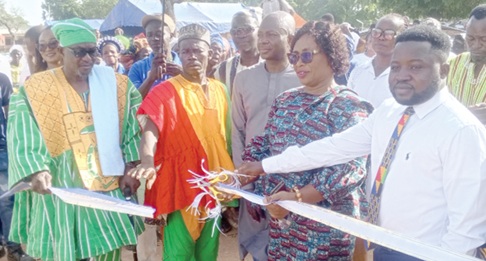
WaterAid Ghana has handed over water, sanitation and hygiene (WASH) and nutrition facilities to the Kadare and Beo-Tankoo communities in the Bongo District in the Upper East Region to improve access to safe water, sanitation and healthcare services.
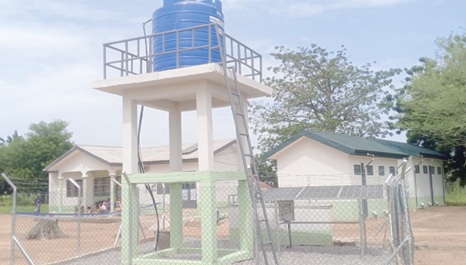
The project, which is expected to impact 3,044 people in Kadare and Beo-Tankoo, includes two solar-powered water systems, two disability-friendly sanitation facilities, rehabilitated healthcare infrastructure and two demonstration vegetable gardens.
The facilities were provided under the 12-month WASH-Nutrition Plus (WN+) Project, implemented from September 2025 to August 2026 at a cost of US$300,000, with funding from the Church of Jesus Christ of Latter-day Saints through Latter-day Saint Charities Australia.
At the handover ceremony at Kadare last Wednesday, the Head of Programmes at WaterAid Ghana, Mohammed Adokor, said the successful completion of the project demonstrated the impact of collective efforts to address water, sanitation, hygiene and nutrition challenges in underserved communities.
He said the project was designed to improve the health and well-being of vulnerable groups, particularly pregnant and nursing women, adolescent girls and children under five, through improved water, sanitation and healthcare facilities.
“The two solar-powered water systems serve different needs.
One supplies water to the healthcare facilities, a neighbouring school and a demonstration garden, while the other provides water to the wider community,” he stated.
Mr Adokor said the project also provided separate male and female sanitation facilities with menstrual hygiene rooms and disability-friendly features, rehabilitated the main and maternity blocks, and established demonstration vegetable gardens in Kadare and Beo-Tankoo to promote household food and nutrition security.
Mr Adokor said the project had contributed to the construction and use of climate-resilient household places of convenience for 139 households across the two project communities and the Zorko sub-district through the Bongo Sanitation Challenge initiative.
“More than 300 assorted WASH kits have been distributed to households in Kadare and Beo-Tankoo, while a 25-member School Health Club has been established at Kadare Primary School to promote good hygiene practices among pupils”, he stated.
He said five Community Information Centres had also been retooled across the district to support behaviour-change communication, while more than 1,200 information, education and communication materials had been produced and distributed to healthcare facilities and communities.
Sustainability
To ensure the sustainability of the water systems, Mr Adokor said the Kadare Water and Sanitation Management Team had been transformed into a community-based social enterprise known as the Kadare Asungtaaba Kosum Enterprise (KAKE) to manage the systems.
He called on community members to support the enterprise through responsible water use and payment for water services, adding that effective management and reinvestment of revenue would be essential to keeping the systems functional.
Mr Adokor announced that the Church of Jesus Christ of Latter-day Saints had approved a further US$300,000 to support the next phase of WASH and nutrition interventions.
The Bongo District Director of Health Services, Estella Abazesi, commended WaterAid for its continued support to the district.
The Bongo Paramount Chief, Naba Baba Salifu Atamale Lemyaarum, expressed gratitude to WaterAid and pledged his commitment to safeguarding the facilities for future generations.
The Upper East Regional Minister, Donatus Akamugri Atanga, commended WaterAid for supporting the government in providing safe drinking water to rural communities.
